A wild vegetable unique to the south: eat the flowers, not the leaves; it has an orchid-like fragrance on the palate and can even be grown as a potted plant
Warm reminder
Hemu Report aims to share and popularize information about various plants and their uses, for reference only. If medicinal use is needed, it is advisable to consult a professional physician to avoid problems!
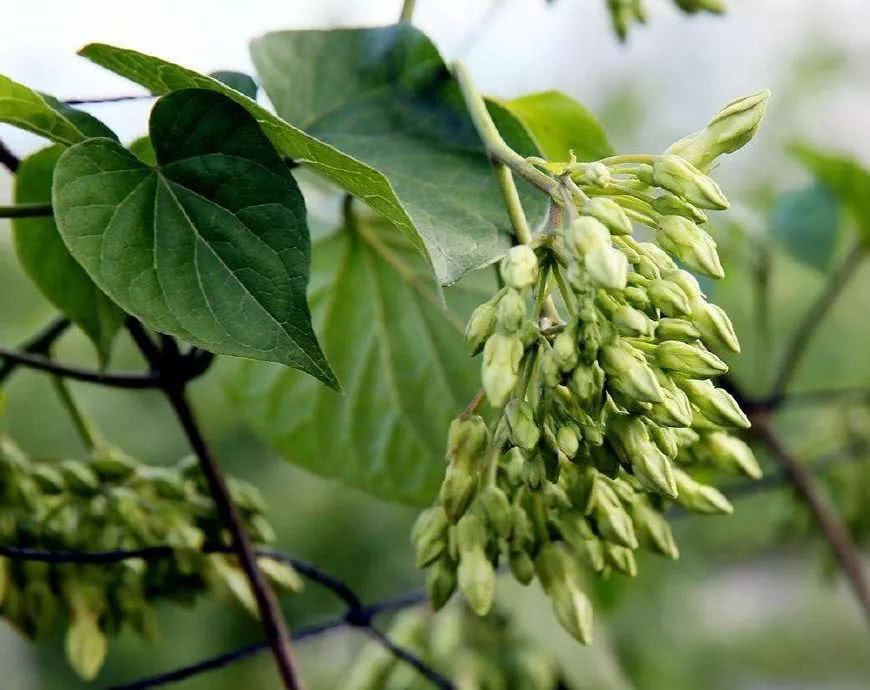
In South China, there is a semi-wild vegetable unique to the region. People eat its flowers, not its leaves, because the part used in cooking is the flower bud. Just as northerners love eating pagoda tree flowers, these flower buds can be used to make porridge, soup, stir-fries, or deep-fried dishes, and they have an orchid-like fragrance on the palate. Southerners love them. At the same time, these flower buds can also be used as medicine and have the effects of clearing heat and improving eyesight. It is exactly the season when they are on the market now. Have you ever eaten them?
This wild vegetable is the night orchid, also called night fragrant flower. It is easily confused with a woody plant called "night-blooming cereus" (ye lai xiang); the difference between the two is that the night orchid is a twining vine with short, relatively plump flower buds, while ye lai xiang is a woody plant with slender flower buds and is slightly toxic, so it cannot be eaten. The night orchid is one of the important ingredients in traditional Cantonese cuisine. In the "winter melon cup" dish made with it, cooked with various dried seafood ingredients, a handful of night orchid flowers must be sprinkled in when the dish is finished, otherwise it will not be fragrant. This dish is also called "a masterpiece of Cantonese cuisine."
However, ordinary people do not eat it in such a complicated way. Farmers usually use it to make "quick-boiled soup," such as sliced pork soup, egg soup, or pork liver soup, which is tasty and economical. But no matter what cooking method is used, the night orchid emphasizes a light flavor, because its own fragrance is already very rich, and pairing it with light dishes instead brings out its orchid fragrance. It should be noted, however, that the heat must be controlled when cooking. If the time is too short, it will be too raw and taste rather green and astringent; if the time is too long, it will be overcooked, soft and mushy, and lose that fresh fragrance.
In May, the weather starts getting hotter and hotter, and at this time the night orchid also begins to grow flower buds. It is generally believed among the people that eating seasonal vegetables is better than eating off-season vegetables, because seasonal vegetables follow the seasons and are beneficial to human health. The same is true of the night orchid. It has the effects of clearing heat, improving eyesight, and removing dampness. In Guangdong, people often use it as a food-therapy vegetable for treating diseases such as conjunctivitis and eye symptoms caused by malnutrition. Moreover, eating flowers is itself a rather "elegant" thing, and night orchid dishes can be seen on the menus of many large restaurants.
Besides the flower buds being edible, the night orchid is also very beautiful when it blooms, with fragrance filling the air, and it has a certain ornamental value. Therefore, not only farmers grow it, but many city dwellers also grow it on their own balconies. It can be enjoyed as a potted plant and the flowers can also be eaten, achieving two benefits at once.
Text/Hemu Report, Images/Internet
If you like Hemu's articles, you are welcome to follow