The wild fruit monkeys love most has extremely high vitamin C, eating one is equivalent to 100 apples
Friendly reminder
Hemu Report aims to share and popularize information about various plants and their uses, for reference only. If medicinal use is needed, it is recommended to consult a professional physician to avoid problems!
In the rural mountains, there are all kinds of wild plants, and with the arrival of May, many wild plants in the mountains have begun to bloom and bear fruit. I believe many friends who have lived in rural areas are very fond of these wild fruits. Many wild fruits taste better than common fruits, and their nutritional value is even better than common fruits. Below, the author will introduce to you a rare wild fruit from the rural mountains, one that only friends who have lived in rural areas have eaten.
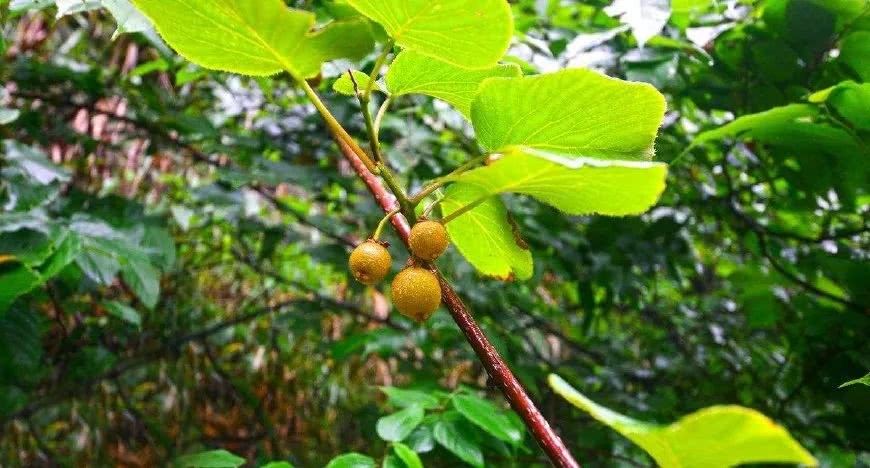
After the recent rains, the weather has gradually become hotter. Perhaps because of the abundant rain this spring, many wild plants in the mountains began to bloom and bear fruit early. When the author went into the mountains at noon, I saw that many wild fruits had already begun to form small fruits. I also saw a very rare wild fruit, which is the "mihouli" (Actinidia polygama, silver vine). Many friends may have seen kiwifruit and pears, but they may not have seen mihouli. This wild fruit looks very peculiar, resembling both a pear and a kiwifruit. Nowadays, wild ones are rarely seen, so it is also considered a relatively rare wild fruit.
Speaking of this wild fruit called mihouli, it is quite interesting. According to the old farmer friends in the village, this wild fruit is said to have been the favorite wild fruit of macaques at first, and only later was it discovered by people. Because its shape looks quite like a pear, it was called "mihouli" (macaque pear).
Although this wild fruit is the favorite of macaques, do not underestimate it. The nutritional value of mihouli is very rich. According to records, mihouli is rich in nutrients and vitamin C, calcium, phosphorus, potassium and other elements, and its vitamin C content is quite high. Every 100 grams of mihouli contains 400 mg of vitamin C, which is 100 times that of apples (the vitamin C content per 100 grams of apples is 4 mg). Under the same conditions, eating one mihouli can match the vitamin C content of 100 apples. Therefore, it is also called the "vitamin fruit."
Not only are the fruits of mihouli delicious and highly nutritious, but its leaves and roots are also treasures and can be used as medicine. According to "Chinese Herbal Medicine," the leaves and roots of mihouli used as medicine have the effects of strengthening the stomach, clearing heat, and promoting diuresis, and can be used to treat symptoms such as indigestion, vomiting, diarrhea, jaundice, and rheumatic joint pain. Therefore, many farmer friends living in mountainous areas are very fond of mihouli.
As the value of mihouli has been discovered, its price has also begun to rise. However, because relatively little mihouli is cultivated, it is also relatively expensive. According to an old farmer in the village who grows mihouli, mihouli currently costs about 40 yuan per jin. As long as it is grown well, there is no problem with it becoming a "money tree." I believe that before long, large-scale artificial cultivation of mihouli will be realized, truly becoming a "money tree" for farmer friends.
Friends, have you ever eaten mihouli? You are welcome to leave a message and share your thoughts!
Text/Hemu Report, Images/Internet
If you like Hemu's articles, you are welcome to follow!