Toss soybeans and peanuts into the flower pot as fertilizer, and the flowers will keep blooming for 3 months without fertilizing
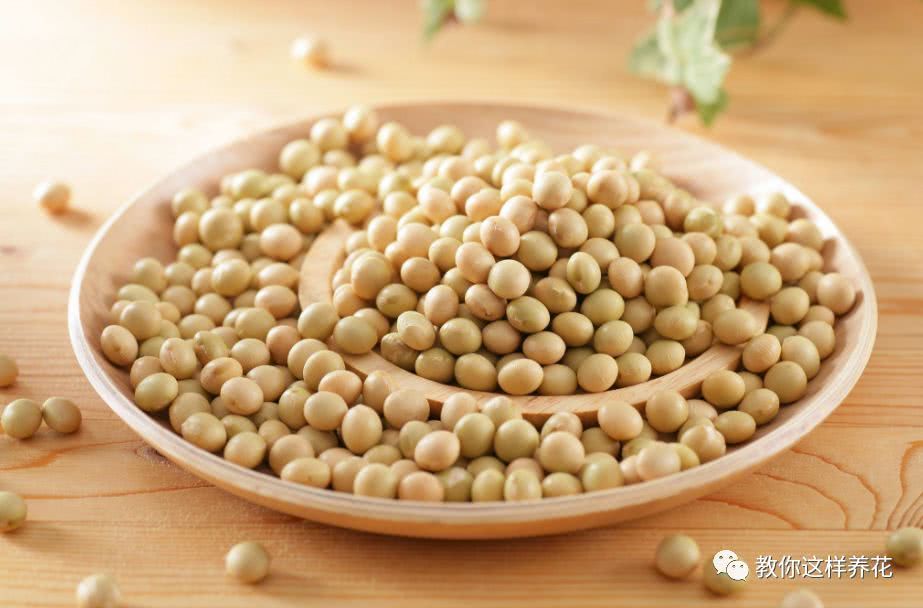
Whether plants are grown well depends on fertilizer. With good fertilizer, the leaves can be glossy green and blooming increases. With poor fertilizer, the soil is barren, there are fewer flowers and the leaves are dull. Actually, there are many materials at home that can be used to fertilize conveniently. Prepare a handful of soybeans and peanuts, and you can also make good fertilizer. Let's take a look!
“
Bean and peanut fertilizer
”
Soybean fertilizer
Soybeans are rich in nutrients and high in protein. After decomposition, they are a very good nitrogen fertilizer, and the calcium, magnesium and phosphorus in soybeans are all very helpful for the growth of flowers and plants. Using soybeans as fertilizer does not burn seedlings and is also very beneficial to the growth of flowers and plants.
-Soybean water-
At home, soybeans are often used to make soy milk, and they are usually soaked first. The water from soaking soybeans contains many trace elements and can be used directly to water flowers.
-Soybean composting-
Soybeans can also be used for composting. Cook the soybeans until soft and crush them, then let them cool. Put them into a bottle or bucket and use after fermentation. During fermentation, a lot of gas will be produced, so the lid cannot be tightened, and occasionally it even needs to be opened to prevent it from bursting.
Water composting smells quite strong. You can add some orange peel, tangerine peel or EM bacteria to the bottle, and the smell will be much reduced. This is suitable for growing flowers in a large yard or on a rooftop, where there is plenty of space and it can be left in a corner to ferment. It is not suitable for small households. When fully composted and the residue naturally sinks, the smell is actually much weaker, but the cycle is longer and it needs 3-6 months before use.
Dilute the well-fermented filtrate with water before use. The residue can be buried deeper at the bottom of the pot. Because it is thoroughly decomposed, flowers can use it directly and absorb it very quickly.
-Soy milk and okara-
If you have a soy milk machine, you can blend it directly and then compost it, and the fermentation speed will be much faster.
The leftover okara can also be used as fertilizer. You can sun-dry the okara, and after it is dry, bury it regularly around the edge of the pot. After it decomposes and rots, it can be absorbed and used by the plants.
Or bury the okara at the bottom of the pot, add soil to cover it, and let it rot in the soil. This used flower soil is very nutrient-rich and can be used as a base fertilizer, or mixed directly into other potting soil.
-Burying soybeans-
There is another method that requires no composting, since composting fertilizer really does smell strong. You can use chopsticks to poke holes around the edge of the flower pot, put a few cooked soybeans in each hole, and add a few beans regularly every week. After they rot and decompose, they can be used by the plants.
Peanut fertilizer
Peanuts contain a large amount of fat, protein and starch, are rich in organic matter, and are an organic fertilizer containing a lot of nitrogen. If you have expired or moldy peanuts at home, because they contain aflatoxin, they are no longer suitable to eat, but they can be used as flower fertilizer.
-Peanut powder-
Some peanuts that are not eaten, or have become moldy, can be put in a plastic bag and crushed, then sprinkled directly at the bottom of the pot or buried around the edge of the pot. If they contain salt, boil away the salt before use.
Fertilizer-loving plants such as clivia (Clivia miniata) really like oil-based fertilizers like peanuts, but do not dig too deep, to prevent damaging the roots. Sprinkle some every 2 weeks, and it can also be used when repotting. It can make clivia leaves glossy green and the flowers burst out of the pot.
-Peanut shells-
Peanut shells can also be used as flower fertilizer. First, after decomposition they can become fertilizer; second, their loose and airy structure can improve the structure of potting soil and make the soil more breathable.
Put peanut shells in a plastic bag, add water to moisten them, then tie the plastic bag well and leave it in the sun to bake for a period of time. When the peanut shells turn black, they can be used. You can also boil them directly in water until soft, then put them in a plastic bag to ferment, and the fermentation speed will be a bit faster.
-Peanut bran-
Peanut bran, also called peanut cake, is a by-product after oil extraction. Peanut bran has a low carbon-to-nitrogen ratio, decomposes quickly after being added to soil, and has a rapid fertilizer effect. It is also rich in the two major elements phosphorus and potassium, and is especially good for flowering plants. It is a good choice for many flowering plants. With a little used on flowers and plants such as clivia and rose, the flowers bloom especially vigorously. For plants like kalanchoe (Kalanchoe blossfeldiana), if a little peanut meal is added, not only is the flowering period longer, but the flower color is also more vivid.
Peanut bran generally needs to be crushed and fermented before use. It can be put in a bottle, add 10 times the water and stir well. During this period, do not seal the lid too tightly, to prevent gas from bursting it open. When the temperature is suitable, it can be used in about 1 month. When using, add water to dilute it. There are also finished fermented products on the market, which can avoid the odors produced during fermentation. Decomposed cake fertilizer is a very good organic fertilizer, and almost all plants can use it. Just sprinkle it directly around the edge of the pot.
Fertilizing for flower growing is actually not difficult
A few soybeans and peanuts solve it
You should try it too
Show it to flower lovers who need it!