Plants Suitable for Keeping at Home: They Purify the Air and Are Easy on the Eyes. Do You Have Any at Home?
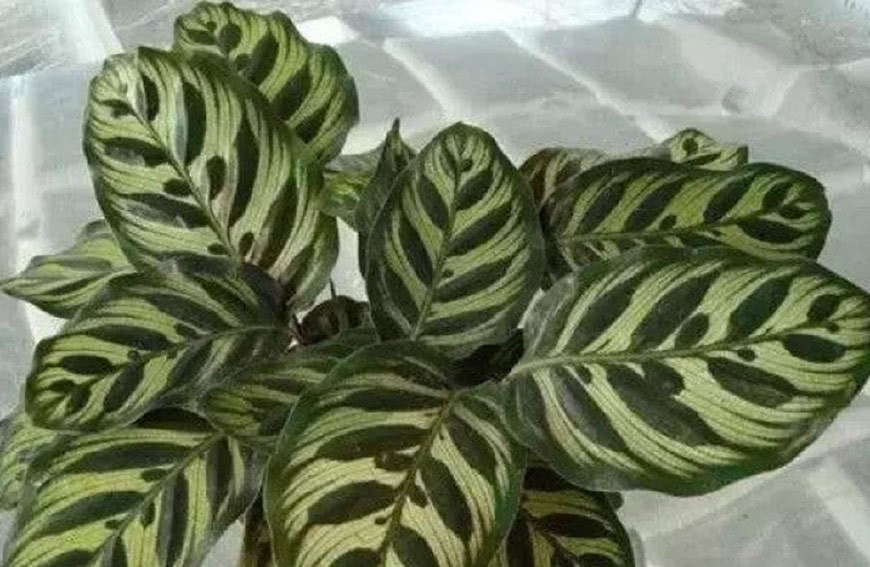
Nowadays many people buy green plants as decorations. Green plants are undoubtedly great decorations: they not only bring vitality to a space and fill the whole room with greenery, but also purify the air. However, there are simply too many green plants suitable for keeping at home, so people don't know which one to grow. Today I will introduce to you a green plant that is very suitable for keeping at home - arrowroot (Maranta arundinacea). Let's take a look together below.
Arrowroot (Maranta arundinacea) has fleshy rhizomes that are spindle-shaped. Its leaves are relatively thin, evergreen all year round, with a gradually pointed tip and a relatively round base. The underside is hairless or thinly covered with long soft hairs. The leaf cushion is covered with long soft hairs on top. It has no petiole or a short petiole. The raceme is terminal, 15-20 cm long, with several flowers. The bracts are linear-lanceolate. Overall, arrowroot is very good-looking. If your home is still missing a potted plant, I suggest you buy a pot of arrowroot.
Arrowroot prefers a warm, humid and semi-shaded environment, but it is not cold-tolerant and is also afraid of dryness, so it must not be exposed to strong sunlight. Under strong light, the leaves are easily scorched. It is also very sensitive to moisture. Arrowroot has relatively high water requirements, and different varieties of arrowroot have different water needs. 'Green Apple' arrowroot and 'Velvet' arrowroot have thin and large leaves, so the watering interval is short; 'Leopard Print' arrowroot has thick and relatively slender leaves, so the watering interval is long. The most suitable soil is fertile, loose and well-drained leaf mold. The suitable temperature for arrowroot production greenhouses is between 20-28°C, and the minimum temperature must not be lower than 18°C, otherwise the growth of arrowroot will enter a stagnant state.
Arrowroot generally has two propagation methods: division propagation and cutting propagation. Planting in spring is better, because propagation is most ideal when the spring temperature is around 20°C, but as long as the temperature and humidity are suitable, it can also be done throughout the year. During propagation, use a sharp knife to cut apart the root tubers with stems and leaves or leaf buds. For small-scale propagation, the cut root tubers with stems, leaves and leaf buds can be placed directly into clay pots; for large-scale propagation, they should be placed on a seedbed for propagation. Cutting propagation generally uses tender shoot tips. The cuttings are 10-15 cm long. Depending on the leaf size, just retain one-third or one-half of the leaves. If you want to plant them yourself, these two methods are very good choices.
Arrowroot has dense branches and leaves, a full plant shape, dark green and glossy leaf surfaces, and purplish-red leaf undersides, forming a striking contrast. It is an excellent indoor shade-loving foliage plant. It is a very good choice for decorating bedrooms, living rooms, offices and other places. It is emerald green, glossy and lush, making the space appear especially quiet and dignified, and it can also be appreciated for a relatively long time, very easy on the eyes. Arrowroot also plays a great role in purifying the air. Although it cannot be compared with spider plant, the air-purifying effect of arrowroot should not be underestimated. Its ability to absorb harmful gases such as formaldehyde and ammonia is still far superior to that of many plants. Therefore, keeping a pot of arrowroot at home is a good choice!
This plant, arrowroot, is very suitable for keeping at home. It purifies the air and is easy on the eyes. Do you have any at home? If not, hurry up and grow a pot. Welcome to leave comments, like and follow.