To make a bonsai from a Buddhist pine, you need to learn these few tricks, otherwise digging it up will be wasted effort
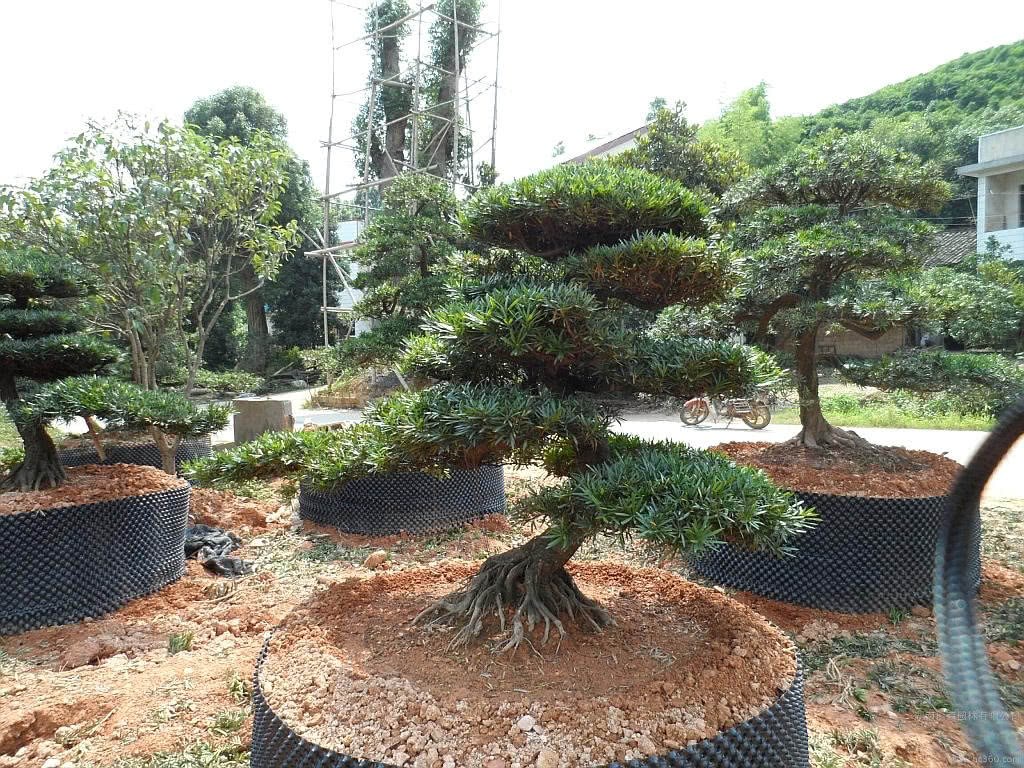
To make a bonsai from a Buddhist pine, you need to learn these few tricks, otherwise digging it up will be all for nothing!
To raise a tree stump well, you need to consider many aspects comprehensively; it cannot be kept alive just casually. To make a good Buddhist pine bonsai, the old hands say these few tricks must be learned, otherwise all the hard work of collecting and digging it up will be all for nothing!
Buddhist pine, also known as soil fir, is an evergreen coniferous tree in the Podocarpaceae family, genus Podocarpus. Its bark is gray or grayish brown, shallowly longitudinally fissured, and sheds in thin flakes; the branches spread out or grow obliquely, and are fairly dense. The leaves are linear-lanceolate and slightly curved. The male cones are spike-shaped and axillary, with several triangular bracts at the base; the female cones are solitary in the leaf axils, stalked, with a few bracts at the base. So, in view of the characteristics and growth habits of the Buddhist pine, you need to learn these few tricks, and raising a Buddhist pine well will be no problem. The first trick is that a collected Buddhist pine must not have its branches cut randomly; wait until you get it home and think it over, then make your decision, so that you will not be left with regrets.
The second trick is that when collecting a Buddhist pine, you must be sure to dig slowly from around it, and you must keep the root ball with soil. This is because a tree stump with a soil ball can adapt well to new soil and integrate better into the new environment.
The third trick is that after sawing the collected tree stump, use white wax to seal the cut surfaces of the Buddhist pine to reduce the loss of water. At the same time, wrap the branches and trunk of the tree stump with cotton cloth and the like to reduce water loss.
The fourth trick is to plant the tree stump in soil for a period of time, and after the stump's period of false vitality has passed, then carry out potting, because this is more conducive to the stump's direct growth. It can better absorb nutrients.
Thank you for taking your precious time out of your busy schedule to read patiently; reading takes you to a higher level. In addition, if you have any thoughts or views, you can post them in the comment section below. Everyone is welcome to save or share this! Click the word "Follow" and you will be able to read more articles about raising tree stumps.