Lantana is salt-tolerant and easy to bloom, and can even be grown as a potted shrub
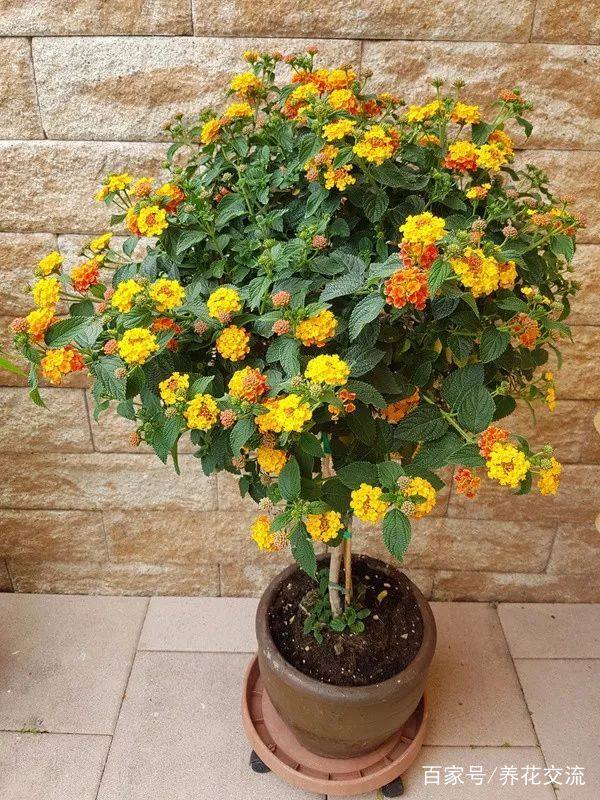
Many people think lantana is just a flowering plant of tropical regions, and may even regard it as a wild weed or wildflower. In fact, it has a great many varieties, including very showy horticultural ornamental cultivars, and it is very drought-tolerant, salt-tolerant, heat-tolerant and shade-tolerant, and can keep blooming all year round. A flower like this is wonderful.
Lantana has more than 150 varieties. It can be grown as a small potted plant or as a flowering shrub one or two meters tall. The one above is a single-trunk lantana shrub in a pot - isn't it very charming?
By the seaside in tropical regions, I often come across lantana; its salt tolerance is beyond doubt.
Lantana is also called five-color plum. Its leaves are a bit rough and give off a pungent smell when sniffed. Some varieties have very showy flowers and can also produce small berries. It is a plant that blooms very easily.
1. Salt tolerance
Lantana is a very salt-tolerant plant, excellent for planting in coastal areas. It likes full sunlight and is suitable both as a garden plant and as a potted plant. It can also be grown in hanging baskets. If you are in the north, you can also grow it as a shrub in a pot, giving it stronger cold tolerance.
2. Growing environment:
There are now some slightly cold-tolerant lantana varieties, but in winter you still need to protect them from the cold, keeping the minimum growing temperature above 4°C to avoid frost damage. In places with frost, lantana should be grown in pots and moved indoors for the winter.
3. Soil:
Lantana grows best in well-drained, loose, fertile, slightly acidic sandy soil. It can adapt to all types of soil, but you must make sure drainage is good and avoid waterlogging.
4. Light:
Lantana loves full sunshine. The more sunlight it gets, the more vigorously it grows and the more showy its flowers are, which is good for its growth. It can also grow in partial shade, but it will produce fewer flowers and grow more slowly.
5. Water:
Once lantana is established, it does not need frequent care; it is a very drought-tolerant plant. For potted plants, watering thoroughly once a week is basically enough, and it is fine if you often forget to water it.
6. Fertilizer:
Lantana does not need much fertilizer. In fact, giving it too much fertilizer suppresses flowering. Just give it fertile soil, enrich the soil with compost, and give it one application of well-rotted organic fertilizer in spring; that is enough. No fertilizer is needed in the other seasons.
7. Pruning:
After the flowers of lantana wither, promptly cut off the spent flowers. If the branches and leaves grow too dense, prune them too to keep good ventilation and light penetration. Proper pruning is also needed in spring to prevent it from spreading too much, otherwise it will grow very messy.
Lantana blooms and sets fruit at the same time - very remarkable.
8. Pest and disease control
If it is shaded too much or grown in a spot with poor ventilation, it is prone to powdery mildew. Promptly cut off the diseased leaves and spray a fungicide in time, such as thiophanate-methyl or zineb.