Organic color pepper greenhouse hit by thrips, Lin Fengqi controls them with the predatory bug Orius strigicollis
The most troublesome small pest in protected cultivation, let its natural enemy solve it! The Taiwan Agricultural Research Institute recently announced a successful case of using Orius strigicollis in a color pepper greenhouse to successfully suppress thrips damage. Associate researcher Lin Fengqi, who has studied biological natural enemies for more than twenty years, said, "The time has come!" With greenhouses and net houses now widespread, it is the most suitable time to release natural enemies to control pests.
The entrenched impressions that natural enemies are costly and slow-acting are gradually being overcome as concepts and techniques mature. In recent years, with the rise of friendly farming and pesticide reduction, the use of biological natural enemies has once again become a focus of attention.
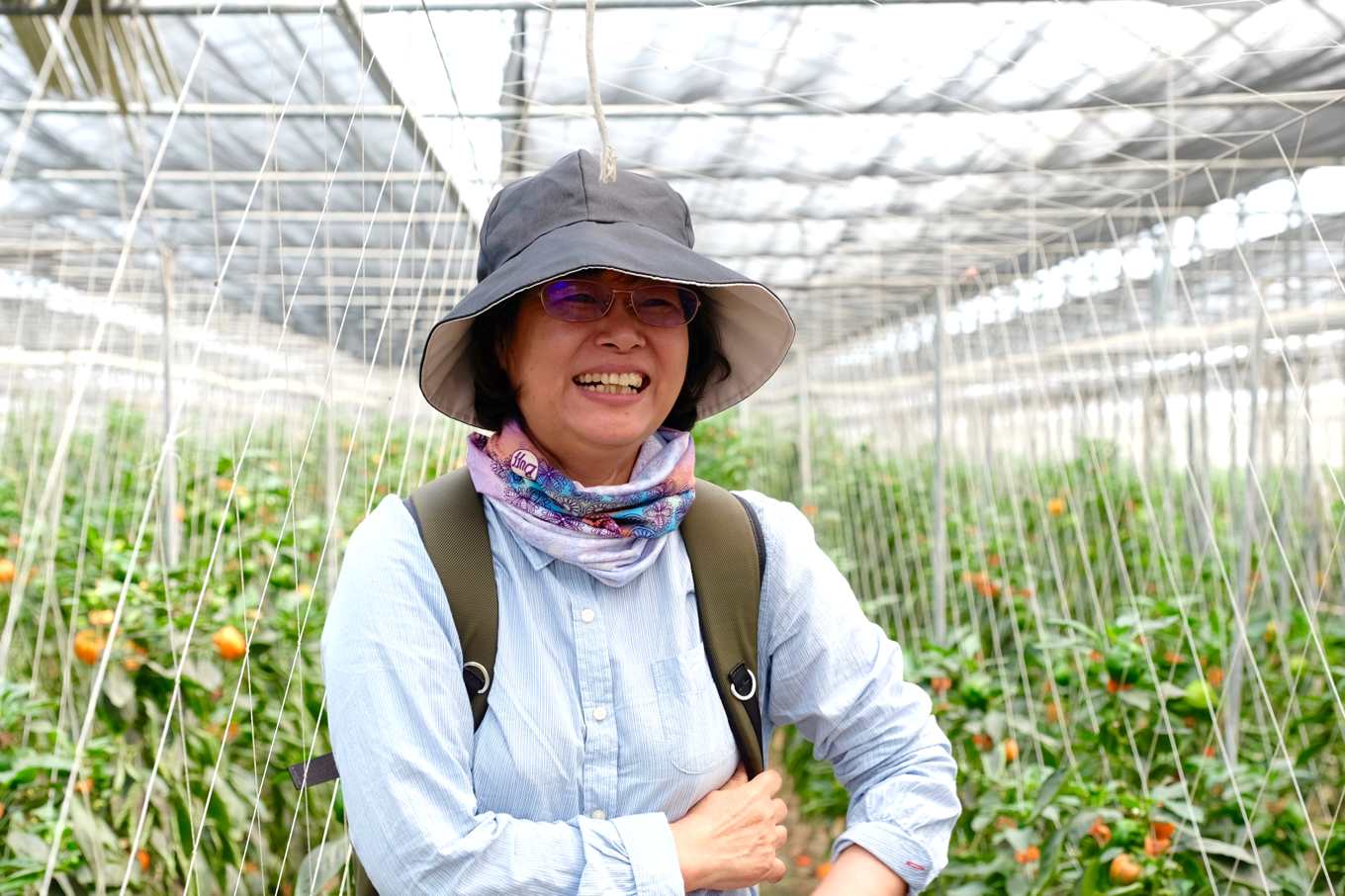
High inquiry volume, natural enemy kits to be announced soon for open technology transfer
Lin Fengqi said that many farmers are now asking where to buy natural enemies. The research institute has currently developed kits of seven natural enemies, including Orius strigicollis, Eocanthecona furcellata and Telenomus sp., which have already passed qualification review and are awaiting announcement for technology transfer. She hopes a larger-scale company can take them on. Each natural enemy can also be licensed separately to interested companies or farmer groups such as production-and-marketing teams.
In Europe and the United States, natural enemy control has already become a trend. Having visited several natural enemy companies in Europe, Lin Fengqi observed that twenty years ago these companies were all small companies producing only two or three kinds of natural enemies, "but now, any natural enemy you can think of, they can supply," along with sales of related non-toxic control materials, and the prospects look very promising.
"Biological control is a method that can balance yield, quality and safety," and coupled with a reasonable price, Lin Fengqi hopes that biological natural enemy control can develop into a mature industry in Taiwan, China, giving farmers one more high-quality choice and making agriculture more in line with the spirit of sustainability.