Characteristics of the Australian pine bonsai, cutting propagation techniques and care methods
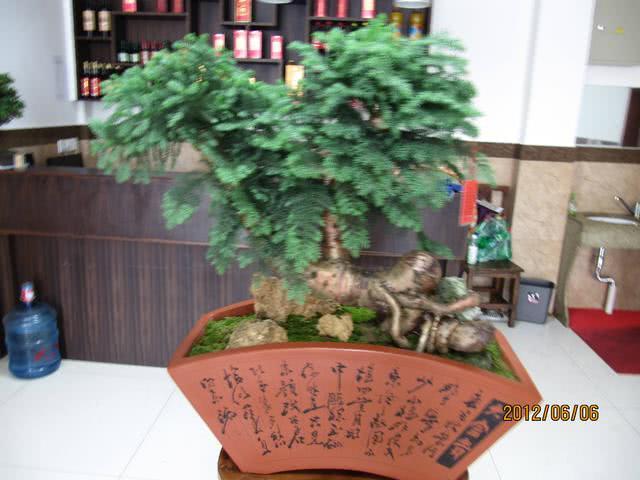
The tenacious vitality of the Australian pine makes it suitable for mass propagation. Generally in summer, the seeds are first scarified, which helps germination, otherwise the seeds rot and die easily. After treatment, at a room temperature of around 26°C and with a certain level of humidity maintained, simply spread a layer of fine sand no more than 2 cm thick over the seeds, and they will germinate in less than a month, at which point they can be planted.
Care is also needed when taking cuttings. If the main trunk or a relatively long branch is chosen as the cutting material, subsequent growth can easily lead to an irregular crown shape, greatly reducing its ornamental value.
When it comes to making an Australian pine bonsai, first you must choose the right soil; a soil substrate made by mixing leaf mold and peat moss, among other things, is the best. The size of the pot depends on the size of the seedling. The placement of the bonsai also needs attention; it should be placed in a ventilated, bright spot, and every so often moved into the sunlight for appropriate exposure, as only then will it grow well.
As for water, it is best to keep the soil moist; water must not be allowed to accumulate in the pot, and watering should also be controlled according to the season. In spring and autumn, for instance, more watering is needed, while in winter watering should be gradually reduced, otherwise its cold tolerance will decline. Plants generally have a phototropic tendency; to prevent it from growing with a bent trunk, the pot must be rotated every so often. In addition, when the bonsai is in a normal state of growth, there is no need to prune it; simply controlling the ambient temperature and humidity is enough.
The care of an Australian pine bonsai must be adjusted according to the season. Spring, summer, autumn and winter are each different. In spring, once the temperature is stable and no lower than 10°C, it can be repotted; note that the potting soil should still be mainly loose and fertile. Its repotting interval is about two to three years. In summer, the temperature is generally higher and the sunlight is relatively strong; although it can tolerate high temperatures, it is not suited to strong light exposure, otherwise its ornamental quality will be affected. Therefore, a ventilated, bright spot is the best place to put it in summer.
Autumn and winter are also slightly different. In autumn, the main thing to watch is the moisture in the pot; fertilizer application can be stopped, and it should be moved outdoors, which can increase its cold tolerance, though frost will cause it damage. In winter, the temperature must be no lower than 5°C, light must also be sufficient, and the potting soil need only be moist and on the dry side.