Can industrial potassium chloride bought from a soil fertilizer formula shop be used as a base fertilizer for corn?
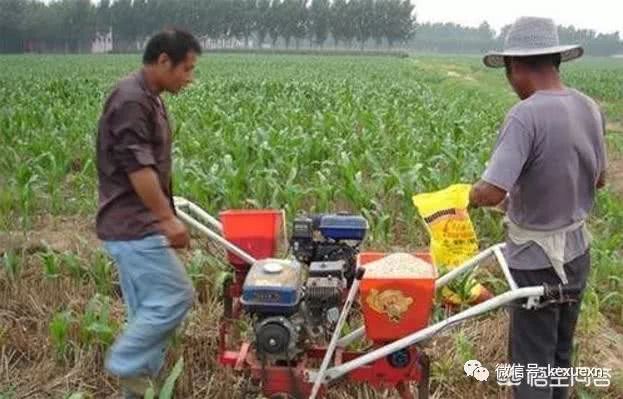
First, let me state clearly: industrial-grade potassium chloride can also be used as a corn fertilizer.
Regarding the question of whether industrial potassium chloride can be used as a base fertilizer for corn, we must first clarify two small issues: first, can corn use potassium chloride? Second, what is the difference between industrial potassium chloride and agricultural potassium chloride? Once these two small issues are clear, I think it will not be difficult to answer the above question. Let me explain below.
Can corn use potassium chloride?
The reason we need to clarify this issue is that if corn were a chlorine-sensitive crop, even agricultural potassium chloride fertilizer could not be used as a potassium fertilizer in corn agricultural production. Therefore, let us first sort out this issue. Regarding the issue of chlorine sensitivity, Science Xingnong has discussed it many times in previous articles. The chlorine-sensitive crops we see, such as sweet potato, watermelon, potato, and grape, are tuber or fruit crops with high sugar content, but corn is not chlorine-sensitive, and there have already been many related research experiments in agricultural production.
What is the difference between industrial potassium chloride and agricultural potassium chloride?
As for industrial potassium chloride, its purity is basically above 98%, which can be said to be already very pure. In industry, it is mostly used for electrolytic production of potassium, as well as for producing potassium hydroxide, potassium carbonate, potassium nitrate, potassium sulfate, potassium chlorate, potassium dihydrogen phosphate, potassium permanganate, and others. It is even used in medicine as potassium tablets to supplement potassium deficiency in the human body.
However, agricultural potassium chloride is quite different, because its use in agricultural production is to apply potassium chloride to the soil or spray it on the leaves, and its purity requirements are far less strict than industrial requirements. You can look at the purity mark on a bag of agricultural potassium chloride. Generally, imported fertilizer bags are marked as (in agricultural fertilizers, potassium oxide indicates potassium content >=60%), which converted to potassium chloride content means purity >=98.8%. However, this is only imported potassium fertilizer, while domestic potassium fertilizer is generally marked with a potassium oxide content of mostly 57%, which is even lower in purity. It is far from requiring the high purity of industrial-grade levels.
From the above analysis, it is not difficult to see that compared with agricultural potassium chloride, industrial potassium chloride is only higher in purity, having undergone a higher level of purification. However, agricultural production does not need industrial-grade potassium chloride at all, at least in terms of input and output, it is not worthwhile. Industrial-grade potassium chloride is too expensive, and the analytical-grade potassium chloride used in our laboratory has a purity of 99.99%, which is even more expensive. If such potassium chloride were used in agricultural production, farmers would probably lose terribly.
This is Science Xingnong. You are welcome to follow, and let us grow knowledge together.