Why does growing succulents become addictive? This may be the most scientific analysis
Follow
Follow Baike · Meet Beauty (WeChat ID: duoroubaike)
Main text begins:
Thanks to the author [Da Yu Er] for theoriginal submissionsharing
Submission date: April 12, 2018
Edited and compiled by: Baike Jun
Images: @lier_papa
Location: Beijing
Original title: "The Pleasure Circuit: How the Brain Presses the Happiness Button to Control Us into Falling into the Succulent Pit"
Why write this article?
The reason is that in just one short month, I found myself rapidly falling into the succulent pit, unable to pull myself out. Before that, very few things could deeply spark my interest, and most importantly, in this short month I actually had a feeling - in a daze, some part of my brain tissue experienced an indescribable pleasure. Just like that, a couple of days ago by chance I read the book "The Pleasure Circuit: How the Brain Presses the Happiness Button to Control Human Behavior," and this made me think of my experience and feelings of falling into the succulent pit, so I felt it necessary to analyze it from a quantitative angle.
Let me start with myself. This year I moved to a new home. In early March, a new flower and greenery shop opened on the commercial street downstairs. One day I happened to pass by and went in, and found two plants that were quite cute, and only then did I realize succulents could be so surprising. Now a month has passed, and I already have more than 20 pots of different succulent varieties at home. Summarizing the reasons I suddenly became addicted to succulents, there are the following aspects:
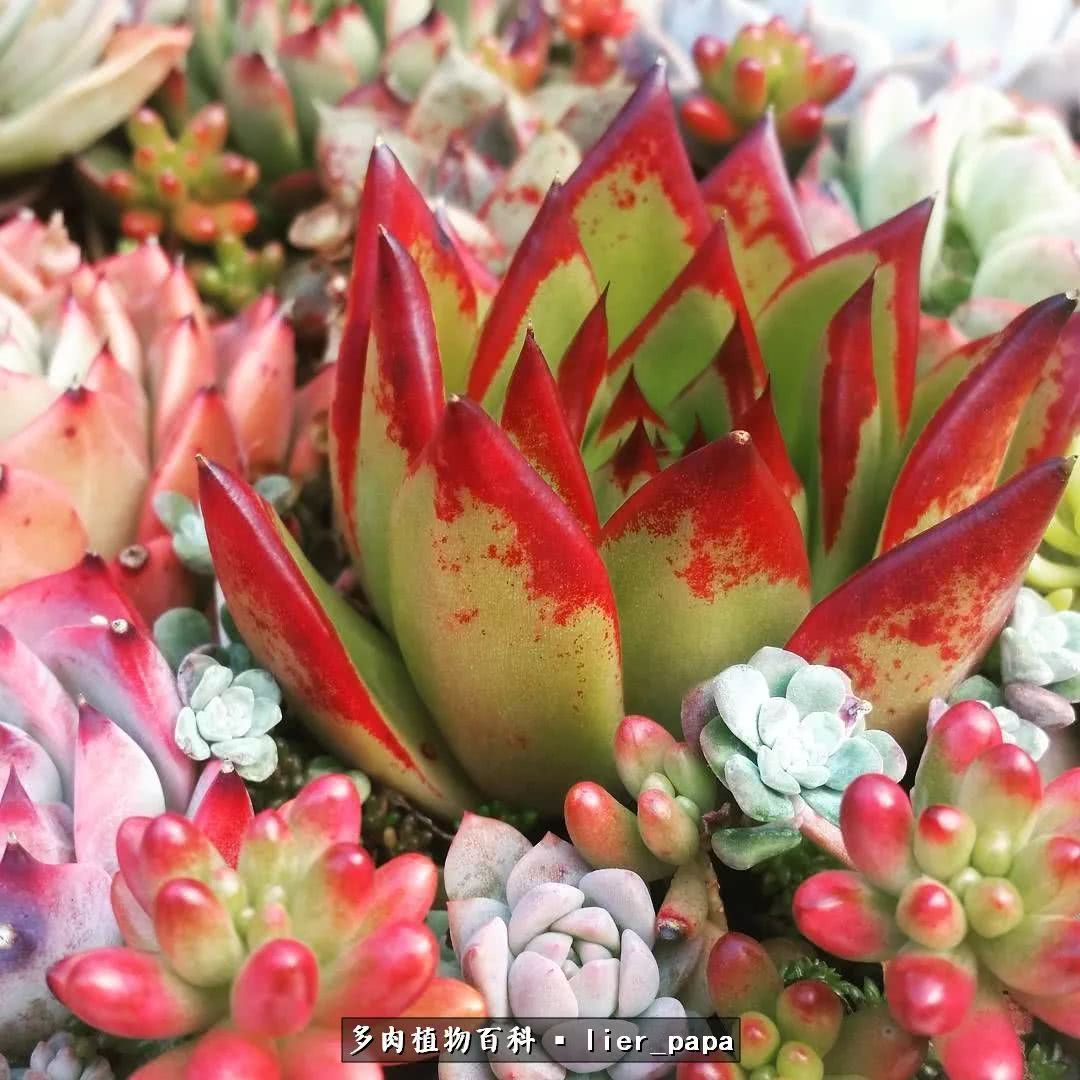
First, succulents have very cute forms and dreamy colors. I am extremely sensitive to color, and beautiful colors and shapes immediately grab my attention. I often think about focusing my gaze on these cute little things. For me, under enormous work pressure, they are like a fresh ray of sunshine in gloomy weather. With this feeling, I cannot say enough how surprising it is;
Second, there are super many succulent varieties, and I feel each succulent is more beautiful and alluring than the last, constantly stirring my curiosity;
Third, I always want to have all kinds of more succulents, hope for more beautiful forms, and collect more and more;
The above experience has almost become a common symptom among people who fall into the succulent pit. So,what exactly causes all of us to lose control and become addicted collectively? While we blindly pursue what we love, wouldn't it be even more interesting if we could know the truth behind it?
In the book "The Pleasure Circuit," the author uses very vivid language to explain clearly from the perspective of neurobiology why people become addicted.
The Brain's Pleasure Circuit
Simply put, it is this process,trigger event - dopamine neurons in the brain are activated - target neurons release dopamine - a feeling of pleasure is produced, and this process is what the author calls the pleasure circuit.
That is to say, once a person comes into contact with succulents, no matter which factor brings this person a joyful mood, this individual's pleasure circuit is officially activated. These factors may very likely be relieving stress, releasing emotions, alluring colors, and so on, anyway, in short, it is these various factors that activate the neurons of the pleasure circuit in the medial forebrain bundle of the brain, causing the target area in the ventral tegmental area to release dopamine. It is precisely this dopamine that makes us feel happy. To put it simply, the nervous system is stimulated, only it is positive stimulation rather than negative stimulation. The pursuit of happiness is a human instinct. Driven by the pleasure circuit, everyone is desperately pursuing happiness and controlling happiness. Once happiness is obtained, one wants to maintain it for a long time, and this is addiction.
Addiction Is a Way of Learning
Addiction is not formed overnight, but is the result of accumulation over time. Once we obtain happiness from an addictive behavior, we connect this behavior with the pleasure it subsequently triggers. After repeating it several times, our brain is constantly stimulated and obtains satisfaction again and again. Over time, this leads to "behavioral addiction."
After understanding the biological basis of our addiction to succulents, let us look at how succulents manipulate us into addiction.
The author David Linden showed through experiments that six methods - information, games, gambling, donation, eating, and exercise - can each activate the pleasure circuit in our brain, making us feel good and thereby making us addicted.
Information
Just like drugs, people can also become addicted to information and news.
When first encountering succulents, the plump leaves, the alternative rose-like posture, the fresh colors, the novel appearance, the unique flower pots, the various succulent arrangements..., succulents convey too much information to us. All this information is thrown at us, and then our brain's pleasure circuit is constantly manipulated, and we have not the slightest intention of resisting. Instead, we are incomparably excited and extraordinarily delighted. (Readers here can compare themselves: I myself could not pull myself out after seeing the rose-like form and bright colors of succulents. At the same time, I also tirelessly browsed all kinds of articles related to succulents, almost reading through all the articles online.)
Merely having succulents exist is not enough. Various forums, WeChat public accounts, and apps all feature succulents. Succulents are practically a top-tier internet celebrity.
Games
A large part of the reason games can strongly stimulate people's pleasure circuit isthe sense of competition in games。
When I see other people's "peach eggs" are so cute, I also want to grow an even cuter peach egg; after choosing a good pot for my succulent, I always feel others have matched their pots better, so I start researching how to switch to a pot with more artistic conception; once I have a satisfactory pot, I then feel the succulents in the pot are not arranged with as much layering and artistic sense as others', so I start rearranging and combining the succulents; not to mention how envious and jealous a beginner like me is when seeing other people's old stems... We are competing all the time, competing with ourselves, competing with others, and the sole source of the problem is still that succulent.
Gambling
The human brain is born loving the pursuit of uncertain pleasure, so humans are naturally fond of obtaining pleasure from risky events. We like gambling not because we need to obtain the initial reward, but because "uncertainly obtaining a reward" itself is pleasurable.
After planting succulents, we observe and hope every day. If they grow a little or remain unchanged, each succulent changes differently, and these uncertainties bring us pleasure every day. Of course, it is also possible for succulents to suffer total wipeout. This situation is miserable, and internally it must feel similar to losing everything in gambling. But more often, because we like them, we still start again buying, buying, buying, and then planting, planting, planting, only we begin summarizing all kinds of growing experience, much like the grandpas and grandmas who love playing mahjong, always chattering and commenting on the reasons for winning or losing each round.
In addition, increasing investment is also a major manipulative factor
The more we come into contact with succulents, the less we can leave them. Visiting flower markets, buying succulents, then buying pots, buying soil mixes, nutrient solutions, insecticides, constantly cycling. At home we move pots in and out, and almost every day the giving never stops. The more we give, the more emotionally attached we become, the more unwilling we are to let go, and the more immersed we become in the succulent pit, unwilling to jump out. If by accident, one day because of our ignorance or laziness, succulents will even give us outright punishment, such as black rot, turning to water, sunburn, and so on.
So, after knowing how we are manipulated, what should we do?
Perhaps we can guide ourselves to only view succulents, whether online or offline, because obtaining information is also one of the ways to press the button of the brain's pleasure circuit. In this way, we do not have to make the home full of sand everywhere every day and then get scolded by family members;
Of course, we can also use this as a reason to set ourselves an ambitious goal, for example, being able to live in a villa after a certain age and have a succulent garden, using the pleasure circuit to achieve this ambitious goal, because we never tire of it;
After succulent sellers understand the biological principles of the human brain's pleasure circuit, they can, according to the manipulation buttons described above, find ways to more specifically design manipulations for us succulent fans, hehe!
Advertisement ADVERTISEMENT
This article has beenexclusively authorizedby the author to the WeChat public account: Succulent Plant Encyclopedia (ID: duoroubaike). The article content does not represent the views and stance of the public account.
- Review of last issue's wonderful pushes -
- Baike essential articlesrecommended -