Succulents can also be planted in the ground, growing more and more vibrant
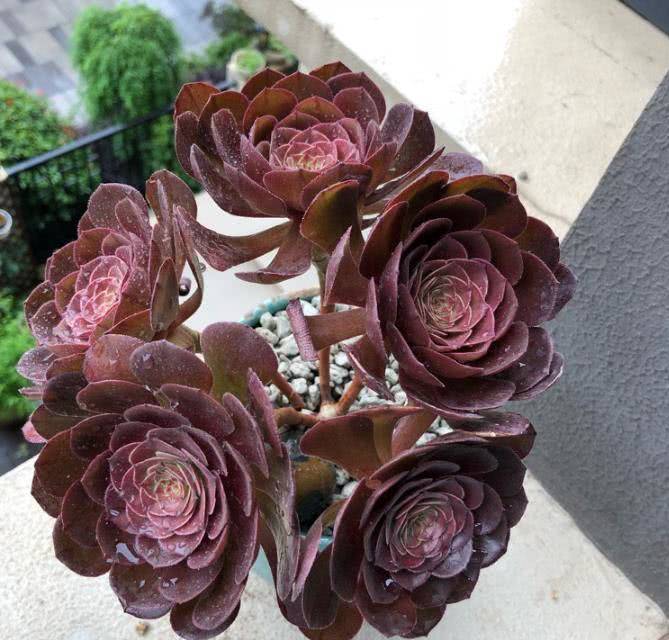
For succulents planted in the ground, the soil mix doesn't need to be as demanding as for potted plants. Generally, for ground planting, use 90% yellow sandy soil, then add coarser gravel, because yellow sandy soil is relatively fine and doesn't retain water. You can spread about ten cm of soil mixed with stones on the ground in advance, so drainage is basically not a problem. If you're really worried about mixing the soil poorly, you can buy some pre-mixed soil.
Pay attention to the pest problem with ground-planted succulents. The common one is slugs, though they're not that common either, and are less common than root mealybugs and scale insects. Just spray pesticide irregularly. Compared to potted plants, where the most harmful are scale insects and root mealybugs, with ground planting only one plant has been observed to get them so far, and after a plant that had scale insects was moved to ground planting, without spraying anything, they were basically gone after a while. Caterpillars and green worms all preferentially chose potted plants, while ground-planted ones had relatively far fewer, so for my ground-planted ones I basically used no pesticide.
How should you create a landscape for ground-planted succulents on a balcony? To keep every pot of succulents you combine looking as perfect as possible, you need to reserve enough growing space for them based on their growth characteristics. Also pay attention to the growth forms of succulents - there are trailing types, rosette types, branching types and coral types, and so on - and you also need to combine them according to their growth habits. Combining succulents with different habits brings a lot of inconvenience in watering and sunlight, so you must take these three points into consideration when combining them.
Succulents need well-draining neutral or slightly acidic soil, a temperature of 10-28 degrees, not exceeding 35 degrees or below 5 degrees, and generally don't need much water. Succulents like light but avoid direct strong sunlight, and require soil that is loose, breathable and well-draining, but with some water retention capacity, neutral or slightly acidic. It's recommended to use a mixed growing medium of large-grain akadama and hyuga pumice, with some rice husk charcoal or smoked charcoal mixed in. Another growing medium formula is peat soil, perlite and rice husk charcoal; this formula has the feature of greater fertilizer effect and lighter overall weight.
The more vigorously a plant grows, the more confidently you can water it, but you must still stick to the basic principle of watering thoroughly only after the soil has dried out. If a plant is listless and its leaves are shriveling, check the roots before deciding whether to water. Watering should be done according to its growth state. Whether it's a winter-dormant or summer-dormant species, stop watering into the pot during the dormant period. In summer, you must sun the water in the planting space and other places to maintain a certain air humidity, and you can use a spray bottle to make mist. Plants in their vigorous growth period should have their water needs fully met. Water at the roots of the plant, not from the center of the leaves, otherwise rot will occur.
Growing succulents outdoors is more like a cultivation method and a pursuit of mindset, rather than like doing an experiment where you must reach a certain light intensity, receive a certain amount of rainfall, and tolerate high temperatures for a certain length of time to meet a series of quantified indicators. That's not called outdoor growing, that's called a survival experiment. So when someone says their succulents are grown outdoors, what they may mean is that they share the rain and dew for long periods, rather than having the sun, wind and rain all monopolized by them at all times.
This is a gathering place for succulent lovers, sharing succulent care tips. Welcome to follow and connect.