Succulents fear muggy heat. Learn how to cool them down like this when caring for them at home.
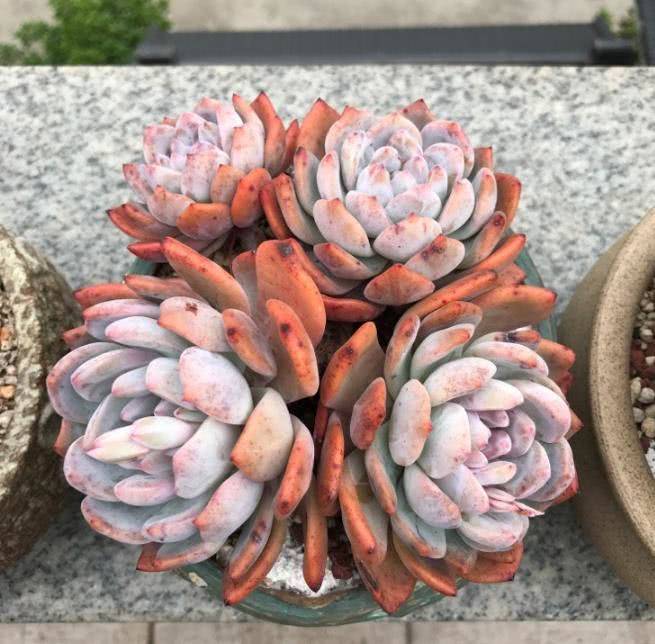
In summer, succulents are affected not only by light but also closely by changes in moisture. Water has the function of absorbing heat, so spraying water on succulents in summer has a cooling effect. During periods of high temperature in summer and autumn, drought and lack of water can easily cause succulents to dehydrate, leading to wilting, and in severe cases, death. Therefore, in summer, although you cannot water heavily, you should promptly spray water around the succulents and on the ground to increase soil and air humidity and lower the temperature.
For the growing environment of succulents, the temperature should not be too high, so exposure to direct sun can easily cause sunburn. They prefer a relatively comfortable environment, so keep ventilation, and remember to water every day. As for the soil, do not use soil that has clumped; if it is too dry, keep it breathable and well-draining. Succulents prefer an environment with sufficient light, but this kind of plant is still relatively delicate, so it must not be exposed to direct sun, especially as summer is approaching. Succulents need to be placed in a relatively shady spot to avoid direct sun.
If succulents get sunburned in summer, we can move them to a ventilated, shady place to let them rest, spray a little water to increase air humidity, and for those leaf tips that have already become scorched and black, you can simply cut them off. If exposure to direct sun causes the leaves to turn to mush, then remove the mushy leaves. For plants that can be propagated by leaf cuttings, you can use the method of beheading and leaf cuttings.
Because direct sunlight in summer raises the soil temperature, in order to suppress the rise in soil temperature around succulents, you can spread some wood shavings at the base of the succulents or cover the ground with bark, straw, etc., to suppress the rise in ground temperature. At the same time, the covered ground can effectively prevent soil moisture from evaporating and avoid succulents drying out and withering. If sunburn spots appear, they are generally permanent, but sometimes over time the traces of the sunburn spots will fade. If there are mushy leaves, remove them; if black rot can still be saved, dig out the black rot.
Some succulents do not like sunlight very much and are more suitable for care in diffused light, such as succulents in the Haworthia genus; the most representative is Haworthia cooperi. For this type of variety, too much light will cause the leaves to sunburn and turn black, which is very difficult to save, so attention is needed. In summer, avoid high temperatures and direct sunlight. Growers need to promptly move them indoors or to a shaded place for care to prevent strong direct light, but diffused light is needed. If conditions allow, growers should ideally hang shade netting on the balcony or in the courtyard.
When succulents are sunburned, is it enough to just move them out of the sun? No. When succulents are sunburned, it means the temperature in that area is relatively high. Do not forget that residential buildings absorb heat during the day and release heat at night, so they need to be moved to a more ventilated place, and the temperature must be a bit lower than before. After heavy rain, if succulents are grown outdoors, never put them directly in the sun after watering thoroughly, and when watering, try not to spray the leaves.
This is a gathering place for succulent lovers, sharing succulent care tips. You are welcome to follow and exchange ideas.