How do you grow succulents thick and sturdy? Eight care points beginners should note
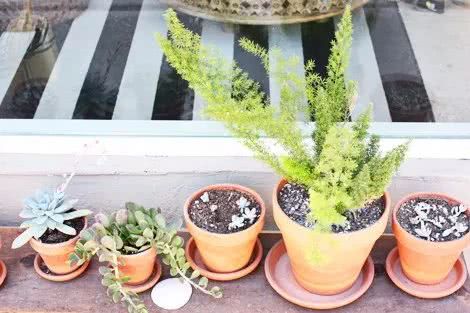
The care methods for succulents are different from those for other annual and perennial shrubs and green foliage plants and flowers. Succulents are very drought-tolerant, very easy to care for, and come in all sorts of shapes. Once you grow one pot, you want to grow several more, but after one summer, of the dozens of pots of succulents kept at home, basically only a few are left. All eight of the following care points need attention.
1. Choose robust, cold-tolerant succulents
There are very many varieties of succulents. Beginners can choose some plants that are cold-tolerant and adapt very well to their environment, such as the common Sedum or Sempervivum succulents.
Choosing cold-tolerant plants does not mean letting these succulents be cared for under extreme conditions for long periods. You can grow succulents with thick skin, such as hard-leaved Haworthia succulents.
2. Plenty of direct sunlight
Many plants and flowers cannot be exposed to too much sunlight, but succulents need as much light as possible to grow well. However, when summer temperatures are too high, they need appropriate shading. When temperatures are high, the afternoon sun is especially harsh, so you need to pull a shade net or move them to a semi-shaded spot to avoid excessive sun exposure.
In fact, summer is the hardest time for succulents to get through. After temperatures exceed 33 degrees, combined with strong direct light, the plant leaves are easily damaged. This is also why many flower lovers' succulents easily die in summer. In summer, besides appropriate shading, you should also promptly clean up fallen leaves at the bottom of the pot and at the base of the stems and roots.
3. Soil choice
Some friends think sand can be used directly to grow succulents. In fact, succulents need good drainage, but growing succulents directly in pure sand is not a very good choice. It drains too well, and when water is poured into the sand it quickly disperses, so the succulent's roots cannot absorb water.
You can choose to grow them in cactus soil, or use peat soil mixed with perlite, and you can appropriately add river sand. This kind of soil drains well and is also very loose, breathable and airy.
4. The difference between succulents and cacti
Personally, I think succulents and cacti are actually different. Most cacti are considered succulents, and cacti are classified among succulents. What do you think?
Common succulent plants include Echeveria succulents, Sedum succulents, Euphorbia succulents, Sempervivum succulents, Aeonium succulents, Sedum succulents, Graptopetalum succulents and Haworthia succulents.
Succulents and cacti are not the same thing. Most cacti are considered succulents, but some are not. Not all succulents are cacti. These would include Echeveria succulents, Sedum succulents, Euphorbia succulents, Sempervivum succulents, Aeonium succulents, Sedum succulents, Graptopetalum succulents and Haworthia succulents.
5. The weather succulents can adapt to
Succulents are fairly good at adapting to their environment. For the succulents you buy yourself, you must first understand their environmental needs. Different succulents have slightly different care methods, though the care methods are roughly the same.
Succulents all dislike places that are too humid. Keep ventilation good. When the temperature is above 5 degrees, succulents should be grown outdoors, with appropriate shading in summer. Below zero degrees they are prone to frost damage, and succulents can only grow under brief low temperatures; in continuously cold environments, the leaves are easily frost-damaged and rot from the temperature.
6. About succulent poisoning
Many succulents can be eaten, but you must avoid accidentally eating them casually. Many succulents are toxic, and some only cause poisoning when ingested in large amounts. This is especially true of Euphorbiaceae succulents; the succulents in this family and genus are all toxic, such as the common Euphorbia neriifolia, Euphorbia tirucalli and Euphorbia milii.
7. Drainage of pot soil
Apart from shading in summer and cold protection in winter, the most critical thing for succulents is the drainage of the pot soil. Too much water is the cause of most succulent deaths.
The flower pot for growing succulents should be loose and breathable with good drainage. The soil needs to be loose, well-draining sandy soil. Add some granular stones at the bottom of the pot to prevent the soil from clogging. Before watering succulents, check whether the soil has dried out completely.
8. The key of ventilation in care
Growing succulents requires a particularly well-ventilated environment and fresh air. Succulents cannot grow well in a closed environment. This is also why I do not recommend growing succulents indoors.
In a poorly ventilated environment, water cannot transpire, mold easily breeds, and this can cause succulents to be infected with root rot or leaf rot.
The soil also needs good drainage. Water accumulating at the roots can also cause root rot. Also, be careful not to grow succulents in glass containers, and do not grow succulents directly against a window, otherwise the leaves are very easily scorched.