7 trailing succulent plants that can grow into a curtain on a windowsill
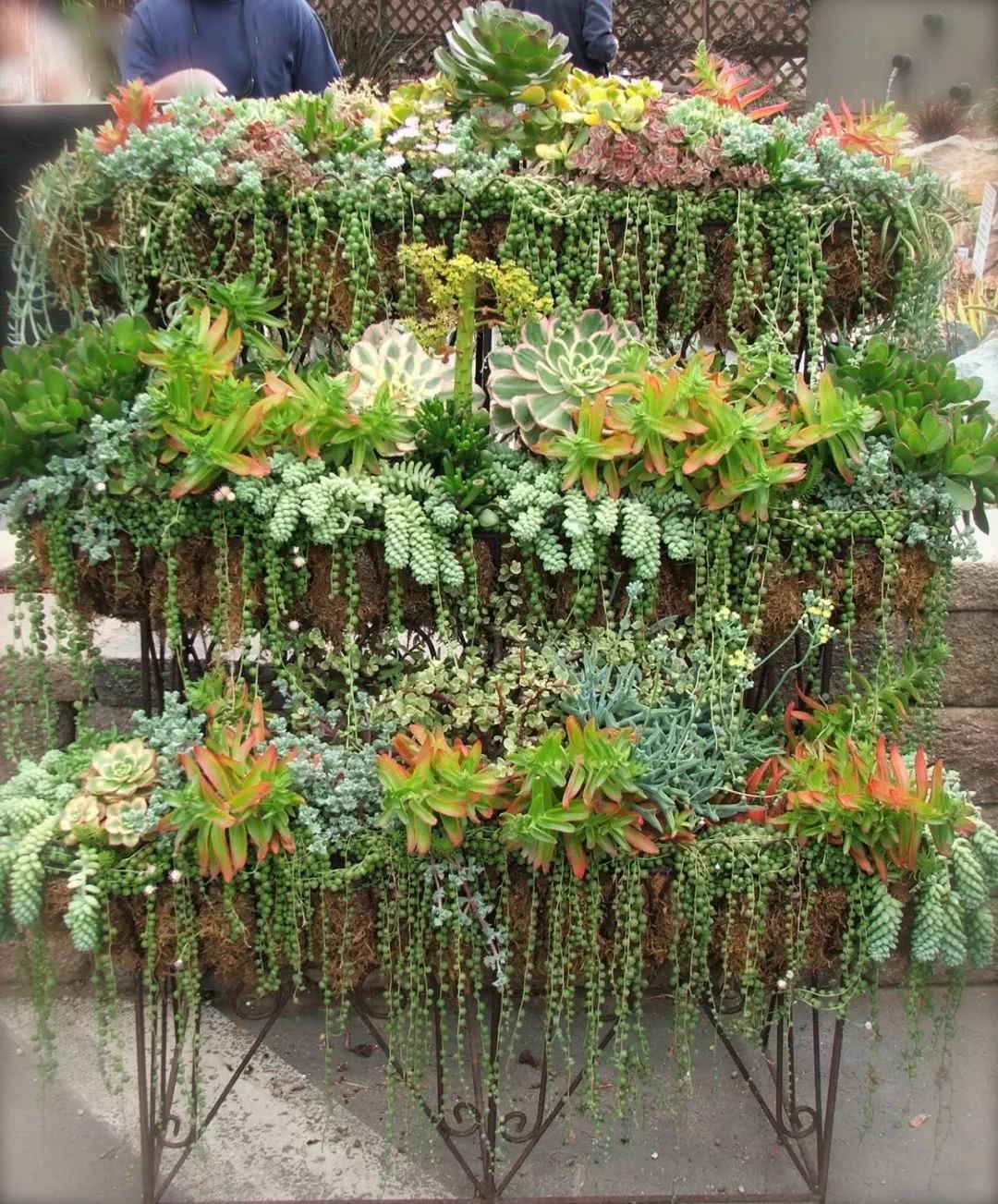
If you are someone who loves growing hanging basket flowers and also happens to be very fond of succulents, then the 7 succulent plants below are perfect for you. They are very well suited to being grown in hanging baskets, and a windowsill with proper light is the most suitable spot. Their forms are all different, so let's take a look at what they are.
7 succulents that can grow into something like a curtain:
1. Burro's tail
Burro's tail (Sedum morganianum) is a very beautiful Sedum succulent. It was also the first succulent I ever came to know, and it is suitable for hanging on a windowsill. It has very long stems and very small, densely packed leaves. It is also a succulent that is easy to care for, liking a warm and slightly dry environment year-round. The growing spot should be well ventilated with proper light, with appropriate shade in summer, and it should be protected from freezing.
2. Mistletoe cactus
It is a succulent with a very unusual appearance, like a pencil cactus in a hanging basket. Mistletoe cactus (Rhipsalis baccifera), also called ribbon cactus or cactus stick, is a succulent with very vigorous stems that keep growing longer. It likes a warm and humid environment year-round and does not need frequent watering, but it does need higher air humidity, and it can produce extremely small white flowers.
3. Burrito
Burrito (Sedum 'Burrito') looks a bit like burro's tail, but its leaves are thicker and fleshier, and the leaves are blue-green, making it look very charming. It is actually a succulent developed by hybridization, and it can be hung in front of a window for growing.
Growing burrito is also very simple. It needs loose, well-draining sandy soil and proper light, and the growing environment should stay warm, slightly dry and well ventilated. It needs appropriate shade in summer and should be protected from freezing.
4. Ruby necklace
Ruby necklace (Othonna capensis) is a very common hanging basket succulent. It has crisp, tender leaves and purple-red stems, and the leaves turn purple when sunlight is especially plentiful and the temperature difference is large, making it look especially attractive.
The stems of ruby necklace can keep growing longer, and when there is plenty of sunlight it can produce yellow flowers. The growing spot needs ample light, though it can also grow in partial shade, but the leaves will turn green. It does not need frequent watering, and the best minimum growing temperature is kept above 7 degrees.
5. String of hearts
String of hearts (Ceropegia woodii) is a succulent that grows by hanging. Its leaves are not very thick and fleshy, and the small heart-shaped leaves have many patterned markings. The stems grow especially long, and it produces very strange flowers; the pink one in the picture above is its small flower.
When growing string of hearts, avoid frequent watering. It grows swollen tubers at the base of its stems and roots, which are used to store water. With proper care, tubers will also grow on the stems, and cutting off a section and inserting it into soil will propagate it.
6. String of pearls
String of pearls (Senecio rowleyanus) actually has two different forms. The one above, string of pearls, is also known as Buddhist beads, and its leaves are round and plump. There is another kind whose leaves are teardrop-shaped, called "lover's tears." The care method is the same, and it can produce small gray daisy-like flowers.
String of pearls likes loose, well-draining soil. The growing environment should stay ventilated, warm and slightly dry year-round. It does not need frequent watering and is especially easy to care for.
7. String of nickels
String of nickels (Dischidia nummularia), also called button orchid, is a succulent with a very unique appearance, with strings of coin-like leaves. The leaves are flat, and with proper care they will grow somewhat thicker and fleshier.
This is an especially easy-to-care-for succulent that does not need frequent watering, but it does like somewhat higher air humidity. The growing environment must stay ventilated, and it should be kept out of enclosed spaces.
All of the succulents above can be grown into hanging basket flowers like curtains, and the strings of leaves hanging down look very beautiful. Can you grow a potted plant as impressive as these?