How to make a Podocarpus bonsai? A full breakdown of the detailed methods and steps
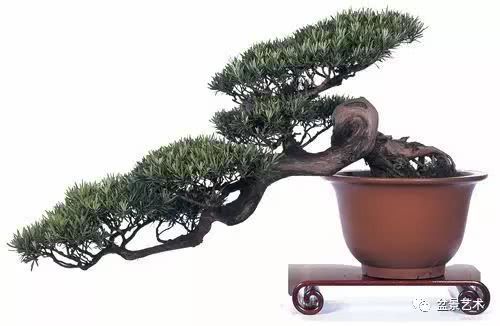
Podocarpus (Podocarpus macrophyllus) is an evergreen small tree of the Podocarpaceae family. It stays green all year round, has narrow long needles, deep green color, rugged branches and a long lifespan, and is a commonly used tree species for making bonsai. Among them, the Queshe podocarpus (Podocarpus macrophyllus 'Maki'), whose leaves grow only 2 cm long, has a graceful tree shape and is a valuable tree species for making bonsai. Podocarpus likes a warm and humid environment, is fairly shade-tolerant, and prefers fertile, loose, well-drained, slightly acidic sandy loam soil. Its bonsai-making method is as follows:
I. Seedling sources
Small podocarpus seedlings for bonsai are usually obtained through artificial propagation methods such as sowing and cuttings. There are also wild podocarpus plants in the mountains and fields, generally growing in rock crevices. You can choose to collect those with dwarf plants, ancient and elegant branches, and graceful forms.
II. Styling
1. Potting
Podocarpus is usually potted before it sprouts in spring, and the potting soil should be loose, well-drained, slightly acidic sandy loam. Because podocarpus has a simple, ancient and elegant posture, it is suitable to use a purple clay pot or glazed ceramic pot for cultivation, and the pot shape is determined by the tree shape.
2. Styling
The styling of podocarpus is mostly carried out during the dormant period, mainly by wiring, with pruning as a supplement. Because podocarpus branches are soft and easy to wire, and can also be pruned, its styles are diverse. Common forms include curved-trunk style, slanted-trunk style, reclining-cloud style, cascade style and exposed-root style, etc. The branches and leaves can be pruned into flat layers or bun shapes.
3. Care
(1) Location
In summer, podocarpus should be placed in a warm, humid, well-ventilated place, and in winter it should be placed indoors at above 5°C. But the temperature should not be too high, so as not to affect its dormancy.
(2) Watering
Podocarpus likes moist soil. During the growing season, it should be watered frequently to keep the potting soil moist, but water must not accumulate in the pot. In summer, frequently spray water on the leaves or the ground to keep the leaf color bright and beautiful.
(3) Fertilizing
Podocarpus that has already been shaped should not be fertilized too much. Usually during the growing season, apply a diluted decomposed liquid fertilizer once every 1 month, and stop fertilizing after autumn begins.
(4) Pruning
Podocarpus should be pruned frequently to maintain its tree shape. When it blooms, it is best to remove the flower buds in time to avoid consuming nutrients.
(5) Repotting
Podocarpus is usually repotted once every 2-3 years. It is generally done in March-April.
(6) Pest and disease control
Pay attention to the prevention and control of pests and diseases, especially in summer and in high-temperature seasons, and pay attention to the control of scale insects and red spider mites.