Case Study: Common Causes of Death for Succulents in Summer, with Solutions
Getting succulents through summer is like surviving a tribulation. Based on the common causes of death for succulents in summer from past years, I have worked out 6 tips for getting succulents through summer. Succulent lovers who do not know how to get through summer can take a look.
Succulents fear damp heat and poor ventilation, and are prone to black rot in summer. The hot summer is about to arrive. Are your succulents doing well? Are you ready to welcome this summer?
Let us first take a look at a batch of succulents that died that summer!
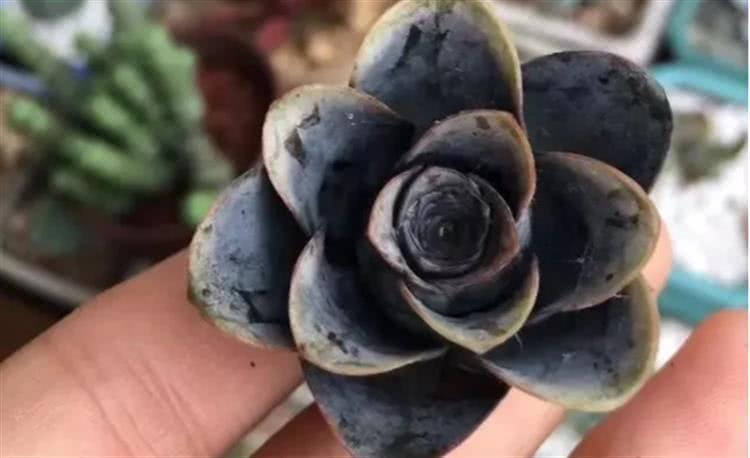
The Echeveria 'Yero' turned into a black rose
There was a heavy rainstorm the night before. The cup-shaped Yero must have caught a full cup of water. When the sun blazed down at noon the next day, it quickly turned black.
So the first essential of getting through summer: check the local weather forecast every day, prepare a rain shelter in advance for outdoor-grown plants, and put up a protective umbrella for your beloved plants. If they are not sheltered from rain, promptly blow away the water droplets gathered in the leaf centers, and provide shade in time when the temperature exceeds 30°C after the rain clears.
The bouquet-shaped Echeveria 'Chuxian' developed black rot and fell apart
The cause of death for this bouquet-shaped Echeveria 'Chuxian' was pests. There were always small white bugs on the potting soil and stems. I did not use professional insecticide. I heard people say that soaking tobacco shreds in water and pouring it on the roots would work, so I did that. I watered thoroughly with the tobacco water, left it for a week, and when I went to look again, it was already beyond saving.
So the second essential of getting through summer: kill and prevent pests early, and make good use of professional insecticides. For pest prevention in succulents, use insecticide regularly.
Besides the parasitic pests visible to the naked eye on the surface of succulents, there may also be insect eggs in the potting soil. Regularly watering the roots with a chlorothalonil solution and Huahuashen together with watering can effectively kill bacteria and insect eggs. You can also mix insecticide into the soil for long-lasting pest prevention.
It was probably because Echeveria 'Lilacina' and two Lithops were living together too crowded, so despite the summer heat I forcibly moved them to a more spacious home. The tragedy was that all three of them died.
So the third essential of getting through summer: if you can avoid messing with your succulents, do not mess with them. Repotting in summer can easily kill succulents. In fact, succulents also like stability.
This pot of Echeveria 'Yudie' barely escaped with its life from summer, but tragically froze to death in early winter.
Everyone says Echeveria 'Yudie' is the king of black rot. I saw that my Echeveria 'Yudie' still looked so spirited in summer, so I thought it was fine. Who knew that becoming leggy and turning blue were signs before black rot. After discovering black rot on the stem, I immediately beheaded it. There had originally been 14 heads; I gave away more than half and kept 5, all of which rooted and survived after planting. Who knew it would ultimately freeze to death.
So the fourth essential of getting succulents through summer: watering in summer should be scheduled at night or on cloudy days, and after watering, ventilate promptly. In environments with poor ventilation, use an electric fan.
Seeing that a few leaves were still healthy, I promptly removed the black-rotted leaves. While the soil was relatively dry, I removed the soil and let it dry for two days, trimmed the roots, and planted it again. I also mixed some carbendazim powder into the soil. This succulent actually came back to life, and now it has even put out two small heads.
So the fifth essential of getting succulents through summer: detect early and treat early. As long as succulents still have a glimmer of hope, never let them fend for themselves.
These were the first batch of succulents when I first got into the hobby. Both the Black Prince and Echeveria 'Yudie' passed away, and the others all grew into old clumps.
Fortunately, in recent years the losses in summer have been very, very few, because before summer arrives each year I do my homework thoroughly. In spring, while fertilizing the flower pots, I also bury systemic insecticide to kill both adults and eggs.
I specially bought an electric fan. Every time after watering, I use the electric fan for more than an hour. I check the weather forecast every day and water depending on the weather. When the temperature is too high, I reduce watering. When watering, I mix in carbendazim, and I put up shade netting at the right time.
So the sixth essential of getting succulents through summer: prevention is greater than treatment. Prevention mainly means preventing black rot and sooty mold. Black rot and sooty mold are mostly caused by damp heat and poor ventilation. The culprit of black rot, Fusarium oxysporum, spreads especially quickly in hot and humid environments. Controlling water and improving ventilation can effectively prevent it.
Sooty mold is mostly caused by pests biting succulents and causing wound infections, combined with poor ventilation, so preventing pests plus improving ventilation is enough to prevent it.
Come on, friends. Once summer is endured, succulents will be beautiful in autumn and winter. Also, does anyone have any good methods for getting through summer?