How do you grow ranunculus (Persian buttercup) so it blooms quickly?
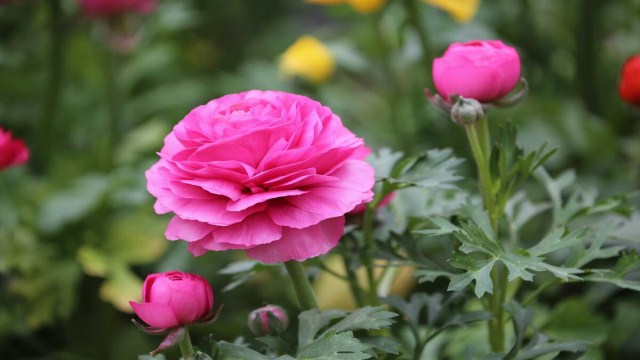
1. Transplant at the right time
When it has grown 3 to 4 leaves, find a pot with a diameter of 16 cm and transplant it into it. The potting soil is made by mixing leaf mold, garden soil, coarse sand, plant ash and so on, to ensure the soil's looseness and drainage. After that, water it thoroughly and keep it in a relatively shady place for care; it must not be exposed to direct sunlight.
2. Control the temperature
After Frost's Descent arrives, that is, when the weather starts to turn cold, if you are in the north, you need to move it promptly into a lower-temperature greenhouse, or place it on a balcony, and keep the temperature between 10 and 20 degrees; it must not exceed 30 degrees, otherwise the leaves will turn yellow from the stuffy heat, and the rhizome will also rot easily. At the same time, when it reaches the bud stage, you should also pay more attention to the temperature; it is best to keep it between 7 and 10 degrees, which can make the flowers open earlier.
3. Apply appropriate topdressing
It is extremely fond of fertilizer, so during care, fertilizer is very important to it and should be applied once every week; use not only organic fertilizer but also inorganic fertilizer. For the first fertilization, liquid fertilizer made from chicken and pig manure is best, and make sure the concentration is appropriate; for the second fertilization, mainly use monopotassium phosphate at a concentration of 3%; for the third fertilization, mainly use inorganic fertilizer. Used in rotation like this, it can make the flower buds begin to differentiate earlier. If the early bud stage is half a month before the Spring Festival, then it can bloom by the Spring Festival.
4. Thin the buds appropriately
When its flower buds first appear, you should thin the buds appropriately, leaving only 3 to 5 robust buds, so that its flowers will be larger and more ornamental. After it blooms, you should also cut off the spent flowers in time to prevent the loss of nutrients, so that it can produce more flowers.