Red Maple Bonsai Shaping Methods and Daily Care Tips
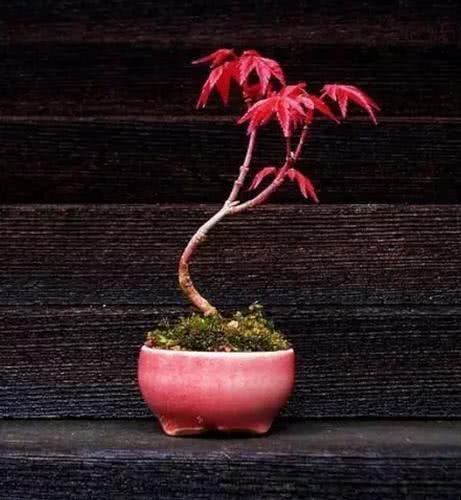
"I stop my carriage to enjoy the maple woods at dusk; the frost-covered leaves are redder than the flowers of February." This is the ancients' praise and love for the red maple. Red maple leaves have a festive feel, and whether placed in a courtyard or indoors, they can give people a completely refreshed feeling, which is why they are so widely loved.
To create an extremely ornamental red maple bonsai, you have to put in real effort during the production process. Bonsai making is based on the characteristics of the material, bringing out the natural beauty of the plant. Red maple bonsai can be divided into many styles, such as the double-trunk style, slanting-trunk style, and cascade style, though the double-trunk style is more common. Those plants that are short in stature with slender, weak branches are most suited to the double-trunk style.
During the production process, too much soil cannot be retained around the roots, otherwise it will reduce the space inside the pot and be unsuitable for root growth. Before potting, the roots must also be trimmed; whether main roots, lateral roots, or fibrous roots, any that are too long must be pruned. The pot used for planting must be prepared before the plant is transplanted. A filter screen and small stones are essential; the bottom of the pot generally has a hole, so place the filter screen at the very bottom, covering the pot hole, and then add a layer of small stones.
After transplanting is complete, the next step is pruning and shaping the plant. During pruning, the main targets are the main branches and trunks that are too tall; the rest should wait until after shaping before being pruned. For shaping, it mainly relies on wrapping those small branches with aluminum wire; decide the direction you want, then guide the aluminum wire toward the ideal direction, so that those branches will grow in the ideal direction.
If you want a beautiful red maple bonsai, careful care is essential. For maintenance, generally start with factors such as soil, light, and water. For soil, ordinary potting mix is fine; after watering, it is best to place it in a semi-shaded, ventilated spot. As for water, be careful to water frequently, because unlike coniferous plants, red maple has a larger leaf area, so water loss is also relatively fast. Therefore, controlling the leaves is also a very important aspect, but be careful to choose the right time, otherwise the plant may be damaged.
Red maple also has a dormant period, so the winter dormant period is the best time for fertilizing; generally apply a nitrogen-phosphorus-potassium base fertilizer, and after fertilizing, prune it, and I believe that in the coming year it will make you feel it is even more vigorous. Pests are also bonsai killers. So pay attention to its health condition; once you find heart borers or other pests, handle them promptly. If there are not many, handle them directly by hand, but if there are quite a few, generally use omethoate or similar for treatment. I believe only careful care will give you an extremely ornamental bonsai.