Jade plant always gets root rot and won't grow well? So these are the reasons
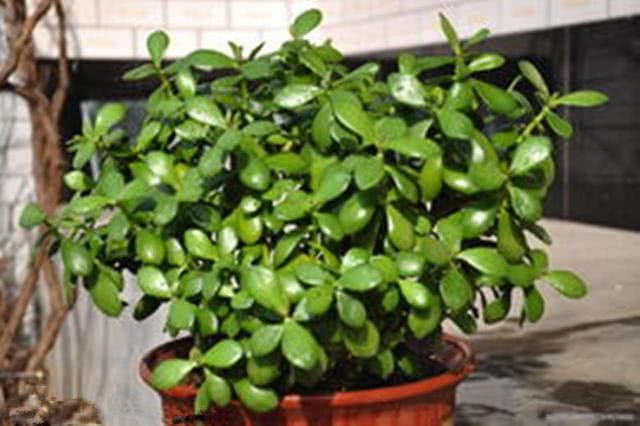
The jade plant is properly called Crassula ovata (jade plant); its leaves are emerald green and glossy, evergreen all year round, and on close inspection it has the graceful bearing of an ancient tree. It is very suitable for bonsai, elegant and imposing. The jade plant not only releases oxygen during the day, but at night it also has a function most plants lack: at night it can absorb carbon dioxide and release oxygen, freshening indoor air and increasing the negative ion concentration in the air.
The jade plant has very strong adaptability, likes sunlight, and tolerates shade and drought. It is not demanding about soil and is mainly grown in sandy soil, but the jade plant is not cold-tolerant and is rather afraid of frost, so when growing it in winter, be careful that the indoor temperature does not get too low.
Because growers water and fertilize potted flowers and trees incorrectly, all kinds of problems arise during cultivation, and a jade plant carefully grown for a long time can be ruined in an instant. It really is a pity. If root rot is discovered in time, this tragedy will not happen. Below are several simple ways to tell whether a plant has root rot.
Look at the potting soil. In summer and autumn, when a normally growing plant is watered thoroughly on a sunny day, check the potting soil at the same time the next day. If the potting soil is slightly dry and a little whitish, then the plant's root system is normal. If the potting soil is not slightly dry and whitish but still moist, then the plant has already begun to suffer root rot. If it is still like this after 2-3 days, then the plant's root rot is already severe.
Look at the leaves. If you have plants of the same type at home, you can compare them. If you find that one plant's leaves are not green and lack gloss, slightly whitish and yellowish, or the leaves have already wilted, and the lower leaves are dropping abnormally, then this shows that the plant's roots have suffered this kind of root rot because of waterlogging, too much fertilizer, or heavy watering after a period of drought.
Look at leaf shape and leaf tips. If the leaves become wrinkled or deformed, this also indicates that the plant's roots may already have rotted. If after being grown for a period the plant's leaves become scorched, there are two reasons. First, when the plant's roots grow and touch the pot wall, watering at high temperatures damages the root system, so water and nutrients cannot be delivered to the leaf tips. Second, the flowerpot used for planting is too large and the plant is small, so the plant in the pot remains in a waterlogged state for a long time, ultimately causing root rot.
The method for treating root rot is also very simple. Remove the rotted root parts, apply carbendazim to the plant's wounds, which can prevent infection, then place it in a ventilated and shady spot to dry. Replace all the previous soil with new soil or thoroughly sterilize and disinfect it, then sprinkle some water on the ground where the plant is drying to maintain air humidity. This way the plant will slowly produce aerial roots. Once the aerial roots have grown a bit longer, plant it into a pot. Do not worry; the jade plant has strong adaptability, and as long as it is thoroughly sterilized it will be fine. It will repair itself, abandon the mother plant, and grow roots from a healthy place.