These succulents don't go dormant in summer and are still growing, so getting through summer is no pressure at all
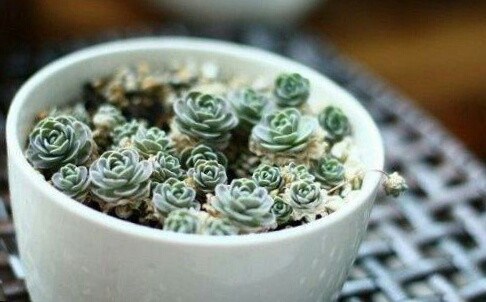
The Start of Summer has passed, and before I knew it, it was already mid-May. As temperatures keep rising, summer is drawing nearer and nearer. However, with the arrival of summer, succulents also enter the toughest season of the year. Because most succulents go dormant during the high temperatures of summer, yet succulent growers who don't know the truth still care for them the way they would during the growing season, which naturally leads to the plants' death. It is precisely because of the high mortality rate of succulents in summer that many growers turn pale at the very mention of "summer." At this time, however, some growers are still chatting and laughing cheerfully, not because their care skills are so superb, but because they have raised some succulents that are not afraid of summer. While other succulents go dormant in summer, these are still growing, so naturally they have nothing to fear. So which succulents grow in summer? Let's take a look together below!
Orostachys boehmeri (Chinese dunce cap)
[Orostachys boehmeri] Summer is the growing season for Orostachys boehmeri, so it gets through it quite easily, but you should provide shade while still maintaining light. If the temperature exceeds 40°C, stop watering immediately. In addition, when caring for Orostachys boehmeri, watering is generally done only when the soil has dried out completely, and then watered thoroughly; if it is not dry, do not water. In the hot summer, water generally 4 to 5 times a month, without soaking through, to maintain normal growth of the plant; watering too much in summer can easily cause rot. In winter, when the temperature drops below 5°C, gradually cut off watering; below 3°C, keep the potting soil dry, and try to keep it no lower than minus 20°C. Orostachys boehmeri rarely gets sick, but you need to watch out for pests, especially root mealybugs, because you cannot tell from the appearance whether there are root mealybugs. Once you find root mealybugs, throw away the infested plant, throw away the pot and soil entirely, and re-propagate from cuttings; otherwise it will affect other healthy plants.
White Peony (Graptoveria 'Titubans')
[White Peony] White Peony is small and exquisite, and looks very fresh and elegant placed on a table. It prefers an environment with plenty of sunlight and is not cold-tolerant, so summer is its growing season. During the care of White Peony, leggy growth often occurs. If the leggy growth is not yet very serious, only slight or showing signs of it, you can still let it slowly recover. Place White Peony in the sunlight, give it more sun, control water appropriately, pause fertilizing, and after a period of time it will gradually return to normal. But if the leggy growth is already very serious and the whole plant has become unrecognizable, then the only option is beheading. Fortunately, White Peony has fairly strong vitality and reproductive capacity; after beheading, replant the cut-off part as a cutting, and you can gain many pots of White Peony.
First Love (Echeveria 'First Love')
[First Love] Doesn't this succulent's name sound lovely just hearing it? Perhaps it is because of this loveliness that it likes to live in a warm environment, so summer is its growing season. During the care of First Love, this succulent is generally watered only after the soil has dried. Although the leaves do not easily get water on them and lose their farina, if water remains in the leaf center for too long, it can easily cause rot. First Love is a small to medium-sized plant, and depending on its growth state it should be repotted once every 1 to 2 years; the pot diameter can be 1 to 2 cun larger than the plant diameter, which promotes plant growth. In summer, once the temperature is above 35°C, use a shade net for shade, then gradually cut off watering; during the entire summer dormancy period, give little or no water. By mid-September, when the temperature drops, watering can be resumed. First Love that has adapted to a sunroom can still grow normally in summer, with dormancy not very obvious.
Dancing Swords (Portulacaria afra 'Medio-picta')
[Dancing Swords] Dancing Swords is also a succulent that gets through summer relatively easily, and it grows fairly quickly, so during care, pruning is a very important step; you can remove excess branches to maintain a beautiful plant shape. For shaping, you can use a combination of wiring and pruning. Common forms include upright trunk style, curved trunk style, slanting trunk style, cascade style, waterside style, and other different forms. In addition, Dancing Swords likes a dry environment and is drought-tolerant. Usually, watering should follow "water thoroughly only after the soil dries out," avoiding long-term water accumulation in the potting soil. In winter, water less and keep the potting soil dry. When the temperature is above 35°C, mist around the pot to increase air humidity. Do not let it stay out in the rain for long periods during the rainy season, to avoid root rot. In winter, keep the potting soil dry; it can overwinter safely at around 5°C.
Firestorm (Crassula capitella 'Campfire')
[Firestorm] Overall, Firestorm is a succulent very suitable for beginners to grow, but if the plant is not robust enough, do not let it stay in direct blazing sun for long periods, otherwise it will simply wilt from the sun. During the care of Firestorm, it rots very easily in an overly humid environment, so never water too much. To avoid water accumulating at the roots, it is best to choose a pot with drainage holes at the bottom; beginners can use a red clay pot with good breathability. Usually water about once every 10 days, and just water thoroughly each time; adjust watering frequency as appropriate according to climate differences in different regions and seasons. Firestorm should not be fertilized too much, especially with nitrogen fertilizer, otherwise it will cause leggy growth and the leaf color will not turn red. Apply a dilute fertilizer mainly of phosphorus and potassium once a month.