There's an art to giving flowers: how much do you know about these flower-giving taboos?
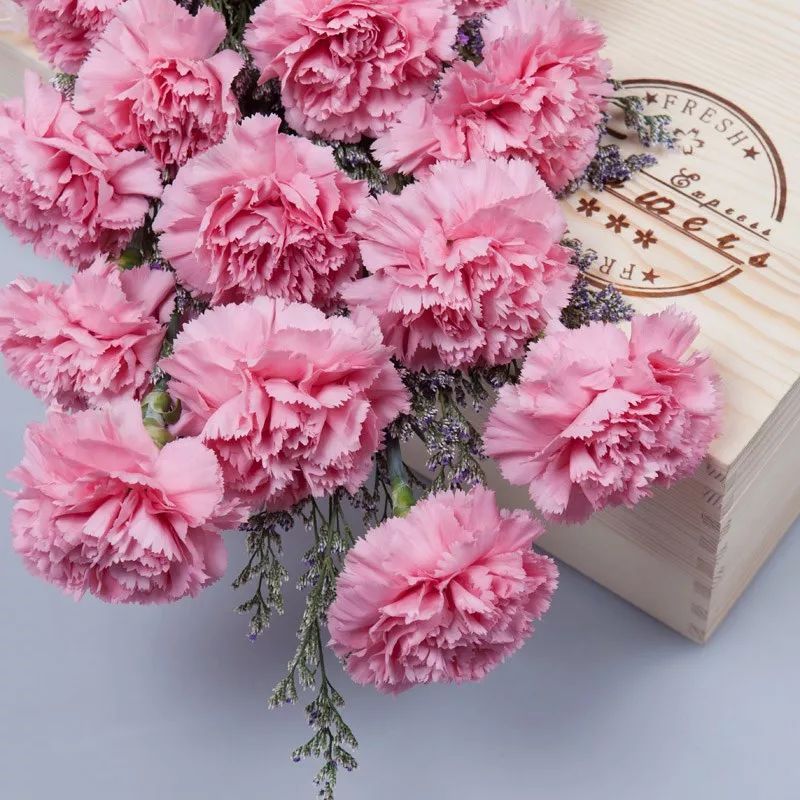
Flowers don't just cultivate the spirit and offer great ornamental value. Often, they are also a tool for emotional communication and exchange between people. On most occasions, we choose to give someone a bouquet to express our feelings.
But there is an art to giving flowers. For different groups of people and different occasions, the flowers given are not the same. Giving flowers is a very particular matter. Do you know the knowledge behind it? Come take a look with the editor, and next time you give flowers you won't go wrong.
Giving flowers to the elderly
The elderly sleep very lightly, and many of them suffer from age-related conditions such as high blood pressure or heart disease, so you must be careful when giving flowers. Some flowers must never be given.
Take night-blooming jasmine (cestrum nocturnum), for example. At night it releases large amounts of tiny particles that stimulate the sense of smell. Breathing them in for too long can make people with high blood pressure and heart disease feel dizzy, depressed and unwell, and can even worsen their condition, so it is very harmful to the elderly, among whom cardiovascular disease is common. When choosing fresh flowers, you can choose carnations, sunflowers, lilies and so on.
Giving flowers to businesspeople
Businesspeople mostly place great importance on the meaning of a gift. If given well, it can bring good luck, and of course the person receiving the gift will be happy too. For businesspeople, it is best not to give plum blossoms, because "plum blossom" (mei) sounds the same as "bad luck" (mei). Although plum blossoms represent noble and elegant character, when choosing flowers it is best not to choose plum blossoms, to avoid the recipient associating them with "bad luck" or "running into misfortune."
When giving fresh flowers to businesspeople, we can choose moth orchids (Phalaenopsis), peace lilies and so on; they are beautiful in appearance and carry auspicious meanings. In addition, lucky bamboo, money trees and the like are all very suitable for giving to businesspeople. As their names suggest, they attract wealth and treasure, so they are more than appropriate for businesspeople.
Giving flowers to people from different regions
Each place nurtures its own people, and different regions have different cultural customs, so the same flower may be well liked by people in some places while being somewhat taboo for people in others.
For example, in Mandarin, jasmine (moli) sounds like "mo li" (do not leave), so friends in the Jiangnan area may like it quite a lot. But in Cantonese, jasmine sounds like "mei lei" (no profit), so it is best not to give it to friends from Guangdong or Hong Kong, China. Gladiolus carries the meaning of rising step by step, so it is relatively popular with people from Wuhan, but some people don't like it much, because gladiolus (jianlan) sounds like "jian nan" (difficulty) or "jian nan" (facing hardship).
Giving flowers to pregnant women
Although the hydrangea is beautiful, it is not suitable for placing indoors. If the tiny particles released by the hydrangea flower come into contact with a person, they can cause skin allergies and trigger itching; it also has the side effect of disrupting hormones, and is especially harmful to pregnant women.
So when giving flowers to a pregnant woman, never give hydrangeas. Some flowers with stimulating odors, strong fragrances, or bright colors are actually not very suitable either. Lily of the valley is a relatively suitable flower; it is extremely beautiful and can also eliminate some bacteria in the air.
Giving flowers to foreigners
The cultural differences between the West and the East are quite large, which means there are many taboos we must pay attention to. If fresh flowers are given wrongly, not only will they fail to strengthen friendship, they may even invite annoyance. For example, many people in China like the noble quality of the lotus, but some Japanese people consider the lotus to be connected with death, so when giving flowers, it is best not to give this flower. Some French people think yellow flowers carry a meaning of disloyalty, so when giving flowers to French friends, it is best not to choose yellow flowers.
Also, the number of flowers given sometimes needs attention. For example, in Japanese, the pronunciations of "4" and "9" are close to those of "death" and "toil and hardship," so when giving flowers to Japanese friends, it is best not to give 4 or 9 stems.
The flower-giving etiquette introduced above is only a small part. If flower lovers know other taboos, you are welcome to leave a comment and share them with us.
If you also like growing flowers, then follow us!