These 7 flowers bloom bigger than a fist; you will regret not growing them for a lifetime
Recently, Huahua has recommended quite a few flowers to everyone, such as geraniums, oxalis... But a flower friend asked Huahua, are there any flowers with relatively large blooms that are also bright and colorful? Today, Huahua will recommend flowers with large blooms and beautiful flower colors!
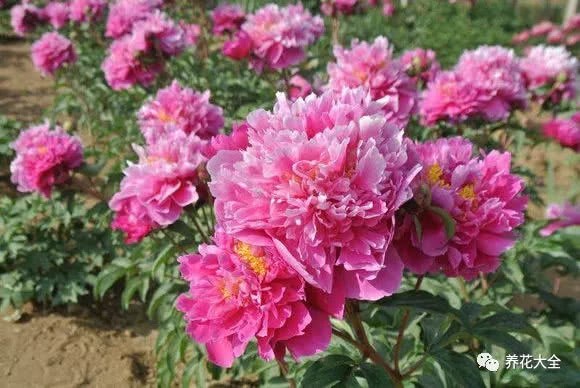
Chinese peony
Growing Flowers Encyclopedia
May is the time when Chinese peonies bloom. Although the beginning of summer has already arrived, spring has not yet left. The Chinese peony blooms with its final beauty in late spring, and is therefore called the "Flower God of May."
1. Acidic soil
Chinese peonies prefer slightly acidic soil. If the soil is too alkaline, the leaves of the Chinese peony will turn yellow, and in severe cases it will wither and die. When watering, add a few drops of white vinegar to the water and pour it into the soil to keep it acidic.
2. Prune in time
For Chinese peonies to produce beautiful flowers, pruning is indispensable. Before flowering, cut off weak branches and dead branches; after flowering, cut off the spent flowers. In this way, the plant shape of the Chinese peony will become even more beautiful.
Dahlia
Growing Flowers Encyclopedia
Dahlia flowers are huge, with layer upon layer of petals and a wide range of colors. Many people are amazed by the brightness of dahlias!
1. Loose, breathable soil
Dahlias like loose, breathable sandy soil. Garden soil, leaf mold, sand, and manure can be mixed in a 5:2:2:1 ratio as the growing medium.
2. Fertilizing
Dahlias are extremely fond of fertilizer. In spring, apply a dilute liquid fertilizer once every 4-6 days. After the plant buds, appropriately increase the amount of phosphorus fertilizer used to promote flowering.
Amaryllis
Growing Flowers Encyclopedia
Amaryllis is a bulb flower and is very suitable for beginners to grow. When amaryllis blooms, a large flower sits atop the flower stalk, giving it quite the mood of "standing out alone."
1. Soil
Loose, breathable soil is an important condition for amaryllis growth. For the potting soil, choose humus soil or garden soil, add about 1/3 perlite, and spread 2-3 cm of coarse sand at the bottom of the pot to increase air and water permeability.
2. Fertilizing
When amaryllis is in its growth period, dig a shallow trench away from the bulb and bury about 3 grams of bone meal. After flower buds appear, mix monopotassium phosphate (a small amount) with fishy water and apply it once every 7-10 days.
Tree peony
Growing Flowers Encyclopedia
Tree peony, flower friends should be more than familiar with it. "King of Flowers" and "National Beauty and Heavenly Fragrance" are both praises the world gives it. And the tree peony is also one of the large-flowered members~
1. Watering
According to the dryness and wetness of the potting soil, water once every 4 days in spring to keep the potting soil moist, and water thoroughly. If water accumulates in the pot, pour it out in time, otherwise root rot can easily occur.
2. Fertilizing
Before flowering, apply decomposed cake fertilizer water 1-2 times. Fifteen days after flowering, apply it once more.
Water lily
Growing Flowers Encyclopedia
For friends who like lotus but do not have a big yard at home, Huahua recommends water lilies to you. Water lilies floating on the water surface are like sleeping fairies. Although the flowers are smaller than lotus flowers, they are larger than bowl lotus~
1. Soil
For the soil used to grow water lilies, you can choose pond mud + garden soil. Before planting, place some crushed bones at the bottom of the pot as base fertilizer.
2. Prune dead flowers and rotten leaves
After water lilies fade, promptly cut off the withered branches and leaves as well as the flower stems to reduce the plant's nutrient consumption.
Hydrangea
Growing Flowers Encyclopedia
Hydrangeas very easily bloom in clusters, and a hydrangea in full bloom can really be bigger than a head!
1. Soil
To plant hydrangeas, it is best to choose loose, breathable, fertile sandy soil. Garden soil, river sand, and organic fertilizer can be mixed in a 6:3:1 ratio.
2. Color adjustment
The flower color of hydrangeas is related to the pH of the soil. Acidic soil produces blue flowers; you can mix 3-10 grams of aluminum sulfate with 1 liter of water and pour it into the soil. Alkaline soil produces red flowers; you can sprinkle some lime into the soil.
Hibiscus
Growing Flowers Encyclopedia
Hibiscus flowers are bright in color and come in single-petaled and double-petaled forms, with many varieties. Large hibiscus flowers can reach a flower diameter of more than ten cm.
1. Light
Hibiscus is extremely fond of sunlight and is best placed outdoors or on a south-facing balcony with ample light. If there is insufficient light, the flower buds are very likely to drop, and the flowers produced will be very small.
2. Water and fertilizer
During the growth period, hibiscus has a great demand for water and fertilizer. Water about once a day, and apply a dilute liquid fertilizer once every 7-10 days. In addition, frequently sprinkle water on the ground to maintain air humidity.
Do you know all these large-flowered plants?
That is all Huahua is sharing with everyone today~
Flower friends are welcome to exchange ideas with Huahua in the comment section~