Pennywort will spread into a big patch if you just toss it on the ground, so why do some gardeners still manage to kill it?
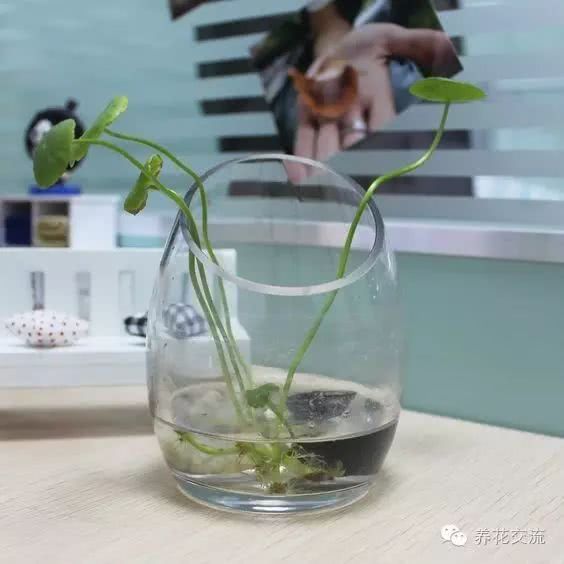
The office goddess brought back a very cute potted green plant. Its leaves were round and small, standing elegantly, looking like miniature lotus leaves.
From then on I knew it was pennywort. I usually helped take care of it too, but unfortunately another time we came back after a long holiday and it was dead. Does that mean pennywort is hard to grow?
Later I bought a pot myself and grew it, exchanged experience with other gardeners, and looked up information, and only then did I understand how that pennywort in the office died!
A gardener said that to grow pennywort, it is best to get a fish tank, put half a tank of straw fertilizer and half a tank of soil, fill it with water, and move the pennywort into it. That is what he did, and he harvested a whole big tank of pennywort. Anyone who wanted some could just dig some out from the edge.
The pennywort in the office all died from drought. Once pennywort dries out, it tends to collapse and easily wilts. It is also not very suited to a closed, stuffy space. As long as there is ventilation, indirect light, soil and water, it is basically unkillable.
1. The best care method
If you want to grow pennywort without worries, it is best to grow it half in soil and half in water. Pennywort likes moisture and warmth. Gardeners who have grown it all feel a great sense of achievement. If you have killed it before, you can try the method below.
1. Prepare a flower pot
For growing pennywort, it is best to choose a pot without drainage holes. A fish tank, cup or small bowl will all work. It depends on how large a scale you want to grow it to!
A shallow pot is best, as it uses less soil, and soil is quite precious to many gardeners too!
2. Planting notes
You can lay a layer of small gravel or coarse sand at the bottom of the pot. As for the soil, pennywort is not picky. Whether it is yellow clay soil or silt, it will do, but fertile humus soil is the best.
3. Transplanting introduction
Some gardeners have bought pennywort online. What arrived were just some rhizomes. Although it was very cheap, the gardener felt cheated!
But I told her to plant them, and in less than two weeks there would be plenty of leaves.
Then in less than a month it filled a small pot. So as long as you have some rhizomes, you can propagate it. Just stick them into moist soil. (Beginners can use peat soil mixed with fine sand at 1:1 for planting.)
4. Daily watering
Watering is all about keeping the potting soil moist. A little standing water is best. Do not let the water be too deep. Grown half in water and half in soil, they can stay vibrant through all four seasons.
5. Placement
Do not put newly planted pennywort in direct blazing sun right away. Keep it in shade with ventilation for two days, then gradually let it see light. After a week it can be grown outdoors. It is actually quite tolerant of sun, but the potting soil must not be too dry.
Pennywort can tolerate a little shade, but the environment must not be closed and stuffy.
6. Proper fertilizing
As long as the weather is not too hot or too cold, you can fertilize. Generally, fertilizing once every two weeks is enough. Ordinary compound fertilizer will do. After all, it is just an ornamental grass with good looks. (Be careful not to let the leaves touch liquid fertilizer, otherwise they will become unsightly.)
7. Repotting notes
Pennywort grows very fast, and its root system is very dense and plentiful, so it can be repotted once every one or two years. You can cut off the leaves above and use the rhizomes for cuttings again. As long as the temperature is above 15 degrees, it is fine.
This thing grows all year round. Do not be afraid that cutting off the leaves will stop it from growing. They will only grow even better.
(A gardener's pennywort, looking very cute, paired with a small ceramic pot)
2. Key points of care
Pennywort grown indoors has crisp, tender and smaller leaves. But if it is grown outdoors, with sufficient sunlight, water and fertilizer, then its branches and leaves become very lush, and the leaves are very large and dark green.
If you want pennywort not to die, you must keep the potting soil moist and not let it dry out. Half water and half soil is best.
Pay attention to the amount when fertilizing. Master the principle of light fertilizer applied frequently. Give only a little each time, and never too much.
The picture above is its structural diagram. The flowers are white-green and not attractive. If you do not like them, you can cut them off, which can also reduce nutrient consumption. The seeds are extremely small. If you can collect them, you can try sowing them.
In the picture above:1 is the root system, 2 is the flower, 3 is the seed pod, 4 is the seed.