What plant is the Daggerpod? Its stunning beauty is worth seeing
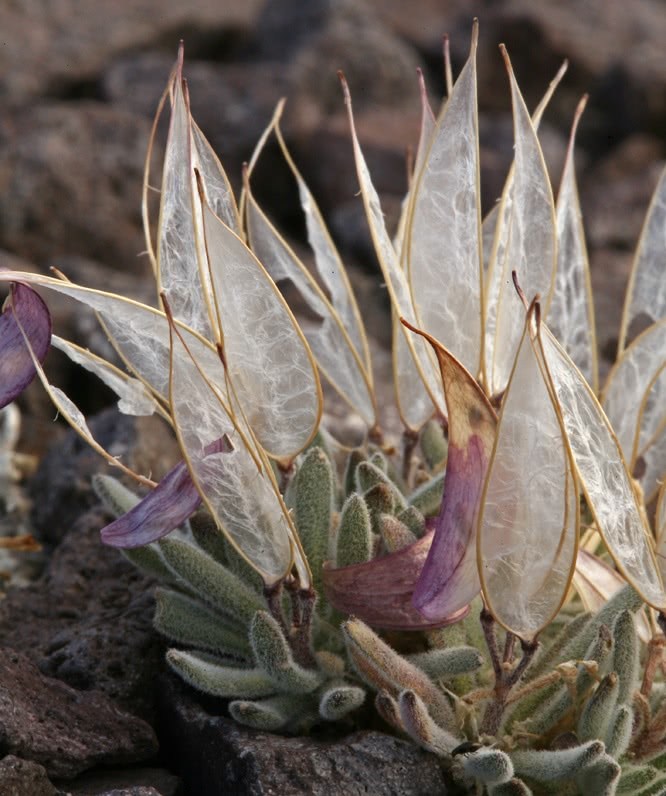
Daggerpod, English name Daggerpod, also known as Daggerpod (Chanwingji), is a perennial succulent herbaceous plant. It is small in size, with rosette-shaped leaves, gray-green, soft, fleshy and hairy, and has dense inflorescences of small white flowers. The fruit is 2 to 3 cm, oval-shaped, and the leaves form a small clump, gray-green, looking very understated.
Speaking of the most beautiful aspect of the Daggerpod, it is this: when its fruit matures, the fruit and seeds fall off, leaving behind a layer of transparent membranous septum, like cicada wings, stunningly beautiful.
The origin of the Daggerpod:Its place of origin is the scree slopes of the Rocky Mountains in the United States. It is widely distributed, but the number is still scarce, and it is a protected plant (do not pick it indiscriminately). There, the annual temperature range is very large, as high as 40°C, and as low as nearly minus 20 degrees; the altitude is very high; the climate is arid, the soil layer is sparse, the sunlight is intense, and the ultraviolet rays are very strong.
The harsh environment has shaped its form, different from its companions: small in size, growing very slowly; leaves fleshy and green, feeling soft and floppy; leaves arranged in a rosette, usually not dimorphic, very hairy, turning brown with large temperature differences. The stem is very short, almost nonexistent; the flowers are approximately corymbose or racemose; precisely because its growing environment has very strong wind and sand, in order to resist dust, the main root of the Daggerpod is a relatively thick taproot, and once pulled up, the main root will definitely break.
The fruit of the Daggerpod is a silique, flat and spindle-shaped with pointed ends. When immature, there is still a green stigma at the tip; when mature, the stigma at the tip withers, and after the seeds and pericarp fall off, the remaining white translucent thing is the "wing." The picture below shows a mature fruit that has not yet split open.
This is a picture of the ovary septum and the flower.
How to grow the Daggerpod
Temperature:Cold-resistant; it can still overwinter safely below -20°C.
Light:The Daggerpod likes light, and during the growing period it should be given sufficient light. If the light is insufficient, the leaves will become thin and weak, and the degree of curling will be poor, making it hard to bring out the unique charm of the Daggerpod. In contrast, plants grown in a sunny place have low, thick, sturdy leaves, spiraling and twisted, with high ornamental value. However, after April, a shade net should still be set up to avoid scorching sun exposure and prevent the leaf tips from drying up.
Fertilization:From October each year to April of the following year is the vigorous growth period of the Daggerpod. Apply a decomposed dilute liquid fertilizer or compound fertilizer once a month to provide sufficient nutrients and make the plant grow vigorously. After the flower buds emerge in spring, spray a 0.5% potassium dihydrogen phosphate solution 2 to 3 times to promote flowering.
Watering:The Daggerpod likes moisture. During the growing period, the soil should be kept moist but not waterlogged. If there is long-term drought and water shortage, although the plant will not die, growth will stagnate, the leaves will turn yellow, and they may even wither; if the potting soil is waterlogged for a long time, it will cause the bulb to rot. You can often spray water on the plant to increase air humidity and avoid the leaf tips drying up.