12 recommended common flowers that bloom exceptionally beautifully
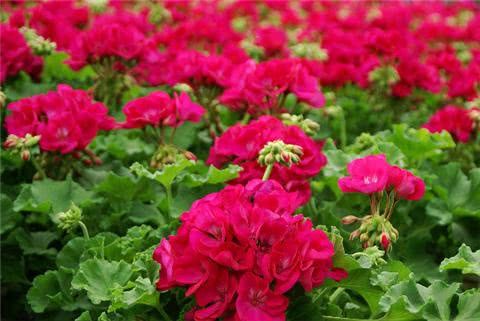
Growing flowers at home is also very common, and many people are willing to spend a little time caring for plants and flowers, watching them bloom, and feeling happy. Below are 12 common flowers!
1. Geranium
Geranium flowers are gathered in small clusters, and the large inflorescences resemble hydrangeas, with vivid colors.
To control plant height and achieve large, brightly colored flowers, in addition to choosing dwarf geranium varieties, the application of growth regulators is very important.
2. Cyclamen
Cyclamen has a sturdy and graceful plant shape, moderate height, abundant flowers and lush leaves, bright colors, and a very long flowering period.
If the plant grows leggy, switch to applying superphosphate or wood ash extract to control vegetative growth, promote flower bud differentiation, and encourage budding and blooming.
3. Stock
Stock has bright flowers, a rich fragrance, and a long flowering period. It is suitable for potted ornamental display and is loved by many flower enthusiasts.
It is not demanding about soil, but grows better in well-drained, neutral to slightly alkaline soil, and dislikes acidic soil.
4. Jasmine
Jasmine has emerald green leaves that remain year-round, blooms continuously in summer and autumn, with jade-like color and a rich fragrance, giving people a cool and comfortable feeling.
Repot once every 1-2 years, replacing with fresh potting soil. When repotting, generally do not remove the roots, but water thoroughly, place in a shaded area to recover growth, and be careful to loosen the soil.
5. Phalaenopsis
Phalaenopsis has many varieties, with highly varied flower shapes and colors, and very beautiful flower forms, deeply loved by people.
Most Phalaenopsis varieties bloom in spring, and some also bloom in summer; the flower stalk emerges from the leaf axil, bearing several flowers that open in sequence, and each flower can remain open for more than a month.
6. Lily
Lily has an elegant flower form, fresh and graceful green leaves, and a slender upright stem, and is a precious new star among cut flowers.
During the bulb-growing period, flower lovers who are able can give light fertilizer, and it is recommended to fertilize about once a month; remember to use light fertilizer.
7. Amaryllis
Amaryllis resembles a trumpet in shape, and the flower diameter can reach more than 25 cm at maximum.
Amaryllis grows quickly, with long and dense leaves, so when repotting and changing soil, the damaged leaves and diseased roots and leaves should be cut away, leaving vigorous leaves.
8. Agave
Generally choose loose, fertile, well-drained soil. When potting, mix leaf mold and sandy loam, and add a small amount of bone meal.
The suitable growing temperature for Agave is 15-25°C. Low temperature, cold and dry conditions in winter are most favorable for Agave growth, and the overwintering temperature should be above 5°C.
9. Chinese peony
Chinese peony looks somewhat like tree peony. It has many flowers and bright colors, and grows robustly, so shaping and pruning are very important.
Its temperature requirement is that it can tolerate low temperatures but not high ones; it prefers cool conditions and fears heat. It tends to grow poorly during the high-temperature summer season, so autumn is the best season to plant Chinese peony.
10. Dianthus
For potted Dianthus, pruning is an extremely important maintenance method. Proper pruning can not only promote robust plant growth, but also allow its root system to fully sprout, making the plant bloom abundantly with lush leaves.
11. Carnation
Carnation has fresh green leaves, a beautiful flower shape, an elegant posture, rich colors, and a pleasant fragrance, and can bloom in all four seasons when conditions are suitable.
12. Hyacinth
Hyacinth flowers vary greatly in color: red like fire, purple intoxicating, yellow dazzling, pink charming, white pure, and blue profound.
During the autumn and winter growing period, apply 1-2 topdressings mainly of phosphorus and potassium. No fertilization is needed during the flowering period; apply one topdressing before and after flowering, and apply sufficient base fertilizer before potting.