How to grow Rieger begonias? Pay attention to these points to keep them free from disease and bursting with blooms
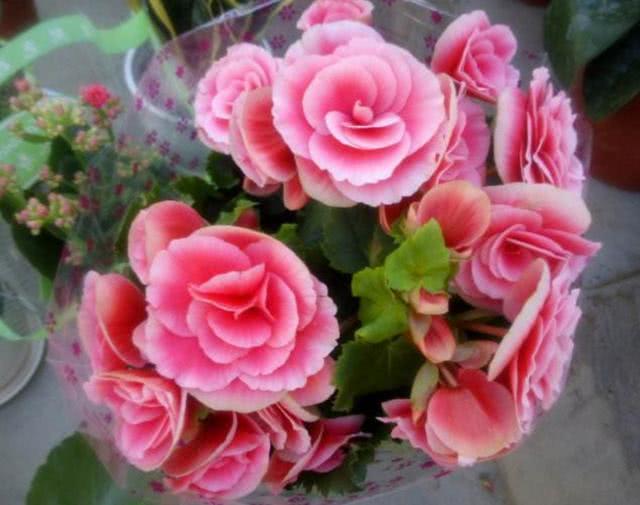
Rieger begonia is an indoor ornamental flower for winter and spring. It not only has large, brightly colored flowers in a range of colors, but also a long flowering period that can last around half a year. Some people compare the delicate, gorgeous flowers of the Rieger begonia to roses and peonies, and that is not an exaggeration at all. It is often said that beautiful flowers are hard to grow, and many flower lovers are both fascinated by the enchanting flower forms of the Rieger begonia and, at the same time, resentful yet unwilling to give it up, sighing that the Rieger begonia is a delicate greenhouse flower that is hard to grow. In fact, if you put more effort into every aspect of the growing process, such as temperature, humidity, light, soil, fertilizer and water, and pruning, growing Rieger begonias well is not difficult.
The most suitable growing temperature for Rieger begonia is 18°C~25°C. When growing it in winter, a room temperature below 15°C makes it prone to dropping flower buds. Below 5°C, Rieger begonia is prone to cold damage. In summer, above 30°C, Rieger begonia will enter a dormant state because the temperature is unsuitable.
The most suitable air humidity for Rieger begonia is between 65% and 80%. Air that is too dry will cause the leaves to dry out or trigger gray mold. At Rieger begonia growing bases, there is professional humidifying equipment to add humidity for the Rieger begonias, and most of the potted Rieger begonias we have just bought also have the plants covered with bags, mainly to keep them moist, so we should usually mist the leaves frequently (when there are flower buds, spray from the lower part of the plant upward to prevent flowers and buds from dropping), but at night there should be no standing water on the leaves, to prevent the leaves and stems from rotting.
The leaves and stems of Rieger begonia are especially fragile, so it fears direct strong light, but it should not be too shaded either, because light that is too weak easily affects pigment formation. The most suitable place to grow it is near a south-facing windowsill or on a balcony with scattered light. At the same time, good ventilation should be maintained, which is also very important, because a closed, unventilated environment also easily causes bacteria to breed on the leaves or stems of Rieger begonia and lead to rot. Normally, spray the plant once every 20 days with a 1:800 carbendazim solution to prevent gray mold. If gray mold has already appeared (blackening or rot around the edges of the leaves), promptly spray with mancozeb or thiophanate-methyl, once every 7 days, and 3 consecutive sprays will be effective.
Rieger begonia prefers loose, airy, well-drained, slightly acidic soil. If you repot the Rieger begonia every spring, it is recommended that a mix of decomposed pine needle soil plus garden soil and river sand is best, because pine needle soil is slightly acidic, not only has good air permeability but also contains many trace elements itself, making it very suitable for acid-loving plants such as begonias, azaleas, gardenias, jasmine, and camellias. If there is no pine needle soil, you can apply a 1:1000 ferrous sulfate solution to the Rieger begonia once a month to keep the soil slightly acidic.
The branches and leaves of Rieger begonia have a high water content, and it likes a moist environment. Water by the principle of watering when dry and letting it dry somewhat between waterings, and normally keep the potting soil slightly moist. An environment that is too wet or too dry is not good for the growth of Rieger begonia. Because the flowering period is long, when watering normally you can add a small amount of monopotassium phosphate to the water, once every half month, which both supplements nutrition during the flowering period and adds potassium fertilizer to the plant, making the stems grow more robust. After the flowering period ends, promptly supplement once with a complete compound fertilizer containing nitrogen, phosphorus, and potassium, to store energy for the next flowering.
After the flowering period ends in late spring and early summer, prune promptly to reduce nutrient consumption for the plant. Apply carbendazim to the cut surfaces to prevent the wounds from rotting, and move it to a cool, ventilated place to help it safely pass the summer during the dormant period (during dormancy, reduce watering and stop fertilizing). When autumn arrives and the temperature drops, Rieger begonia enters a growth state. Applying a multi-element compound fertilizer once more can encourage the plant to sprout side branches faster. Around September, Rieger begonia enters the flower bud differentiation stage. You can apply decomposed rice washing water once every 10 days, together with spraying a 1:1000 monopotassium phosphate solution once every 7 days, to promote flower bud differentiation.