A detailed guide to watering orchids through all four seasons
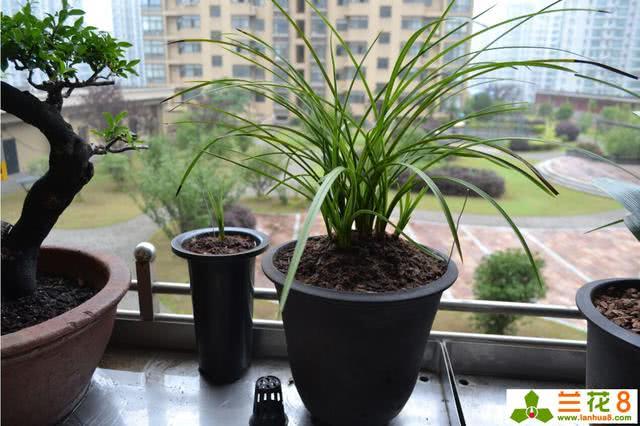
Orchids love to grow in cool, moist environments. The word "moist" certainly does not mean that large amounts of water must be poured into the soil, but rather that the necessary humidity for their growth should be provided. Orchid leaves are relatively thick, covered with a cuticle, and the plants also have plump pseudobulbs and fleshy roots, which besides storing a certain amount of nutrients can also hold a certain amount of water, so that they can regulate themselves during brief dry spells and are not likely to dry out and die quickly. However, if the soil is too dry, the pseudobulbs shrivel or other tissues lose water and metabolism is affected. If there is too much water, water accumulates in the soil, aeration is poor, the roots' ability to breathe is blocked, and water uptake is affected, which easily causes root rot.
After "Lichun" (the Beginning of Spring), the climate gradually warms up, orchids enter their normal growing stage, and the flower buds slowly extend, so the soil should be kept moist at this time. On fine, mild noons, move the potted orchids outdoors into the sunlight in batches, and wash away the dust that has accumulated on the leaf surfaces so that it does not block the stomata, and also use the opportunity to keep the mud layer on the pot surface moist (especially with the high-pot-surface style, where the mud layer rises above the pot rim and dries out easily). If the mud layer on the pot surface is found to be too white, it must be watered several times until water leaks out of the drainage holes at the bottom of the pot.
After "Jingzhe" (Awakening of Insects), flowerless spring orchids (Cymbidium goeringii) and cymbidiums (Cymbidium faberi) have just been moved from indoors to outdoor cultivation, and exposed to wind and sun, the potting soil dries out easily; in particular, the new root tips and bud points of the root system begin to stir, so daily watering should be frequent, but the amount of water should not be too much. After "Lixia" (the Beginning of Summer), the flowering period of spring orchids and cymbidiums is over, and for any potted orchid that has finished flowering, the soil moisture at this time should be slightly drier than that of ordinary potted orchids, because after flowering most have a brief semi-dormant period, grow slowly, and lose less water through the leaves. From June onward, the weather gradually heats up, the daughter plants (that is, young shoots) grow faster and begin to break through the soil one after another; at this time, pay more attention to soil moisture, frequently spray the leaves with clean water, and wet the orchid stand to create a certain moist microclimate, which is beneficial for the daughter plants to extend and unfurl their leaves. But when the yellow plum rainy season arrives, with continuous mouldy rain, humidity becomes too high; on the contrary, watering should then be controlled or the plants even moved to a place sheltered from the rain, otherwise black spots and patches (commonly known as partridge spots) often appear on the leaf surfaces, and this disease damage is most likely to affect the leaves of the fat-ring grass and the plain-heart petal types among spring orchids. After the start of the dog days, when the hot, scorching period sets in, besides strengthening shading, the soil must also be carefully kept at a certain humidity at all times. If the humidity inside the shade shed is found to be insufficient, the pot surface dries out easily, and the Selaginella uncinata grows old and droops, then water must be sprinkled on and around the orchid stand, on the walkways, or on nearby walls to increase the moisture in the air and reduce the water consumption of the orchid plants.
After "Bailu" (White Dew), the temperature gradually turns cool with autumn, and there is also the moisture of night dew; the new growth has stopped growing and the orchid buds break through the soil and grow slowly, so watering can be reduced at this time, but if the potting mud is found to be dry it must be watered to the point of moisture.
After Mid-Autumn, the temperature also often tends to be on the high side and the air is too dry; if watering is insufficient, fine cracks often appear in the mud layer in the pot or it pulls away from the pot wall, a phenomenon commonly called "water chestnut dryness" in the Jiangnan region. Orchid pots are most easily damaged by this, which affects growth, causes the flower buds to wilt, or makes next year's flowers stiff and shortens the flower stalks. Therefore, at this time water in the morning and evening.
During late autumn, the new growth of potted orchids has turned from fresh green to deep mature green, and the flower buds and their outer sheaths are all visible. If there is prolonged rain and excessive moisture, black spots are most likely to appear on the new leaves, and the flower buds often show "rotten sheath" (that is, the bud sheaths rot). At this time, measures should be taken to shelter them from rain, or watering should be reduced, and they should be exposed to more sunlight. When the climate gradually turns cold, water once every few days and let them receive all-day sunlight.
The degree of watering throughout the year should also be adapted to local conditions according to the actual temperature of the season in each place, the size of the pot, the number of plants, and the characteristics of the variety. As for watering time, generally speaking, in spring and autumn it is best done in the morning; during the hot height of summer it is best before sunrise and at sunset; in early winter and early spring it can be done when the sun is at its zenith and the temperature has warmed slightly. During the period when the plants are brought indoors for the winter, watering must be done around noon on clear days.
When watering, generally wait until the pot surface must be dry (the soil turning white is enough). For example: on the first day apply pesticide first, then on the second day water; watering must be done in the morning and evening in spring, in the morning and evening in summer, and in the morning and evening in autumn, while in winter water at noon. Watering must be thorough. Spray the leaf surfaces thoroughly, and you can soak them thoroughly using a basin or bucket; generally soaking for two or three minutes is enough.
Watering tools: a spray gun is used for watering orchids, and watering orchids requires great care: fine, even, and thorough, so that orchids do not rot at the roots, do not lose their hearts, send up many shoots, and produce few pests. Our company's spray gun nozzle uses Japanese technology and is made by laser perforation. Here, we specially recommend it to the broad community of orchid growers.
Besides watering with a spray gun, there is also the immersion method, which is to immerse the orchid pot in water and let the water slowly seep through the holes in the bottom of the pot into the mud layer. Although this method can make the potting mud absorb enough water, a potted orchid that has just been repotted and newly planted should not be immersed too deeply; it is enough for the water to reach the waist of the pot. If it goes too deep and reaches the pot surface, then because of the pressure of the water, the fresh soil in the pot is easily floated upward by the seeping water, causing the mud layer to loosen and the root system to fail to fit well with the soil. When it is taken out in a saturated state, although excess water can gradually drain away, the mud clump has already been loosened; at this time, the surface soil must be gently pressed with the fingers to make it firmer. If it is an overly old pot rim, using the immersion method to supplement moisture is still one of the ideal methods.
Our country has a folk saying: "Dry orchids, wet chrysanthemums." This saying should be understood relatively, and its essence recognized: it merely refers to the different degrees of water requirement of the two plants. Although orchids are said to prefer dryness, in fact they love to grow in a moist environment that is dry but not parched. As our country's orchid-growing predecessors said: "Spring prefers moisture, summer and autumn prefer slight dampness, winter must be moist with some dryness," which fully explains the principle that orchids have different requirements for dryness and moisture in different periods. I publish orchid knowledge and pictures every day, taking you to understand orchids in depth and teaching you to grow orchids easily. If there is anything you do not understand about orchids, you can ask me at any time or leave a message below. If my knowledge has helped you, I hope you can give me a like or share it to help more people!