Cut off blind shoots on roses in time, and the flower quantity easily doubles
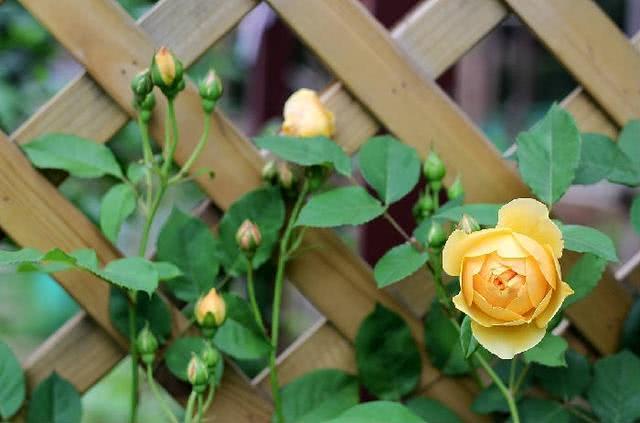
In the process of growing roses, one of the questions that once puzzled me most was rose blind shoots. What are rose blind shoots? They are the new shoots that have only just sprouted recently; some grow well and successfully produce flower buds, while others stop growing at a certain point and come to an abrupt halt at the tip. Such branches are called blind shoots.
First, let us get to know rose blind shoots from the pictures. (See the rose blind shoots in the pictures)
How are rose blind shoots produced? I have summarized the following points.
1. The growing environment is not ideal
Plant growth cannot do without light and water-fertilizer management, and our home growing environment, limited by conditions in many ways, cannot provide every plant with balanced sunlight and nutrients. Roses themselves also have different sunlight and water-fertilizer management requirements because of different varieties, and we cannot satisfy each one individually. Poor natural growth of the plants easily leads to blind shoots.
2. Not repotting and changing the soil in time
When roses grow to a certain stage, they need sufficient nutrient replenishment. In addition to daily water and fertilizer management, potted roses should be repotted and given fresh soil at the appropriate time. Generally, after a year of growth, the small seedlings bought back then gradually become sturdy little trees, and the originally small pot can no longer fully meet their growth needs. Long-term artificial watering causes the soil to compact and nutrients to be lost, producing blind shoots.
In this situation, we need to repot the potted roses and change the soil to meet the corresponding soil and fertilizer needs of roses at different growth stages. It is generally recommended to repot and change the soil of potted roses at the same time as winter pruning. When changing the pot and soil, the roots of the roses can be pruned, moderately trimming away some old roots to stimulate the growth of new roots.
3. Not pruning reasonably
Besides the above points, the production of rose blind shoots is also closely related to unreasonable pruning. A few years ago, the problem of rose blind shoots was almost never-ending. As time went by, it became nothing unusual. The simplest way to deal with it is to observe among the roses whenever there is time each day, and cut off any blind shoot the moment you see it, without mercy.
When growing roses, the most routine work is pruning. It is best to keep scissors on you at all times. It is recommended that in daily growing management, especially during the spring budding period of roses, you observe and inspect the plants more, promptly carry out bud thinning on newly sprouted bud points, remove excess new buds and newly born blind-shoot buds at the same bud point, and keep the strong while removing the weak. Promptly cut off diseased and weak branches, and branches sprouting horizontally or inward, to reduce the loss of nutrients in the roses. When the roses are healthy and strong, blind shoots will naturally decrease.
Above we have gotten to know rose blind shoots and understood the reasons why rose blind shoots are produced. Finally, let us review the methods for dealing with rose blind shoots.
1. Often turn the direction of the pots to minimize mutual shading among potted plants. Reduce mutual shading between plants.
2. Observe more during the rose growing period, distinguish the growth characteristics of roses, suit measures to local conditions, and arrange the planting location.
3. Prune frequently in daily care, observe more during the early spring budding period, and place potted varieties that sprout early and grow uniformly together as much as possible, so as to carry out synchronized water and fertilizer management later.
4. According to the growth condition of the roses, repot and change the soil in time to meet the growth needs of the roses.
5. Prune the roses in time. After roses bloom, prune the spent flowers in time to promote the sprouting of new shoots and healthy bud points. When winter comes, during the dormancy period of roses, the roses can be heavily pruned, cutting off diseased and weak branches and crossing branches, and keeping 3 to 5 strong branches of the current year, which can promote the sprouting of thick new branches from the base after spring begins.
When we satisfy the growing conditions of roses, blind shoots will continue to grow too. By then there will be many flower buds, and the flower quantity will bloom doubly!
Blind shoots that continue to grow