The flower language of the passionflower is longing and aspiration
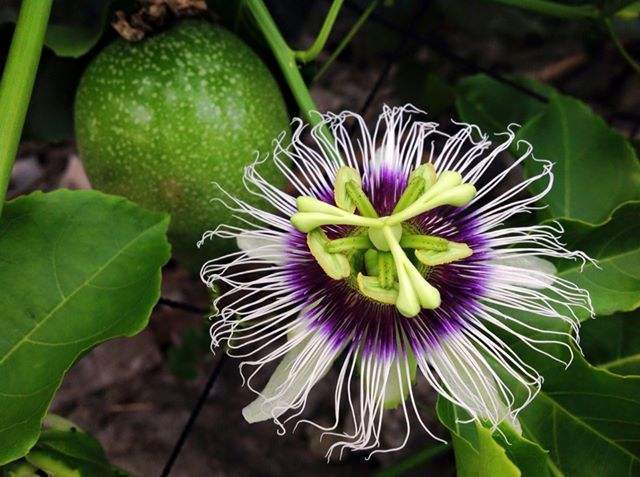
Passionflower, a perennial evergreen climbing woody vine, is an aromatic and delicious fruit known as the "king of juices." Also known as passion fruit, Brazilian fruit, vine peach, passion fruit, clock flower, western chrysanthemum, twining stem lotus, sour eggplant flower, and clock plant. The stem of the passionflower is cylindrical and slightly angular, hairless; the leaves are papery, heart-shaped at the base, palmately 5-parted, with the central lobe ovate-oblong, the lateral lobes slightly smaller, hairless, and entire; the cyme is reduced to a single flower, opposite the tendril, the flower is large and pale green; the berry is ovate-globose to nearly globose, orange-yellow or yellow when ripe; seeds numerous, obcordate, about 5 mm long. Flowering period is May to July.
According to measurements, passionflower fruit contains more than 135 kinds of aromatic substances, and is most suitable for processing into juice, or blended with other fruits (such as mango, pineapple, guava, citrus and apple, etc.) into mixed juices, which can significantly improve the taste and aroma of these fruit juices; it can be used as an additive in ice cream or other foods to enhance aroma and improve quality. It is native to Brazil, and was later cultivated in South America, South Africa, Southeast Asian countries, Australia, and various regions of the South Pacific.
Passionflower
Edible:
According to expert analysis and testing, passionflower fruit is rich in protein, fat, reducing sugar, multiple vitamins, and as many as 165 compounds including phosphorus, calcium, iron, and potassium, as well as 17 amino acids essential to the human body. When ripe, the passionflower fruit has a fragrant scent; when cut open, the aroma fills the air and refreshes the senses, and the fruit contains a large amount of pulp and juice, tasting sweet and sour, promoting salivation and quenching thirst, and refreshing the mind. It is especially suitable for processing into juice, fruit syrup, jam, jelly, and other products that are uniquely flavored, nutritious, healthful, and aid digestion. The passionflower juice beverage produced in Xishuangbanna has already sold well both domestically and abroad. The seeds of the passionflower contain 21.7%-25.25% oil, and the oil quality is comparable to sunflower oil, making it a high-quality edible oil. The roots, stems, and leaves of the passionflower can all be used as medicine, with effects of reducing inflammation and relieving pain, promoting blood circulation and strengthening the body, lowering lipids, and lowering blood pressure. In addition, the passionflower peel is also a very good feed.
Passionflower
Ornamental:
The passionflower is beautiful in both flower and fruit, with large and distinctive blooms. It can be enjoyed both for its flowers and its fruit, making it a very ideal garden ornamental plant.
Medicinal:
In Europe, passionflower is a well-known herbal medicine used to treat insomnia and anxiety. In the 16th century, Spanish explorers first encountered passionflower among the indigenous tribes of Peru and Brazil, and brought it to Europe. The indigenous people considered passionflower the best sedative. Modern medicine holds that passionflower is rich in 17 amino acids essential to the human body and more than 160 beneficial components such as multiple vitamins and trace elements. Among them, the abundant natural active component flavonoids are the basic element for reducing irritability and alleviating stress, and its excellent stress-relieving effect helps with sleep. Derived from a purely natural sedative effect, it works in accordance with the body's natural mechanisms, with none of the side effects of ordinary sleeping pills or sedatives, such as damage to the liver and kidneys, dizziness, headache, or memory decline.
Passionflower has multiple health benefits: it is a natural sedative with especially good effects in relaxing and calming the nerves; it treats insomnia, inducing natural sleep and deep sleep, and eliminates phenomena such as headache and dizziness; it relieves headache, stomach pain, frequent urination, and palpitations caused by anxiety, tension, depression, and nervous tension; it improves muscle cramps, spasms, and pain caused by nervous tension; it relieves all discomfort caused by nervous tension and extreme anxiety; it improves extremely low mood and excessive mental anxiety; it treats qi stagnation, relieves bloating, and aids digestion.
Passionflower
Legend:
It is said that in the legends of the indigenous peoples of the Americas, the passionflower was the daughter of the day. She inherited the passionate sunlight given by her father, and she was always filled with a brilliant smile. She was the most beautiful flower in the forests and grasslands. One day, when the morning star first rose, the passionflower was awakened from her sleep by a noisy sound. She opened her eyes and saw a youth playing in the water by the river. His handsome appearance attracted the princess, and the passionflower fell in love at first sight, falling in love with him. This youth was unlike the other people the passionflower saw during the day; he was the guide of the night, appearing only at night. The princess was deeply enamored with this night guide, counting the time moment by moment, waiting for the arrival of night, hoping to see the night guide once more.