A tiny action of the lotus can actually reveal so much information
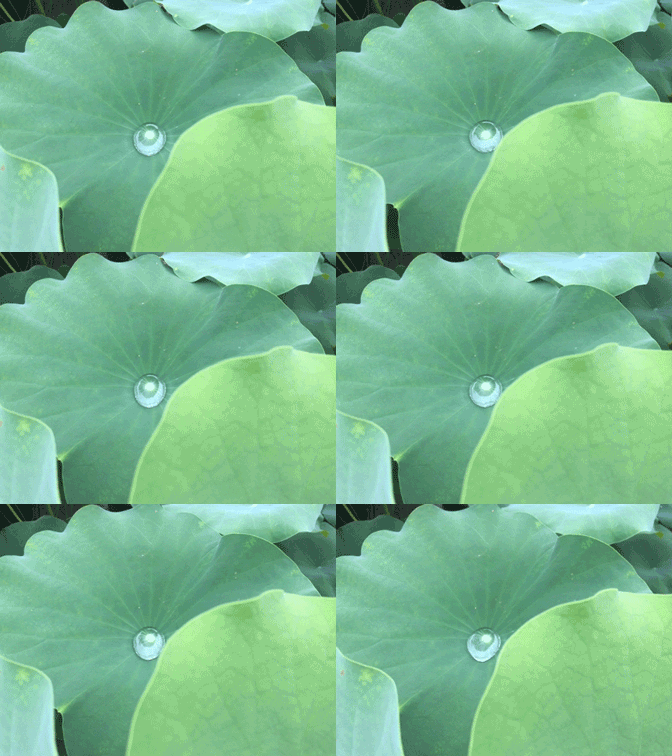
The summer lotus and water lily mode is about to begin, and Squirrel Jun is also firing up the science popularization mode. Today I will not talk about the lotus, because I covered it in careful detail last year. If you do not remember, go flip through the history. There are especially many new discoveries. This time I will talk about a special phenomenon that both lotus and water lily have, the lotus effect of emerging unstained from the mud.
A drop of water on the leaf surface - the principle
When flower lovers admire the lotus, have you ever noticed the lotus leaf? Oh, do not think of lotus leaf chicken, and it is not lotus leaf fried rice either. It is just that when water drops fall on lotus leaves and water lily leaves, they turn into freely rolling beads of water, and as the beads roll they can also carry away the dust on the leaf surface.
That is right, this water drop detail is the lotus effect. As early as the 1970s, the German botanist Barthlott discovered a little secret in ponds. The surface of lotus leaves and water lily leaves looks simple, but in fact it has a very complex multiple nanoscale and microscale ultrastructure.
Through an electron microscope, you will find some waxy particles on the leaf surface, covering countless protrusions at the 10 micrometer unit level, and the surface of each protrusion is also covered with nanoscale fine hairs. The size of a water drop is far larger than this leaf surface structure. When a water drop falls, we think it has landed on the leaf surface, but in the microscopic world there is a large amount of air in the depressions of the protrusions. The water drop actually lands on an extremely thin layer of air on the complex structure of the leaf surface and can only touch the raised points of those protrusions, so you will find that when a breeze comes, the water drop seems to leave the tree's leaf and fall to the ground.
This phenomenon is the result of long-term evolution of organisms in nature. Do not think it is simply a self-cleaning ability; it is also of great significance for preventing the invasion of pathogens. Take lotus and water lily, which grow in an environment of emerging unstained from the mud. In this "mud" environment filled with a damp and decaying atmosphere, bacteria can breed at any moment. If the plant did not have this ultrastructure, it would certainly be affected. Thanks to the lotus effect, plants in these harsh environments are able to survive.
Seen everywhere in the biological world - nature
This kind of self-cleaning surface ultrananostructure not only exists in lotus and water lily leaves, but is also commonly found in other plants. For example, among aquatic plants, duckweed, rush, reeds and so on, and among herbaceous plants, goosefoot, mugwort, rice, greater celandine and so on. In addition, the wings of winged insects also have these ultrastructures. Dragonflies, bees, moths, butterflies, cicadas and so on all have differently shaped ultrastructures distributed on their wings, so that they can be cleaned in time without affecting flight.
Small units change big life - society
Scientists have not been idle either. Imitating the lotus leaf effect and applying it to surface nanostructure technology, they have developed self-cleaning and anti-fouling nano coatings. Glass treated with nanotechnology has a self-cleaning effect. This technological innovation may mean that glaziers will disappear from our sight. Floors and walls that do not get dirty are a benefit for housewives.
Adding nanostructures to the fibers of clothing can give ordinary clothes a self-cleaning function, turning you into a superman or Spider-Man in minutes. More importantly, it may change the habit of using large amounts of detergent for washing. Throw them into the washing machine and you only need to turn on the rinse mode, greatly saving time and alleviating worsening water pollution.
Welcome to follow Plant Fan, Squirrel Jun chats with you about flowers and plants!