Clivia never grows and looks like a fake flower? Learn these 2 tricks and it will burst its pot and bloom profusely in 20 days
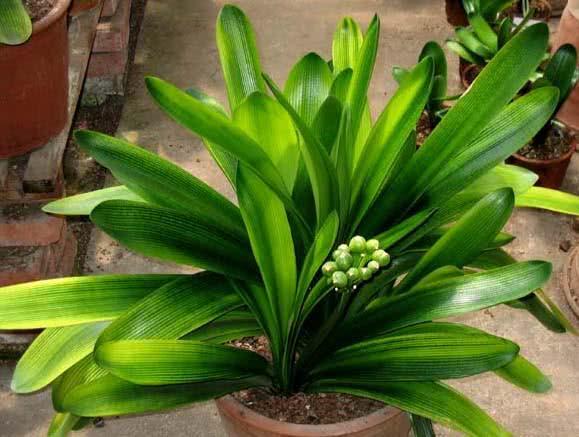
A flower enthusiast left a message saying that the clivia at home never grows, and after buying it, not a single leaf has grown, making them suspect they are raising a pot of fake flowers. This situation is likely that the clivia has become a "stunted seedling."
Generally speaking, if a clivia is well cared for, it can grow 2-3 pairs of new leaves within a year, but some flower enthusiasts' clivias have barely grown a few new leaves in several years.
This is very likely a stunted seedling. Stunted seedlings are caused by compacted potting soil, poor air permeability, improper fertilisation and other reasons. Even if the root system of the clivia is not rotten, it cannot normally absorb water and nutrients, so it does not grow new leaves.
When this happens, the method to adopt is to cut off the diseased parts and all the roots. You must be ruthless. Although the roots look white and sturdy, they are actually of little use, forced out, and the root hairs are not well developed.
At this point you need to repot, so that you can thoroughly understand the growth condition of the clivia plant. If the roots are rotten, you must deal with the rotten roots and replace with new potting soil to promote the clivia's recovery. After cutting off the rotten roots, soak the rhizome in potassium permanganate solution, disinfect the new soil, and then pot it up.
If you used special clivia soil from the start, then basically the nutrients are quite sufficient for more than half a year. When mixing your own soil, it is best to add some decomposed organic fertiliser at the bottom of the pot. After half a year, once the clivia has recovered and started growing, begin applying light fertiliser frequently, giving 1-2 times a month of diluted organic fertiliser.
Once things are back to normal, you can water the clivia with a little beer or baijiu, diluted with water and poured around the edge of the potting soil, not directly onto the rhizome. Generally after a few days, the stunted clivia plant will quickly recover and start growing.
Moreover, if it is during the clivia's flowering period, flower buds will generally appear after about 20 days, and by then you can just sit back and wait for the flowers to bloom.
Clivia care is as follows
1. Light
The most suitable light condition for clivia is half shade and half sun. Build a shade shelter for the clivia, preferably shade material with holes, which can both block sunlight and give the clivia sunlight exposure. Light in summer needs special attention: placing the clivia in the sun for 3-5 hours is enough. Also pay attention to shading.
2. Clivia likes soil rich in humus, very fertile. It is best to mix some small gravel into already prepared soil, which is good for the clivia's root growth. However, gravel does not need to be too much, about 50% is enough. This way, air permeability and water permeability are both relatively good, suitable for the clivia's root respiration.
3. Water is also an indispensable part of plant growth. Clivia has well-developed fleshy roots that can store a lot of water and have a certain drought tolerance, so clivia should not be watered too frequently. Water again when the surface of the potting soil looks dry.
When the flower stalk is emerging and blooming, avoid spraying water. You can water once every half a month or so with decomposed cake fertiliser water (1:3) or organic nutrient solution. When watering, prevent water from seeping into the centre of the leaf rosette, and do not let rainwater pour into the leaf rosette either, to avoid rot of the core.