What is a bonsai garden? A detailed explanation of the concept and classification of bonsai gardens
The concept of a bonsai garden
A bonsai garden is a form of garden-within-a-garden that gradually began to appear in parks in our country starting in the 1960s. Later, through gradual development, it became a specialized garden mainly focused on bonsai creation, bonsai collection, and bonsai display, generally with a relatively stable visitor base, and it is also a product of the development of the bonsai industry. In today's bonsai gardens, the most important function is creation and display. With the continuous development of society, people's demand for spiritual culture is increasing day by day, and the functions of bonsai gardens are also constantly being improved. For example, bonsai research, trading and auctions have begun to appear. The emergence of this type of bonsai garden has, to a certain extent, also promoted the development of our country's bonsai industry and the spread of bonsai culture and art.
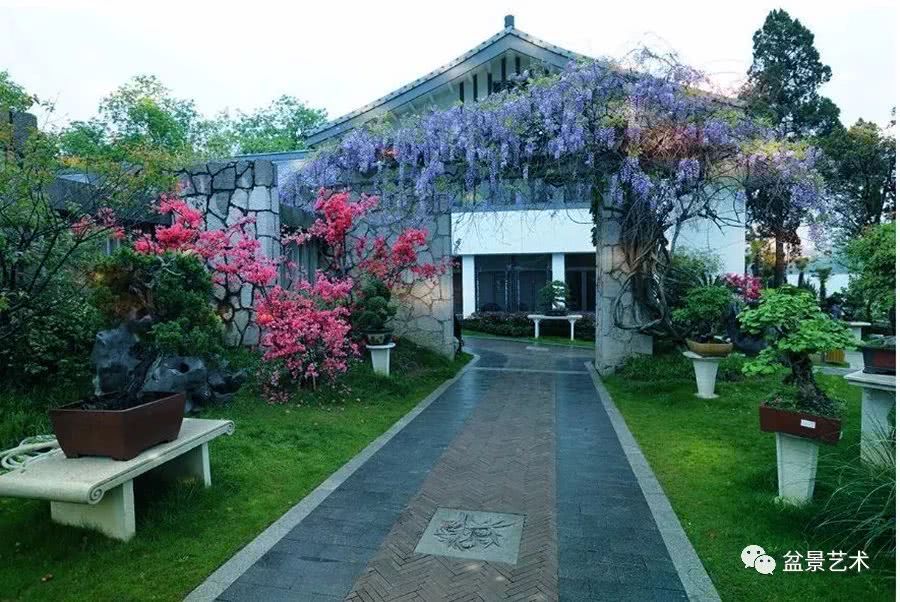
A general bonsai garden is basically divided into two major sections: the production area and the display area. The production areas of most bonsai gardens are not open to the public and are only used for the creation and restoration of bonsai. The display area is generally further divided into an outdoor exhibition area and an indoor exhibition area. The outdoor exhibition area is generally arranged in combination with distinctive garden features, lawns, landscape walls, etc., integrating bonsai with nature. Indoor display area bonsai are usually placed on wall corners, windowsills, and desk tables, generally accompanied by paintings, calligraphy, and so on.
Classification of bonsai gardens
At present, more and more bonsai gardens are beginning to appear in China. According to survey data, bonsai gardens in our country are mostly found in Jiangsu, Zhejiang, Shandong, Beijing, Shanghai, and Anhui. In Jiangsu Province alone, there are no fewer than 200 bonsai gardens of various sizes, and private bonsai gardens are in the majority. From the data, it can be concluded that there are differences in the size and functions of bonsai gardens across the country. In terms of the classification of bonsai gardens, they can mainly be distinguished according to the following classification methods.
Classification by form and scale
According to different forms, bonsai gardens can be divided into independent bonsai gardens, gardens-within-a-garden, and bonsai museums. Independent bonsai gardens include most private bonsai gardens, a garden-within-a-garden example is the bonsai garden of Shanghai Botanical Garden, and a bonsai museum example is the Yangzhou-style Bonsai Museum.
Classification by ownership
Private bonsai gardens and state-owned bonsai gardens are currently the two major categories in China, though a small number of bonsai gardens adopt a public-private joint operation model. State-owned bonsai gardens mostly appear in the form of parks or gardens-within-a-garden in parks. At present, private bonsai gardens account for the majority in our country. Because they are funded by private individuals or private groups, their most important purpose is bonsai sales, and the display function of this type of bonsai garden is generally relatively underdeveloped.
Classification by bonsai school
Because China has a vast territory, resulting in differences in natural conditions and culture across regions, there are many bonsai schools in our country. At present, the more widely circulated schools in China mainly include the Lingnan school, Su school, Chuan school, Hui school, Hai school, Yang school, Tong school, and others. In order to develop the bonsai industry, bonsai gardens have been built one after another. For example, the bonsai garden of Shanghai Botanical Garden mentioned in the case studies below is mainly based on Hai-style bonsai. In recent years, other new bonsai schools have also begun to appear, such as the Minnan-style bonsai of Fujian, which is mainly based on banyan trees and cascade-style bonsai.
Classification by duration type
From the current situation, most existing bonsai gardens are permanent. Temporary bonsai gardens generally appear at some temporary exhibitions, such as bonsai and flower shows and garden expos. After the exhibition ends, this type of temporary bonsai garden will be dismantled.
Classification by plant species
At present, the vast majority of bonsai gardens in China have a wide variety of bonsai plant species, but there are also some bonsai gardens that favor bonsai of a single species, such as banyan bonsai, elm bonsai, apple bonsai, boxwood bonsai, and Buddhist pine bonsai (pine and cypress garden). This depends on the preferences of the bonsai garden owner. Some bonsai gardens are also combined with flower nurseries, so bonsai gardens can also be divided into single-species bonsai gardens, comprehensive bonsai gardens, flower and bonsai gardens, and so on.