How to Defoliate Bonsai Trees: Detailed Explanation of the Correct Methods and Techniques
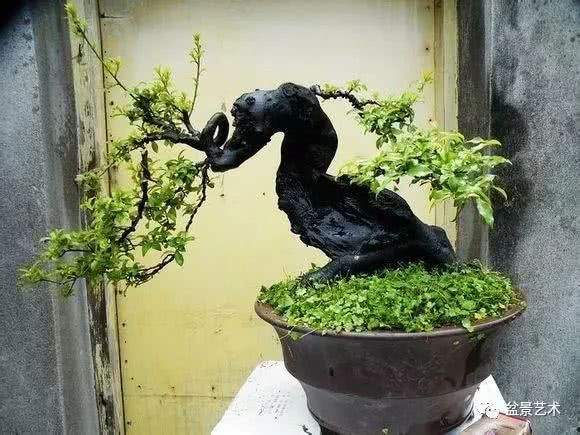
For some bonsai trees, especially deciduous species, the tree is at its most beautiful when the new leaves have just emerged, which is the best viewing period. But under natural conditions, this best viewing period comes only once a year. To enhance the ornamental value, you can defoliate the plant during the peak growth season in summer or early autumn, prompting it to sprout new leaves that are small, dense and vividly colored.
The new leaves of some species are a beautiful red or tinged with red, such as pomegranate, trident maple, and maple. In addition, some miscellaneous broadleaf species such as Vitex negundo (Chinese chaste tree), elm, Japanese bush cherry, and Chinese privet have strong sprouting ability; after defoliation, the newly grown leaves are small and thick, making them even more ornamental. For such species, you can defoliate 3 times a year, increasing the best viewing period from 1 time to 3 times.
Defoliation is generally carried out during the growing season from June to September. Many places in China have the habit of holding bonsai exhibitions around National Day. You can remove the old leaves 20 to 30 days in advance. For plants with vigorous growth, all the leaves can be removed at once; for weak-growing plants, defoliation can be done in 2 to 3 sessions. After defoliation, provide ample light and apply one dose of fully rotted organic liquid fertilizer. After that, strengthen water and fertilizer management, applying a diluted fully rotted liquid fertilizer once a week, and frequently mist the branches and trunk. Before long, tender green and lovely new leaves will grow, giving a refreshing, pleasant and uplifting feeling.
For tamarisk bonsai, if they are to be exhibited around National Day, defoliation can be carried out around July 15 (do not go past July 20). If the exhibition time is moved earlier or later, the defoliation time should also be adjusted accordingly. Defoliation can be done in 2 sessions; it is best not to remove all the leaves at once. The leaves left behind can serve as the plant's "breathing windows," so as to avoid "smothering" the bonsai to death, and through photosynthesis they produce nutrients, which helps the new leaves sprout. Once the new leaves have sprouted, remove all the remaining leaves. After defoliation, water and fertilizer must keep up: apply a diluted fully rotted liquid fertilizer every 3 to 5 days, and frequently mist the plant to increase air humidity, so that the new leaves are plump and robust with a jade-green color. After defoliation, pay attention to weather changes. When the maximum temperature drops below 18°C, move the stump at night to a place not open to the sky; if the bonsai is too large to move, build a shed to cover it, so that dew does not yellow or knock off the new leaves.
A bonsai that has undergone defoliation can be shaped about one week before the exhibition, removing some branches and leaves that affect the tree's form, unwinding the metal wire from the shaped branches, and placing ornaments as needed, so that it participates in the exhibition in perfect form.