Why Your Succulent Suddenly Got Black Rot: The One Thing Missing from the Pot
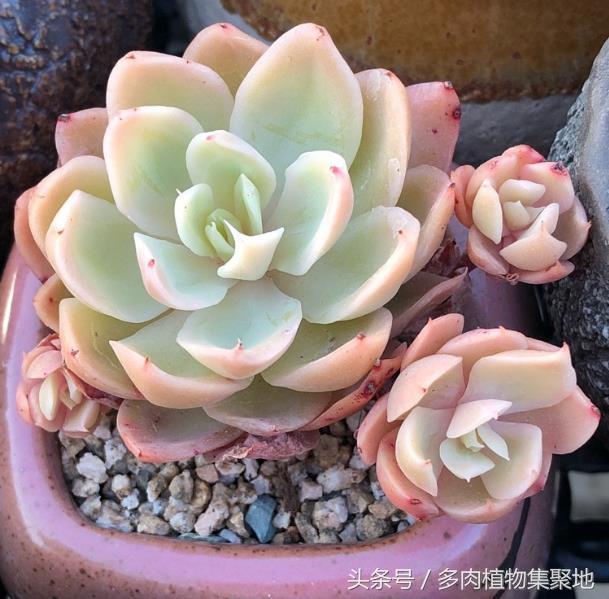
A fellow gardener's succulent suddenly developed black rot a few days ago. When he waters his succulents, he always waits until the soil is completely dry and then waters thoroughly, so overwatering can basically be ruled out as the cause. Later, he couldn't resist digging the succulent out, removing the soil to take a look, and found that the cause of the black rot was actually the lack of top dressing, which left the bottom of the succulent without airflow and caused the black rot.
If succulents are grown outdoors, ventilation tends to be better. But because this gardener was growing low, clustering succulents, and there was no top dressing in the pot, the lower leaves pressed right against the soil. That way, after watering, the damp soil surface stayed in prolonged contact with the leaves at the base of the succulent, so the environment underneath the plant remained damp and poorly ventilated. As a result, even though the gardener only watered when the soil was completely dry and then watered thoroughly, the succulent still easily developed black rot.
So the role of top dressing is by no means just decorative. It can also isolate the succulent's leaves from the damp soil. We can also use a cotton swab to prop up the succulent's leaves slightly, which improves airflow so the air at the soil surface can circulate. Note that top dressing stones that are too densely packed can have a bad effect on succulents, but larger top dressing stones have no such effect. They not only allow air and water to pass through, but also provide some support for the plant, so old stems or leggy plants won't easily topple over.
As for top dressing stones on succulent pots, on rainy days they can prevent some of the rain from washing the soil away. When we don't have time to bring our succulents indoors on a rainy day, or for those of us who are a bit lazy, we can spread some top dressing stones on the surface of the pot. But that doesn't mean that with top dressing stones in place, rainwater can't wash away soil from the pot surface. It can, however, effectively prevent and reduce it.
Actually, succulents do benefit from occasional rain. Rainwater can wash away some of the powdery coating and clean the surface. Every time you buy a new pot, check whether there is a small hole in the bottom. If there isn't one, you can make a small hole so that on rainy days it can help prevent water accumulation that causes root rot to some extent. Those who buy wooden box planters to grow succulents need to shelter them from rain, because wooden box planters generally have a bottom that is hard to make holes in. When a pot has no holes, water accumulation is the biggest worry, and a wooden box planter after rain can also easily fall apart.
When a succulent develops black rot, we still have a chance to save it. We can choose to behead and propagate it: cut away all the blackened, discolored parts of the succulent until healthy, normal tissue is exposed. After disinfecting and drying it, once the wound has healed, you can care for it as usual and wait for the succulent to grow roots and send out new shoots.
This is a gathering place for succulent lovers, sharing succulent care tips. Welcome to follow and join the conversation.