Treating the cut ends of collected wild stumps this way more than doubles the survival rate
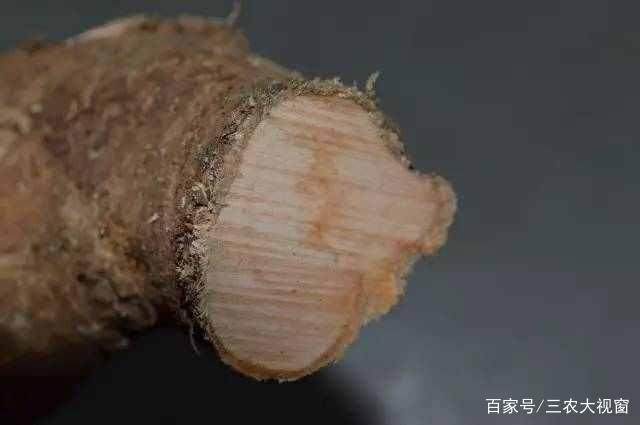
At present, collected-wild-stump culture is still the mainstream; on one hand, the training of collected stumps is very short, and on the other hand, international capital is quite abundant. Many other people have already found the opportunity of losing their jobs. Collecting from the wild is not easy. Seed work is the most important. Collected wild stumps are also very important. First, let's talk about the cut point. Here, taking the waxed part as an example, there will be some unsuitable requirements; for unsuitable trees, the basic requirement is the same as on New Year's Eve.
This is the saw's tear-off; this small sawtooth sawed it down, and you can see part of the torn bark, and how the wound is not easy to heal.
From this angle, this point is even clearer.
The treatment is to go around it with a cutting knife and remove the torn part. This is the pattern for root cutting.
This is the appearance of the branch after cutting, and the green outer layer of the skin can be clearly seen.
The appearance of the grave digger after cleaning.
If you look closely, you will find many parts that have been torn open and separated. It must be clean; assuming it is a branch of the stem, or this branch dries up and dies, at the root it will cause staleness and destroy all the roots, and lead to no desire to live. This is the clean appearance.
Close-up of trimming with a sharp small knife. These are the basic tasks of settling collected wild stumps; the next thing we need to do is cut them off, cultivate them, and cultivate at every step.