Tutorial on management methods for bonsai from wild-collected stumps in summer, recommended to save
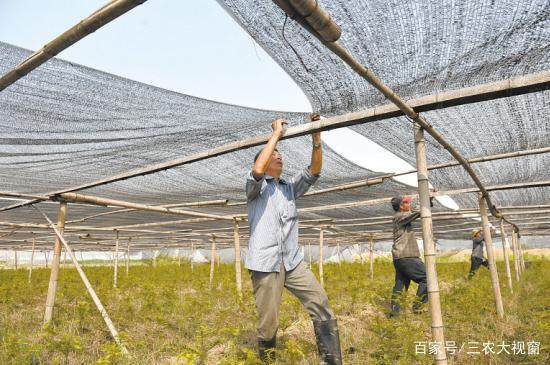
When a new stump is alive, it has poor tolerance to harsh conditions. Improper handling in summer and spring often leads to death. Therefore, handling new stumps in summer and spring must be done with caution. The following key points should be sent to the following points:
1. Shading and cooling
In summer and spring, the sun is fierce, plant transpiration is steady, and newly planted tree roots are few, often unable to meet the needs of plant transpiration, causing plants to wither or even die. Assuming that during the strongest time of day (10 a.m. to 2 p.m.) half of the sunlight is covered, the survival rate of new stumps can be improved.
2. Water
Watering new stumps should be done dry-wet alternating. Since the soil in the pot is slightly dry, it can smooth root swelling, but it also cannot be dried out.
3. Summer heat avoidance on the ground
In front of the greenhouse, choose a sunny, well-ventilated place, dig a pit, bury the stump, bury the pot all around, so that the pot is slightly lower than the pit edge, and cover the surface of the pot with a layer of soil, making it slightly higher than the surrounding air. Only in this way can waterlogging be prevented. Stumps buried in the ground are more resistant and have a higher survival rate.
4. Air humidification and mask humidification
In high-temperature seasons, a layer of wet sand or wet sawdust can be placed in the air, then the bonsai sits on the wet sand or sawdust, and the pot is buried by the wet sand or sawdust, but not up to the pot. Usually, water sprinkled on the shield causes the water to evaporate, lowering the temperature around the stump and the air humidity in the sky, thereby slowing the transpiration of the tree. In popular cases, new stumps should not be pruned.