Firethorn bonsai: from digging the stump to keeping it alive, all the techniques taught to you
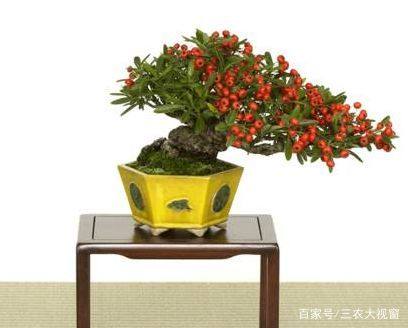
Firethorn is distributed in the Yellow River region, southern China, and its vast southwest. It is tough, tolerates poor soil, drought, and cold; planted south of the Yellow River, in the south it needs potted care, overwintering in a plastic shed or heated greenhouse, with temperatures that can go as low as 0 degrees. It is not strict about soil requirements; neutral or slightly acidic loam with good drainage, moisture retention, and looseness is good.
Firethorn bonsai is evergreen, with a compact plant shape, lush branches and foliage, flowers like early autumn snowflakes, and fruit that ripens like fire; the fruit does not wither after winter, the leaves are not elegant, the flowers are not elegant, but neither are the inelegant fruit, and it is deeply loved by bonsai enthusiasts.
Old firethorn stumps are easy to obtain; stumps can be transplanted from the mountains. It can be transplanted within four hours, but it is easier to transplant in late autumn and early spring. Regarding the transplanting of old stumps, I want to talk about my own experience. First, find the stump you like, dig it up, do not take the soil, cut off the roots, and keep more fibrous roots. Cut off the branches according to their imbalance. If the stump is hot, the stump can be soaked in water for two to three hours before watering. Then wrap it with plastic wrap or white plastic film, and seal it with white latex or candle wax. The soil for begging is not tall, but it calls for looseness and breathability, planting a good stump and compacting the soil, and hoping to keep the soil with the roots. When the sun comes out, it is not easy for the stump to be exposed to the sun. Baking it for one or two hours every morning is good. If it is dug in winter, it can be wrapped or covered to keep warm.
After completing the earlier tasks, do not pour water without elegance, but it is not easy to fertilize. Because the tree's roots have been severely damaged, because the tree's roots have been severely damaged. Do not do it without watering. Around the popular Qingming period, the stump will sprout at the end, and then it can be maintained normally.