Why does a sago palm neither flower nor grow leaves?
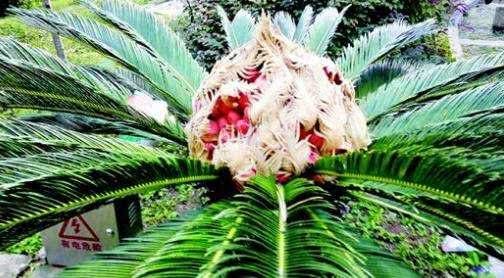
When we were children, we often heard old people say that if a thousand-year-old sago palm were to bloom, it would be nothing short of a miracle, so from a young age we had a strong curiosity and beautiful longing for this magical plant, the sago palm. So will the sago palm actually bloom? First of all, it certainly does bloom. We all know that the sago palm grows its leaves in a radial pattern like a fountain, so the flower it produces is located at the center of the plant, and is generally orange or yellow. Why is it said that the sago palm blooming is such a rare thing?
Because the sago palm has relatively high temperature requirements for blooming, and the light and water in the surrounding environment must also meet the plant's requirements, otherwise you will not see it bloom. Therefore, all these objective conditions must be satisfied before we can see the sago palm flower we want. Although some people grow sago palms and, even with careful care, rarely see them bloom, they fortunately stop pursuing the bloom and simply hope the plant can grow healthily. But even such a small wish often cannot be fulfilled. People often report that their sago palm has not grown new leaves for some time, and it is worrying just to look at it. What is going on?
1. One of the most important reasons the sago palm does not grow new leaves is that we need to reflect carefully on whether we have kept it indoors for too long. In fact, indoor temperatures can meet the growth needs of the sago palm, but light cannot be guaranteed; even without curtains blocking it, at most only half of the day provides sunlight. And as for ventilation, it is, after all, not very good, and most of the time the indoor environment is fairly enclosed. This leads to poor air circulation, and the sago palm may fail to grow new leaves.
2. We all know that for a plant to grow new leaves, it needs to obtain more nutrients through its roots, so if the sago palm cannot grow new leaves, it may also be because the soil fertility is insufficient. Why would fertility be insufficient? It may be because the amount of soil cannot meet the needs of the sago palm, or it may be because after long-term cultivation, the fertility in the soil has been almost entirely absorbed by the sago palm, and at this point it needs to be replenished with fertilizer.
3. There is another possibility that is not particularly likely but is also the reason we least want to hear: the sago palm has developed root rot. In this case, if it is not brought under control, it will not just be a matter of failing to grow new leaves; the old sago palm leaves may also gradually turn yellow and withered. Therefore, when you encounter a situation where it does not grow leaves, you still cannot ignore it. Water when it should be watered, fertilize when it should be fertilized, and as for light, as long as it is not excessive, it is good for the plant.