How do you tell the varieties of Florist's Ranunculus apart, is it easy to grow, and how does it differ from the peony?
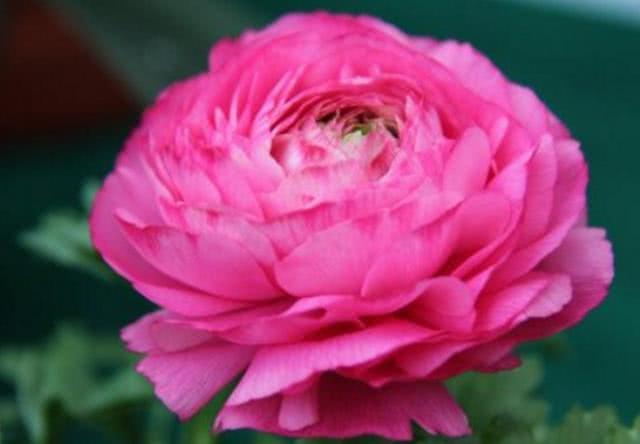
When you see the name of this flower, does it make you think of the celery used in cooking? This flower is not celery, though; its leaves merely look somewhat like celery, and its blooms bear a slight resemblance to the national flower, the peony, so people combined its leaves and its name and called it celery peony. There are quite a few kinds of this flower; what are they classified by? And if you want to cultivate it, how should you grow it? Please see the following.
1. Variety classification
There are many kinds of Florist's Ranunculus, mainly reflected in the differences in flower color and the number of petals. When the flowers are in full bloom, the varieties are divided into two types: double-flowered and semi-double-flowered. Classification by flower color is a bit more complicated, because Florist's Ranunculus has many flower colors: there are solid-colored flowers such as white, red, pink, yellow and purple, and there are also multi-colored flowers such as white with pink edges, red edges, and gradient yellow.
2. Fertilizing
Many flower lovers use chemical fertilizers sold on the market because it is convenient for fertilizing flowers, but this is actually very bad. Chemical fertilizers will harm the plant's roots to a certain extent, so they cannot be used for a long time. They should be applied in combination with farmyard manure or fertilizer cakes; this not only reduces the harm to the plant's roots, but also fully supplements the trace elements the plant needs. The plant has base fertilizer in the soil before being potted, so after potting there is no need to fertilize the seedlings. You must wait until the plant has grown and matured before carrying out topdressing work, and the interval between topdressings can be adjusted according to the plant's growth.
3. Water
The biggest difference between Florist's Ranunculus and other flowers is probably that it does not like a humid environment. Although Persian buttercup has strong drought tolerance, it is still only to a certain degree, so do not think that because it is fairly drought-tolerant you can skip watering. This will hinder the growing plant, force it into a dormant state, and affect root growth. After the plant is potted, water it immediately, just enough to keep the plant from wilting.
4. Light
Although Florist's Ranunculus likes sunlight, it cannot tolerate strong light, so in summer you must do a good job of shading to prevent the light from scorching its leaves. Winter light is relatively soft, so it can receive sunlight all day long; this allows flower buds to sprout earlier and greatly brings the flowering period forward. The number of flowers is also closely related to the length of light exposure. Shortening the light duration allows side branches to grow better; the more flower buds that sprout on the side branches, the more flowers will bloom, so you can adjust the light duration according to what you want.
Florist's Ranunculus is actually not difficult to grow. It is rarely harmed by pests, so growing it saves a lot of trouble. However, light, watering and other aspects all need to be well regulated. I hope the few growing methods listed above can help everyone.