What is the succulent Cleistocactus? Let us introduce you to this succulent
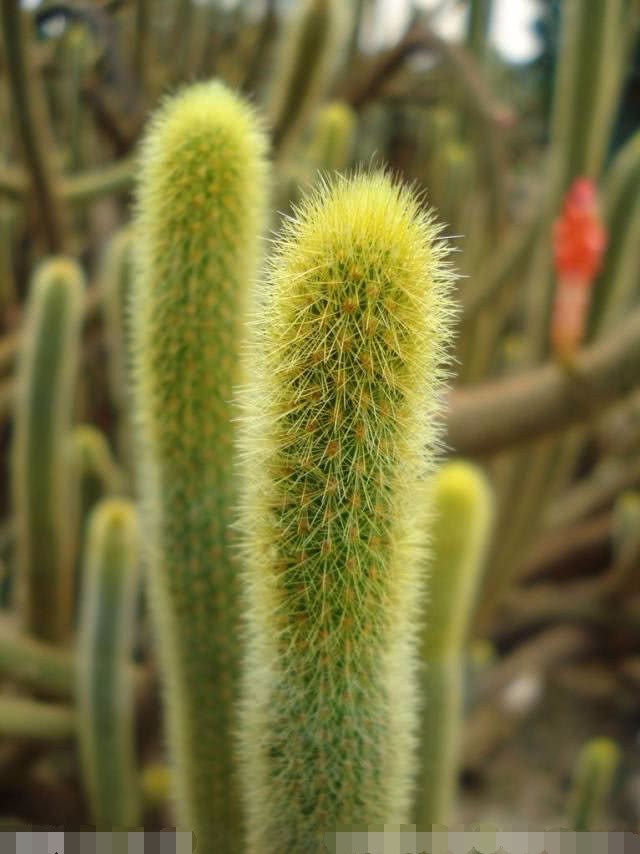
Cleistocactus, also known as yellow old man cactus, belongs to the genus Cleistocactus in the Cactaceae family. Its stem is cylindrical, 60-70 cm tall and 10 cm in diameter, and it readily produces branches at the base. It has 30 or more ribs, with closely arranged areoles. It has 15 radial spines, bristle-like, 0.3-0.7 cm long, yellow-white; 3-4 central spines, 4 cm long, yellow, slender needle-like. Flowers are borne at the top of the stem, 4 cm long and 5 cm in diameter, yellow. The plant only blooms when it reaches about 20 cm in height, and when it blooms the white hairs at the top of the stem increase.
Cleistocactus
It prefers a warm, dry environment with plenty of sunlight. It is relatively cold-tolerant, drought-tolerant and tolerant of partial shade. It does best in fertile, well-drained sandy loam. In winter the temperature should not fall below 5°C.
Propagation:
Propagation is commonly done by seed, cuttings and grafting. For seed propagation, sow indoors in pots in April-May; the seeds germinate in 15-20 days after sowing, and the seedlings grow fairly quickly. For cuttings, do this in May-June: cut off the top 15 cm of a taller plant, let it dry, then insert it into a sand bed; it roots about 30-40 days after insertion. You can also peel off the offsets sprouting from the mother plant and root them as cuttings; they root faster than top-stem cuttings. For grafting, do this in May-June, using Hylocereus undatus or Echinopsis multiplex as the rootstock. Use seedlings or sprouted offsets as the scion. Generally the graft heals and takes hold 10-15 days after grafting.
Cleistocactus
Cultivation:
The potting soil should be a fertile, loose mix of leaf mold and coarse sand. During the growing season it needs plenty of sunlight, and the potting soil should be kept moderately moist; its golden-yellow fine spines will then be bright and glossy. In the strong light of midsummer, provide a little shade to keep the stem from overheating and getting scorched; you can also spray water more often to raise the air humidity. However, too long a period of shading will also affect the color of the fine spines. Fertilize once a month during the growing season. In winter keep the potting soil dry, which can improve the plant's cold resistance.
Cleistocactus
Cleistocactus is fairly commonly cultivated. In its place of origin the plant is 60-70 cm tall with a stem 10 cm thick. The stems often grow in clusters, are densely covered with golden-yellow fine spines, and bear large yellow flowers at the top of the stem, which is exceptionally beautiful. Used as a potted plant to decorate a room or a public place, it has an excellent ornamental effect.