Hangtai Aquarium: It's not enough for fish to just eat their fill; these 5 nutrients are indispensable
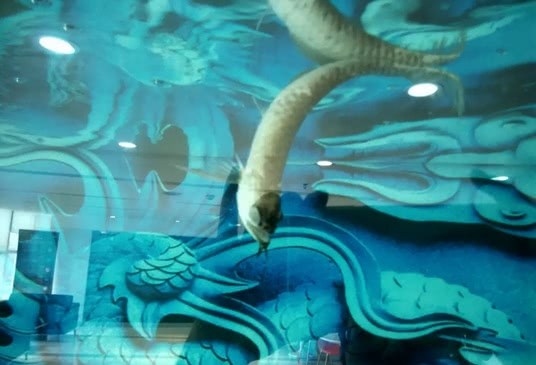
When we keep ornamental fish in captivity, the bait we feed them is rich in the nutrients ornamental fish need. These substances include 5 key elements: protein, carbohydrates, fat, vitamins and minerals, and they must be sufficient and reasonably balanced, so as to ensure the fish grow and reproduce healthily. If some nutrient is insufficient or excessive, it will affect the growth of your beloved fish, and in severe cases can cause nutritional deficiency diseases, or even death. Today let's talk about what effects a lack of a certain component can cause.
1、Diseases caused by insufficient or excessive protein, or by an imbalance among various amino acids
Protein in the feed is the most important substance for the growth of ornamental fish, and is the basis of forming the body's protein. Fish require 2~4 times as much protein as birds and mammals. Protein deficiency not only affects the fish's weight gain, but also affects its life activities. For example, when carp lack vitamins and amino acids, it will cause deterioration of the fish's constitution, loss of balance, curvature of the spine, and seriously affect the liver and pancreatic tissues.
If the content of various amino acids in the feed is unbalanced, or the protein content in the feed is too high, it is not only uneconomical, but also harmful to a certain extent. Although fish have the ability to deaminate and excrete ammonia to deal with excess protein beyond what is needed for growth and maintaining life, this ability is limited. The excess portion is mainly excreted into the water in the form of ammonia, and the ammonia content in the water is a limiting factor for fish growth. Excessive accumulation of ammonia can lead to poisoning and death of the fish.
2、Diseases caused by insufficient or excessive carbohydrates
Carbohydrates are an energy substance, can play a role in regulating protein, and are also one of the components that make up fish body tissues. The degree to which fish can utilize carbohydrates is far lower than that of livestock and poultry. If the carbohydrate content in the feed is too high and exceeds the limit of the fish's demand for carbohydrates, the excess portion is synthesized into fat, which will cause accumulation of visceral fat, cause fatty infiltration of the liver, and a large accumulation of liver glycogen, causing fatty liver disease, a decline in the liver's detoxification ability, poor stress resistance and disease resistance in fish, intolerance to long-distance transport, and increased mortality. In appearance, the fish body is short with a large belly. Dissection reveals that the abdominal cavity is filled with fat, the liver is enlarged, pale in color, and shiny on the surface.
Long-term insufficient intake of carbohydrates can also cause metabolic disorders, a decline in growth rate, and emaciation of the body.
3、Diseases caused by insufficient or rancid fat
Fat in the feed is the main source of fatty acids and energy. The various growth abnormalities shown by fish due to insufficient intake of essential fatty acids are called essential fatty acid deficiency.
A lack of essential fatty acids will lead to slow growth of the fish, low feed efficiency, and a decline in both egg production and hatching rate. In severe cases, fin erosion, myocardial inflammation, shock, etc. occur.
If the fat content in the bait is too high, it can cause excessive fat deposition in the fish body and hinder its physiological functions. For fats with a high melting point, fish cannot easily digest them. If such fats are used for a long time or in large amounts, they easily trigger fatty liver disease. At the same time, fat is prone to rancidity, and the aldehydes, ketones and acids produced by oxidized fat are all toxic. Practice has shown that carp that eat feed containing rancid fat can suffer from back-wasting disease, with muscle fibers atrophying and necrotizing, and in severe cases leading to the death of the carp. Therefore, feed ingredients with a relatively high fat content must have the fat extracted in advance, and then added in an appropriate amount when used. In order to prevent the toxicity produced by oxidized fat, a sufficient amount of vitamin E must be added to the feed.
4、Diseases caused by vitamin deficiency
Fish respond more slowly to vitamin deficiency than warm-blooded animals, and can survive for a relatively long time on a feed completely lacking vitamins. Apart from insufficient intake, the main causes of vitamin deficiency in fish also include the presence of vitamin antagonists in the feed and the inhibition of intestinal bacteria by antibiotics, which reduces vitamin synthesis. The symptoms of vitamin deficiency in fish are atypical, and even for a deficiency of the same vitamin, different species of fish show differences.
When carp lack vitamin B, their appetite will significantly decrease. As with warm-blooded animals, the secretion and activity of the digestive tract and the functions of food digestion and absorption are disrupted, oxygen consumption is significantly reduced, and growth is markedly delayed. When lacking vitamin B, it can also cause spasms, abdominal dropsy, and exophthalmos; a lack of pantothenic acid, inositol and niacin can cause loss of appetite, slow growth, and increased fat in the liver and pancreas, forming fatty liver.
When carp lack vitamin A, growth is slow, appetite is poor, the skin bleeds, the operculum and the marginal skin membrane curl back and thicken, and the eyeballs protrude.
When fish lack vitamin C, the fish body becomes deformed, and the spine forms an S shape, affecting the fish's growth and appearance.
When lacking vitamin E, lean-back disease occurs, muscle fibers atrophy, swimming becomes disordered, the function of the islet B cells and pituitary hormone cells is lowered, and serum protein increases.
5、Diseases caused by mineral deficiency
The feed must contain sufficient minerals. Minerals are an important component of the fish body. Their physiological functions are many-sided: they can promote growth, improve the utilization rate of nutrients, and also play an important role in maintaining the osmotic pressure of cells.
Rickets is caused by phosphorus deficiency. Generally, the calcium content in water is relatively high, and fish can absorb calcium from the water through the gills, so no calcium is added when preparing the feed, and the impact on growth is not great. However, fish find it difficult to absorb phosphorus from the water, because part of the phosphorus in the water is absorbed by phytoplankton, and part is deposited on the bottom as phosphorus-calcium compounds, so the content of dissolved available phosphorus in the water is extremely low. Almost all the phosphorus the fish body needs comes from the feed, and the fish body absorbs calcium and phosphorus synchronously. If the feed lacks phosphorus, the absorption of calcium will be affected, causing calcium deficiency in the fish body. When fish lack phosphorus, growth is poor, the skull and opercular bones are deformed, the eyeballs protrude, and spinal curvature occurs. The skull becomes square due to deformation, hence it is called "square head disease".
When carp lack magnesium, growth is poor, mortality is high, swimming is abnormal (spasms), and the calcium content of the bones increases.
When carp lack iron, hypochromic microcytic anemia occurs.
When carp lack zinc, growth is slow, and the skin and fins are prone to erosion.
This is why we have always emphasized that food should be diverse, and that you must never keep feeding a single kind of feed. Not only will it spoil your beloved fish's appetite, but it also cannot provide balanced nutrition. Keeping a pet is like raising a child. I hope today's content above can help everyone.