How to Make a Jade Plant (Portulacaria afra) Bonsai? A Step-by-Step Guide to the Making Method
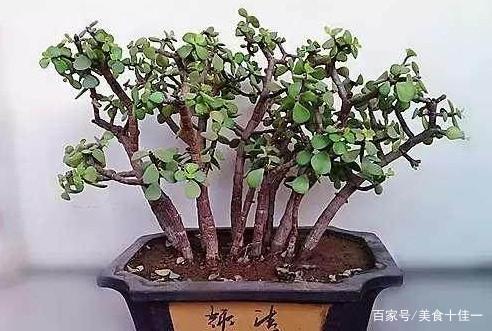
Jade plant, nicknamed tree or silver sun tree, commonly known as "royal relation", named Portulacaria afra Jacq (the jade plant originates from Africa), English name elephant bush (a useless shrub native to Africa), is a succulent evergreen plant of the family Portulacaceae (Didiereaceae), genus Portulacaria. Shrub. The trunk is hard and thick, with very troublesome nodes, the branches are soft yet hard, and the branches droop steeply. The leaves are small and thick, and the branches are concentrated. It sprouts readily, is especially suitable for terrace cultivation, and is an ideal plant material for making bonsai or combined potted plants.
Preparation of Bonsai Plant Material
Jade plant is too common to obtain ovules, mainly through pressing branches. It can be applied in three seasons, spring, summer and autumn, but spring is best. Because the spring temperature is moderate, the fleshy pieces are less likely to feel the virus. This also helps long-term and newly sprouted roots. Thick, straight 2 to 3 year old stems or branches can all be cut out. After the plant survives, it is best to consider the shape of the plant. After properly truncating the spike, the next Underword is best placed below 0. At 2cm to 0. At 3cm, after drying with dark language, press it into neat fine sand or vermiculite or vermiculite and perlite, and the cutting liquid concentration is about 1/4 to 1/3 of the spike length. It can keep the substrate tide moist and damp, and it cannot be watered well. Otherwise, it easily leads to corrosion, forming branch breakage. After 3 weeks, roots can grow out from the roots. Department. In order to cultivate a plant that meets the bonsai plant, the live plant can be transplanted into a pot, and water and fertilizer can be strengthened. According to the needs of the bonsai plant, it can be pruned once first, once a month, for about a year of cultivation, when the person has a certain plant form, it can be used. It is made with a potted plant.
Two, Making the Potted Jade Plant
After a year of cultivation, the potted production stage is formed. Potted plants can be carried out in the four seasons of spring, summer, autumn and winter of a year according to the thickness and shape of the stem of the plant material, the shape of the stem, and the part and place of birth of the branches.
The popular main trunk depicts courtesy, density, internodes, middle and lower branches, and more Nakagami Bereiko and similar plants spreading to the southeast and northwest. However, the fluidity of the plant group is optional, blue or tender yellow potted plants and potted potted plants. But in the basin, a large amount of stone and coarse sand should be used as a mat and coarse sand to cause roots in the basin. The best combination of 2 to 3 plants can choose the best combination of one-sided plants. Potted potted plants include high mountains and forests, and the quality is very high. Potted potted potted plants should choose flat round or duck-egg-shaped shallow pots, the potted area is relatively large, the tree on the tree is not stupid and stubborn, the image is unique, and it is easy to make. Paint fists and accessories.
The newly made jade plant bonsai may not be satisfactory, and pruning is the most important hand and eye for achieving its greening. For places where the demand forms, it can be pruned frequently to promote the germination of its lower lateral buds, extract new branches, form a dense crown, and appreciate the tree shape of the group expressing group density; it is worth noting that Pu Lang. The heat-relieving time should avoid the hottest season and rainy days, and 1 to 2 days after pruning is also not allowed. Water and fountains should be watered to avoid mildew on the fleshy new wounds. Because its dry stem and wrinkles are many, the branches are relatively sparse, and the leaves are relatively small, compared with ordinary ficus bonsai, it is simpler and easier to do, and is especially suitable for the expression of evergreen tree species in the south of the Yangtze River.
Three, Maintenance and Management of Jade Plant Bonsai
Jade plant is native to hot Africa, and potted plants have abundant light. Because their branches and leaves are rich in nutrients, they are succulent plants, and they receive more light in summer and receive full sunlight. If they are not shaded for themselves, they will form thinner leaves and thinner leaves, and reduce their appreciation value; bonsai should be loose with the soil. Loose fertilizer, especially water should not be too much, or randomly cause the plant's root system to erode, and the scenery will grow normally; jade plant has poor cold resistance, and generally in winter it should be moved to a bright room, keeping the indoor temperature. Not less than 5oC, so that the short branches of the jade plant main stem are taken out as soon as possible. It will affect the ventilation and penetration of the inner cavity, and can form scars on the main trunk, and increase the undulating sense of the main trunk. Potted jade plant bonsai can be repotted in 2 to 3 years. After the plant emerges, break off the aging roots and old soil, reapply soil with good water permeability and soil, and keep the pot soil moist, moist and glossy, to increase its yield. The fattening of potted jade tree is beneficial to early maturity, once a month, the hottest period, and the loss of fertilizer supply after autumn, which is beneficial to both growth and growth. Mel.