Potted grapes on the balcony are beautiful and tasty, and growing a few pots is more economical than buying them
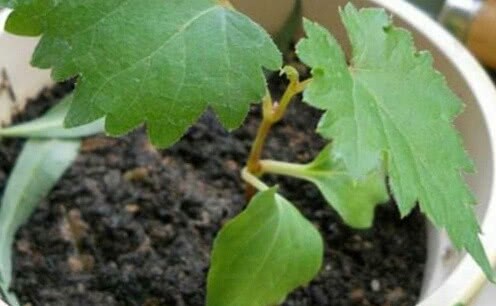
When it comes to grapes, everyone is surely familiar with them. As one of the oldest fruit trees in the world and a common fruit in daily life, grapes have always been favored by consumers and are an excellent healthy fruit. In recent years, with the improvement of living standards, more and more friends like to grow some fruits on the balcony, such as watermelon, strawberry, etc., and grapes are a good choice among them. Making use of the balcony space and growing a pot of grapes not only greening the home environment, but also enjoying the fun of growing while harvesting sweet fruit, which naturally achieves multiple benefits at once. So, how should grapes be grown in pots? Below we will introduce the potted cultivation method for grapes. Let's take a look together!
Potted grapes
[Potted grape method one]
Choose a suitable container: For potted grapes, it is best to choose a large and sturdy container (plastic pots that are too light will not grow well, and the terracotta pot in the picture above is the most suitable), so that the grapes can climb and grow freely. At the very least, it should be 35-45cm deep, and a diameter of 50-60cm wide is most suitable. Generally, containers of about 50-70 liters are the most suitable. Of course, for seedlings grown at the beginning, it is still best to choose a small or medium flower pot, and only after growing for more than half a year should they gradually be moved into a large pot.
Choose a variety: It is best to buy from a large gardening flower market. Of course, it also needs to suit the climate where you are, and choose the most suitable flower pot according to the variety. Some varieties have good disease resistance, some have good cold resistance, and some are very dwarf. Among them, the "Pixie" elf-type grape variety is the most dwarf variety I have ever seen, and of course it is a new variety.
Choosing the planting time: The best time to plant grapes is spring and early summer. Planting this early is to let the grapes grow strong and better cope with the frost season. But if you live in a frost-free tropical or subtropical region, the best time to plant grapes is actually late autumn and winter.
Potted grapes
. Placement: It is best to grow them in a sunny, warm and dry place. If the summer is too hot, shade should be provided appropriately in the afternoon, but more than 6 hours of light are still needed every day. Avoid growing them in humid, dark and low-wind places. If ventilation is poor, potted grapes cannot be grown well, and fungal diseases will easily develop.
Training the grape's shape: Potted grapes also need a trellis or some supports, which can be made of wood or bought directly. Grape plants will grow very long and need support. In addition, you also need to shape it, letting its vines grow in the shape you want, such as the shapes below. Once you choose what type of support to use, the shape to train it into should already be determined.
Soil selection: Do not choose overly heavy garden soil (vegetable garden soil), because these are potted grapes, so you must choose loose, organic-rich, well-drained humus soil. Compost soil is a good choice.
Proper watering: Regular watering is very necessary. Potted grapes greatly dislike humid environments, so avoid overwatering, but keep the potting soil slightly moist (the soil can be pinched into a ball, but no water can be squeezed out, which means slightly moist). Humidity easily causes root rot and stem rot, and easily breeds pathogens.
Potted grapes
Fertilizing: For fertilizing, it is best to choose decomposed manure or compost, and use other chemical fertilizers as little as possible. In the first year of planting, you can fertilize in spring and summer, and ordinary compound fertilizer is enough. In the second year, after flower buds appear in spring, use a high-phosphorus and high-potassium fertilizer with low nitrogen content.
Pollination: Everyone should know that most potted grape varieties can self-pollinate. Of course, in order to increase the success rate of fruit set, you need to gently shake the plant when the grape flowers are fully open, so that the pollination success rate is higher.
Harvest: Generally, potted grapes can be harvested after growing for 2-3 years. As mentioned above, choosing the variety is the first key, and pruning in winter and spring is the second key.
Potted grapes
[Potted grape method two]
1. Prepare the potting soil: The soil for potted grapes requires nutrient soil that is loose, airy, well-drained, and relatively rich in humus. This is because the pot volume is limited, there is not much soil, and the requirements for the potting soil are relatively high. Nutrient soil mixing ratio: 40% edible mushroom residue (the leftovers from producing shiitake mushrooms and oyster mushrooms) or decomposed sawdust, 40% leaf mold or garden soil (cooked soil such as vegetable leaves can also be used), 10% mountain soil, and 10% cake meal powder or dried chicken and duck manure plus an appropriate amount of phosphorus and potassium fertilizer. Mix evenly and ferment. In summer and autumn, it needs to decompose for more than 30 days, and in winter and spring the time is doubled. Use it after it has decomposed. Every spring from late February to early March, the soil should be changed, replacing 30% to 50% of the old soil, and some old roots should be cut off. According to the size of the pot, apply about 200 grams of cake meal powder at the bottom of the pot, mix it evenly with the soil, then spread a layer of nutrient soil, and plant the plant back into the pot. Finally, repair the trellis. It must be reminded here that the pot and soil must be changed every year, and it cannot be changed once every two years. Practice has shown that only by changing the soil and trimming the roots every year can the leaves be lush, the branches strong, and the fruit abundant.
Grapes
2. Scientific fertilization: To make potted grapes grow robustly, bloom more, and bear more fruit, you must fertilize frequently and fertilize scientifically. When sprouting begins, apply 1 to 2 times of nitrogen-based fertilizer to promote lush growth of branches and leaves and help flowering. Before flowering, apply 1 to 2 times of thin fertilizer mainly based on phosphorus and potassium. When the flowers fade and fruit sets, in order to make the fruit expand, cake water should be applied every 7 to 10 days. In order not to pollute the environment, the cake water is applied by the trench method. First dig a 2cm to 3cm trench around the edge of the pot, apply the cake fertilizer water into the trench, and immediately cover it with soil to reduce the evaporation of odors, gradually increasing the fertilizer from light to concentrated. You can also scatter decomposed cake meal powder on the surface of the potting soil, let it further mature in the pot, and after 7 to 10 days mix it evenly with the soil. At the same time, after flowering and before the fruit ripens, use 0.3% potassium dihydrogen phosphate and 0.5% plant growth promoter for foliar fertilization every month.
Potted grapes
3. Watering and humidity control: Watering must be done well. Usually, water according to the soil, the plant, and the weather, and keep the potting soil moist and slightly on the dry side. In hot summer, water evaporates quickly, so water thoroughly every day. Especially during the high-temperature "sanfu" period, water once in the morning and once in the evening every day. On rainy days, humidity should be controlled. Especially during the plum rain season, move the pot to the inner side of the balcony to reduce rain exposure. If there is standing water in the potting soil, drain it in time, otherwise flowers and fruit will drop.
Grapes
3. Pruning: Pruning and shaping are relatively important and complex technical measures in the management of potted grapes. Before fruiting, pruning grapes is mainly to regulate the relationship between its aboveground and underground parts, promote early shaping, and create conditions for fruit set the following year. The growth and fruiting habits of grapes differ by variety. Most of those used for potting are European grape varieties, and their fruit clusters are borne on the fourth and fifth nodes of the fruiting cane. The 3 axillary buds below the fruit cluster differentiate into mixed buds after the fruit is harvested, preparing for the fruiting canes that will sprout the following year; therefore, the fruiting cane of the current year is exactly the fruiting mother cane of the following year. In order to control the plant shape of potted grapes and prevent them from growing too tall, after leaf fall in late autumn, the fruiting canes of the current year should be cut back, keeping only 2 nodes at the base of each cane. In the following spring, the branches that sprout from the axillary buds on these two nodes can all bear fruit.