Potted plants grown from food are both beautiful and practical
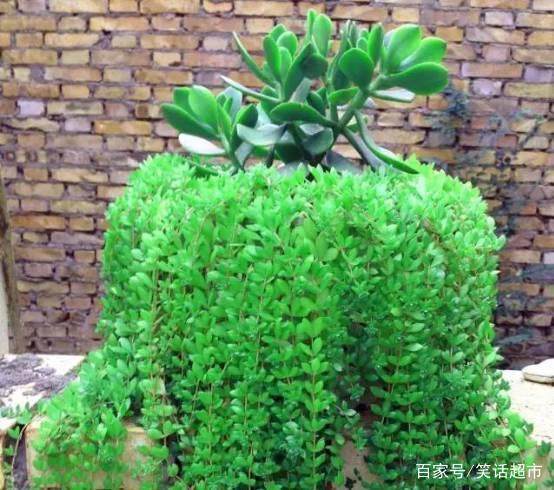
Potted plants grown from food are both beautiful and practical
Stringy stonecrop is extremely easy to cultivate, has low environmental requirements and is very easy to keep alive. It generally grows in rock crevices on hillsides, along mountain gullies, and in moist spots by rivers. It can be planted in front of and behind houses, and can also be grown in pots.
Stringy stonecrop prefers a warm, humid and semi-shaded environment. It is highly adaptable and relatively tolerant of drought and cold. It is not fussy about soil and grows best in loose sandy loam. It is not strict about light and generally grows well under moderate light conditions, and also tolerates weak light.
It is usually kept at home, and it will not die even without watering for a month. It withstands both high temperatures and cold, and as you care for it, it will soon fill the pot!
How should stringy stonecrop be grown?
Cutting method:
In spring or autumn, collect the creeping stems of stringy stonecrop from mature plants, cut the creeping stems into small sections 3 to 5 cm long, and insert them into a pre-prepared cutting bed. After inserting, water with a sprinkler, making sure to water thoroughly, and keep the soil in the cutting bed moist. At a temperature of 20°C to 25°C, they will root in 10 to 15 days.
When the young roots change from white to yellowish-brown, begin transplanting. When planting in the ground, shade with reed blinds for 3 to 5 days; for potted plants, place them under a cool shed to recover for 3 to 5 days, then move them to a sunny spot for cultivation.
Key care points
1. Pay attention to fertilizing
Stringy stonecrop is not fussy about soil. Garden soil, neutral soil and sandy loam can all support its growth, and it has extremely strong vitality; stems can take root as soon as they touch the ground. However, it dislikes poor, barren soil, which will show as weak growth. When planting stringy stonecrop, an appropriate amount of organic fertilizer must be added to the soil; crushed cottonseed cake, sesame paste residue or dried chicken manure are all suitable;
2. Overwintering
In the Beijing and Tianjin areas, choosing a wind-sheltered, sunny location allows it to overwinter safely.
3. Avoid waterlogging
Most plants are actually cold-tolerant but not waterlogging-tolerant, and stringy stonecrop is the same. Be careful that the soil does not become waterlogged.
4. Avoid strong light
Stringy stonecrop dislikes strong-light environments and shows yellowing leaves when exposed to strong light. It is a plant that can be grown indoors, on a north-facing balcony without advertising.