Snow Aconite looks like mugwort, and its root is highly toxic yet very precious
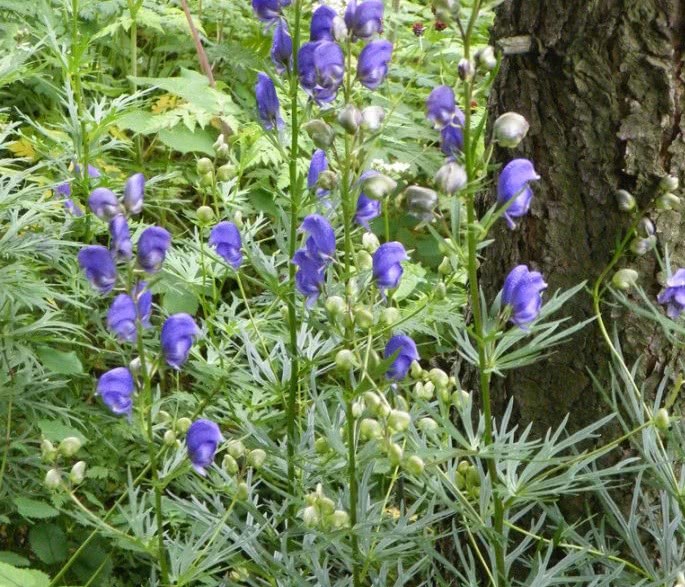
Many people have seen mugwort; its leaves and smell are quite distinctive, and most people can recognize it. But in rural areas of Yunnan, Sichuan and other parts of China, there is a highly toxic plant whose leaves look very much like mugwort and whose underground root grows fairly large and can be used as medicine. Yet its toxicity lies mainly in the root. Folk tradition says of it, "used properly it cures disease, used improperly it kills," but many people still use it despite the danger. Why is that?
First, let's get to know this plant. Its name is "Snow Aconite" (Aconitum brachypodum). It sounds like a beautiful name, and those who don't know it might think it is a lovely ornamental plant. Indeed, its flowers are truly beautiful, blooming in strings of blue blossoms with a very pure color, but don't be fooled by its appearance! It is extremely toxic, containing several toxic alkaloids, the most toxic of which is aconitine. For an adult weighing 120 jin, only 1.6 milligrams of aconitine is enough to cause death, which shows just how toxic it is.
But this highly toxic plant, when used well, can cure disease. According to research, the several alkaloids contained in Snow Aconite, including aconitine, all have good pain-relieving effects. It can dispel wind-dampness, invigorate blood, and stop various pains, and has a good analgesic effect on arthritis, joint pain, fractures, toothache and other conditions. However, the dosage must not be too large, otherwise it will cause poisoning, the most obvious sign being numbness of the mouth and tongue. If taken by mistake, be sure to seek medical attention quickly.
Snow Aconite is also quite precious and generally rather hard to buy, because it is a special medicinal substance that requires a doctor's prescription to purchase, precisely to prevent poisoning. Some folk practitioners dig up wild Snow Aconite themselves to steep in liquor to treat rheumatic arthritis; this practice also requires attention to dosage, and it must absolutely not be drunk like wine, only applied externally. Still, for the sake of safety, it is better not to rashly use this highly toxic substance yourself.
Dear readers, do you recognize this highly toxic plant? If you see it, don't touch it carelessly!