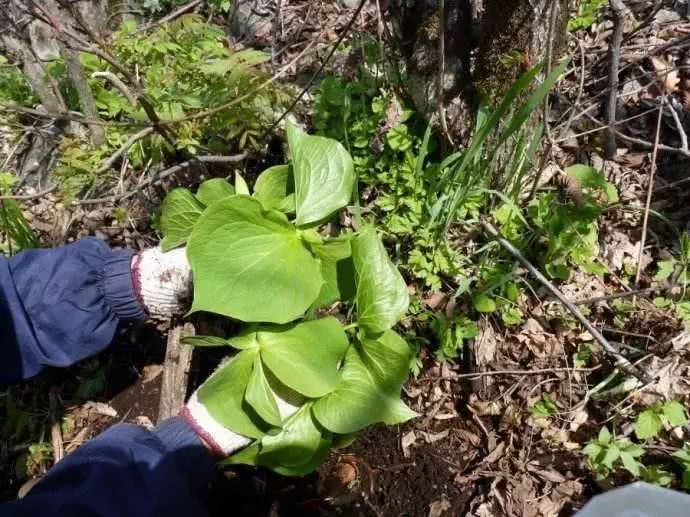
This wild grass in the mountains is commonly known as "one pearl on the head", with three leaves and three flowers, and its fruit is precious
Friendly reminder
Hemu Report aims to share and popularize information about various plants and their uses, for reference only. If medicinal use is needed, it is recommended to consult a professional physician to avoid problems!
In the primeval forests of Shennongjia in China, not only is the legend of the "wild man" passed down, but there are also countless rare plants of various kinds. This is especially true of various Chinese herbal medicines, many of which are rich in legendary colour, such as Paris polyphylla, "a bowl of water by the river", and "one pearl on the head". Their names are well known, and many people have heard of them but never seen them. Today let us talk about this rare "one pearl on the head". Both its fruit and root can be used as medicine, and it is very precious, hailed as the "sacred medicine of Shennongjia".
The scientific name of "one pearl on the head" is Trillium tschonoskii, and it is a plant in the Liliaceae family, so its flowers are as white and beautiful as lily flowers. Trillium tschonoskii is easy to identify because it has 3 leaves and 3 flowers, highly distinctive and very unusual. When the fruit of Trillium tschonoskii ripens, it is a round black-purple fruit, like a dazzling black pearl. Because the fruit grows at the top of the plant, people commonly call it "heavenly pearl" or "one pearl on the head". Corresponding to the fruit is its root, commonly known as the "earthly pearl".
The root of Trillium tschonoskii is actually not round. It has many fine rootlets, but when people process the medicinal material, they are used to gathering these fine rootlets into an oval shape, which is why it got the name "earthly pearl". The most valuable parts of Trillium tschonoskii are its fruit and root, which have the effects of stopping bleeding and promoting blood circulation, calming and soothing the nerves, relieving pain, detoxifying, and removing dampness. In daily life, people in the Shennongjia forest area used to pick its fruit and root to make medicinal liquor, but today Trillium tschonoskii has become a national third-class protected plant, and digging it up is prohibited in nature reserves.
Because of its high medicinal and ornamental value, Trillium tschonoskii was once heavily dug up by people, and in addition its seeds have a relatively low natural germination rate, resulting in fewer and fewer distribution areas. Also, excessive logging of forests in the past destroyed the growing environment of Trillium tschonoskii, because it is a plant that grows under the forest canopy. After many years of research by scientists, Trillium tschonoskii has now been artificially cultivated for medicinal use and other research.
Reader friends, do you know this rare wild grass in the mountains?
Text/Hemu Report, images/internet
If you like Hemu's articles, you are welcome to follow