Camellia, azalea and kalanchoe yellow leaves and no flowers - one trick makes the foliage oily green and the flowers burst into a full pot
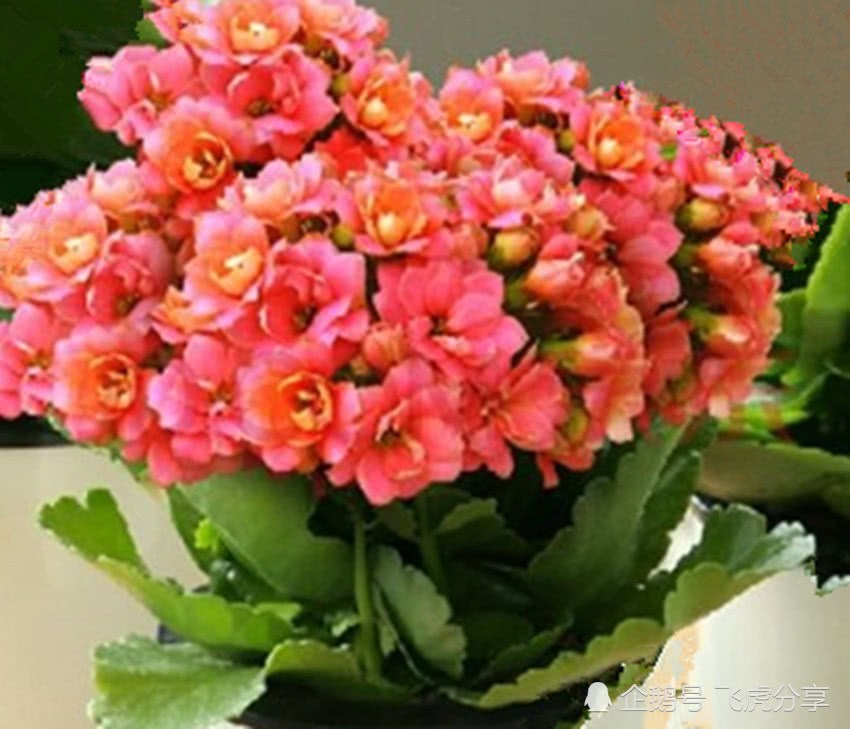
Camellia, azalea and kalanchoe are all flowers that everyone likes very much, but many flower lovers report that the ones they grow either have yellowing leaves, or do not grow, or only grow leaves and do not bloom. Today the editor will tell everyone some tips to make the leaves a deep green and the flowers burst into a full pot, guaranteed to make your flowers not only have emerald green foliage, but also bloom into a full pot year after year.
Kalanchoe has no strict requirements for soil and is drought tolerant; on the whole it mainly needs ventilation and air permeability. I advocate adding more granular medium because for beginners it is not easy to master the strength of watering. With soil dominated by coarse medium you do not have to worry about these things. The overall principle is to mainly use airy, loose soil. During growth, spray the leaves or water with a 0.1% urea solution or foliar fertilizer once every ten days, which can quickly turn the leaves from yellow to green. If the kalanchoe refuses to bloom, or if you want to see flowers earlier, by Spring Festival, you can use the light-shading method to promote flowering. The method is: give the kalanchoe only half a day of light each day (not limited to sunlight, including lamplight and so on), and cover it with a black plastic bag or shut it in a dark room for the rest of the time, repeating this every day; after about one month of this treatment it will basically form buds.
Camellia requires loose, airy soil with good water filtration. It likes half shade and half sun, and refuses full sun, otherwise it will get sunscald disease and the leaves will die. Keep the soil neither too dry nor too wet; do not water too much, otherwise it is not good for root aeration. For each flowering cycle of camellia, it is best to fertilize four times, not too frequently; too much fertilizer and the buds will not easily open, or may even drop. After the flowering period each year, first supplement once with phosphorus and potassium fertilizer to replenish the nutrients consumed during flowering. When fertilizing, control the amount according to the size of the sapling. Mainly phosphorus fertilizer, with compound fertilizer as a supplement. Do not use too much fertilizer solution; of beginners who grow flowers, eight out of ten love their flowers to death, not starve them to death. It requires a certain temperature difference. The environmental humidity should be above 70%, so spray water frequently to increase the humidity in the air.
It likes a warm, moist, cool-air, ventilated and semi-shaded environment. It requires acidic, fertile, loose soil rich in organic matter with good drainage. In summer avoid direct sunlight and provide shade, spray water often and maintain air humidity. After September to October, reduce shading to help flower bud differentiation. The roots of azalea are as fine as hair strands, with few thick main roots. It fears both dryness and wetness, and especially fears heavy fertilizer. If watered too much, the roots soak in water; if too dry, the branches and leaves shrivel and the leaves fall off, which is a great threat to the plant. As for applying heavy fertilizer, that will endanger its life. There are particular points about where to place potted azaleas; generally they should be placed on a southeast-facing balcony, and they must be ventilated, and moved as little as possible. Without ventilation, they are prone to black spot disease and lose leaves in large numbers. Azalea also has moderate light requirements; avoid direct light in summer. Fertilization should be mastered as light fertilizer applied frequently, better weak than strong, applying organic compound fertilizer once a month on the pot soil. Spray monopotassium phosphate once every 10 days. This promotes green leaves and abundant flowers.