Million Bells bloom beautifully and look great in photos, and the care experience is suitable for beginners to learn from.
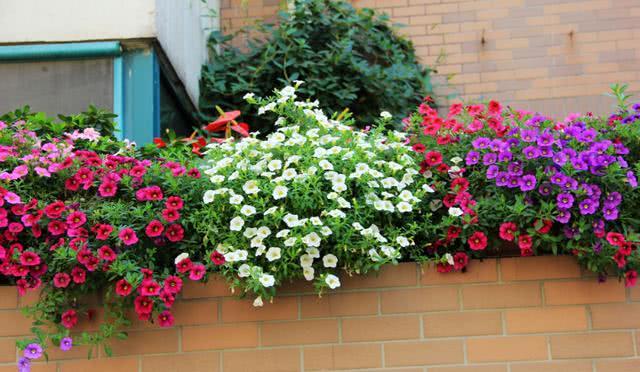
Million Bells are beautiful, and I would say not just ordinarily beautiful. They photograph especially well, and another plus is that you do not have to keep deadheading spent flowers. The downside is that they are quite demanding about soil, fertilizer, and water. If you want to grow Million Bells well, you need to grow them well starting from the seedling stage. We all know that when growing flowers, you first grow the roots. Only with good roots will the seedlings be strong, so let us start with the seedlings.
When the seedlings arrive home, first check whether the soil is wet. If the soil is wet, do not rush. Just put them somewhere without direct sunlight. When the soil in the small pot changes color and needs watering, then pot them on temporarily. If the soil is not wet, you can pot them on temporarily right away. Temporary potting-on is a step you must take. The benefit of temporarily potting on seedlings is that soil moisture is easier to control, and it also helps them recover and grow new roots.
I generally use a small 10-11 cm red pot for temporary potting-on. If the seller used 128-cell trays to root the cuttings, then using a 9 cm small pot for temporary potting-on is enough. Never use too large a pot for temporary potting-on. For temporary potting-on, it is better to use a pot that is too small than too large.
For soil, I use two parts of my homemade nutrient soil, one part new peat, and one part perlite. For temporary potting-on, I do not add any fertilizer, because my homemade nutrient soil already contains fertilizer. If you are using new soil, I suggest a peat-to-perlite ratio of 3:1. If you have slow-release fertilizer, add a little, but do not exceed the standard amount.
If you see new branches growing, or you see roots coming out from the bottom of the small pot, then the seedlings have successfully recovered. At this point, when you see long branches, you can pinch off the tips. The pinched-off branches can be used for cuttings. I generally pinch the tips when they are in the temporary potting-on pots. When the branches and leaves of the seedlings have grown one size larger than the temporary pot, then consider moving them to a large pot. By then the roots have also fully grown.
This year, I used two kinds of pots for potting up Million Bells: Iris No. 8 pots, 24 cm in diameter, with 3 plants. Iris 36 cm bowl pots, like the pot in the first picture, with 4 plants. Some gardening friends will surely say, why use such large pots? Can't a single plant fill the pot after pinching? Haha, last year in early June I potted up one batch of seedlings, and on July 18 I potted up another batch of seedlings. These two times are the best growing periods for the flowers. I was impatient, so using large pots with multiple plants lets Million Bells fill the pot and bloom as quickly as possible.
For soil when moving to a large pot, I still use 3 parts of my homemade nutrient soil plus 1 part perlite. I do not add new soil, and I do not add base fertilizer, because my nutrient soil has enough fertility. If you are using new soil, add some base fertilizer, but definitely do not add too much. When the roots of Million Bells have not fully grown, this flower is quite afraid of fertilizer. For a period after potting up, I try to keep the soil on the drier side when watering. I do not apply fertilizer either; I just water with clear water. When you see the Million Bells branches fill the pot, then go back to normal management. Usually when watering, carry fertilizer with it, using a thin fertilizer solution.
Some gardening friends will surely say, other people grow Million Bells with lots of water, lots of fertilizer, and lots of sun, so why do you grow them like this? Alas, growing flowers really cannot be rushed. Million Bells are different from petunias and Marguerite daisies. Marguerite daisies and petunias are both fairly tolerant of fertilizer, but Million Bells are not, especially when young. Too much fertilizer will definitely cause problems. I have had lessons in this regard, so I will not go into it. As for watering, when the temperature is above 30 degrees, or even higher, too much water is not a problem, but too little water is. However, when the temperature is below 30 degrees, too much water is not good. When the seedlings are small, too much fertilizer is not good, but when the seedlings are large and growing well, even a bit more fertilizer is not a problem. You need to handle it flexibly and not make a blanket rule.
Now let me talk about pinching Million Bells. I pinch them while they are in the temporary potting-on pots. Generally, pinching the tips once or twice is enough. After moving to a large pot, once the branches have grown to fill the pot, wait a few days. When you see branches growing beyond the edge of the pot, pinch the tips once more. That is, pinch every long branch you see. The pinched parts are not long, and I still cannot bear to pinch them, because I am eager to see the flowers. Haha, everyone who grows flowers understands how I feel at this time.
The full bloom period of Million Bells after they generally start flowering is 2-3 months. Do not imagine that Million Bells can bloom from spring all the way to late autumn. It is not that they cannot bloom, but that the later blooms do not look good. I take cuttings of a batch of seedlings around May 1 in spring, and pot them up in mid-July. For overwintering plants, I take cuttings after the Start of Autumn, and in late October pot them into 9 cm small temporary pots and bring them indoors for winter. They stay in the temporary pots all winter. In spring, as long as the low temperature is above zero, let the seedlings go outside and let them experience low temperatures to harden off. At this time, also repot the Million Bells into 11 cm small pots, in order to add some new soil and let the seedlings grow roots. The reason is that Million Bells grow quite poorly indoors, and their roots are especially bad. They are just barely alive. If you do not repot them once, it will not do. After repotting, the growth of Million Bells is obviously much better.
It was really not easy. I finally finished writing. This is roughly my method for growing Million Bells.
By the way, Million Bells are quite prone to red spider mites and aphids. I use pyridaben to treat red spider mites, and imidacloprid to treat aphids, applying once every 15-20 days, alternating them. Also, when it is hot, they attract butterflies that lay eggs, which hatch into small fleshworms that specifically eat the flowers. Geraniums also get this kind of small fleshworm. I use methomyl for prevention and control. Throughout the whole summer, no pest problems occurred on the flowers at home.
I have rambled on for quite a bit, and I do not know whether it is useful. I truly hope it has at least a little reference value, even just a tiny bit.