The kitchen waste you throw away every day is a priceless treasure
BGM:Feeling U - M80
- Tasha's foreword -
Inseparable from our daily lives is an endless stream of garbage. This garbage is dirty and smelly, and is often discarded without being sorted.
But the kitchen waste in it (abbreviated as "food waste") is actually an excellent material for composting! If handled properly, its effect is in no way inferior to the various fertilizers on the market.
So, what simple and effective composting methods are suitable for doing at home? Our Sister Damao has settled abroad and has many years of rich experience in making her own compost. Let's take a look~
- Main text begins -
Not long ago, I went back to my hometown to visit my parents. I didn't want to go to the food stalls, nor did I want to eat specialty snacks. I just wanted to walk with my dad on the small hill in the park and go with my mom to the vegetable market.
We picked some fresh vegetables. She took one stool, I took another, and according to her requirements, I separated what could be eaten from what was to be thrown away.
I was surprised that every meal filled up a plastic bag. What was in these plastic bags also counts as food waste. After the meal, my dad went out for a walk and casually threw it into the big trash bin downstairs.
Their fate is the same as all garbage: whereabouts unknown. Where they go seems to be none of my business, but I really want to know where they go.
In the city where my own little home is, many backyards have a composting box like this.
Open the lid and put the food waste in. When the weather is hot, it rots quickly; when the weather is cold, it rots slowly.
From the small opening at the bottom, you can dig out a lot of black soil-like stuff. The food waste ultimately turns into it. Crush it with a pinch and it breaks apart, and its color is oily black. At a glance, it is clearly rich in organic matter.
Using this compost to grow flowers and vegetables not only enriches the soil, but also reduces the amount of garbage, greatly easing the pressure on landfills.
Seeing food waste turn into fertile soil gives a great sense of accomplishment.
But this equipment also has drawbacks. It must be placed outdoors, and it also attracts rats and mosquitoes.
Starting the year before last, our local government began implementing a strict garbage sorting system. The government gave every household a large green bin to put outdoors, specifically for food waste packed in small degradable bags, and only sent a truck to collect it once every 2 weeks.
Because this kind of large green bin does not have its garbage collected in time, it easily attracts mosquitoes in summer.
The government also distributed small food waste bins for the kitchen to collect daily food waste, and charges a fee every month to collect and process this kitchen waste.
In addition, users themselves also have to bear the additional cost of buying the matching small degradable bags.
This bin is very small and cannot fit a single watermelon rind. It can barely hold the food waste from a dinner of four dishes and one soup. Sometimes one meal does not fill it, and two meals do not fit, so for a while there were complaints everywhere.
But at the beginning of spring, the government gave citizens a benefit: the fertilizer made by composting the collected food waste was distributed for free.
We learned the final destination of the food waste we sorted out, and we also learned exactly where the money we paid was used.
Look at this compost. Isn't it beautiful? Isn't its appearance lovely? Don't you want to rub it with your hands and feel it flow between your fingertips?
When this compost is mixed with soil, it can increase the soil's organic matter and improve soil aeration. Loose soil is good for plant roots to take hold and grow.
But for indoor balcony gardeners who want to make compost, it is like putting on a show inside a snail shell. Where should they start? Odorless and bug-free, highly efficient and fast, and taking up little space are the issues everyone cares about most.
I myself once fanatically tried many composting methods, some failed and some succeeded. I have summarized the 4 most practical ones to share with everyone~
- Soft shrimp shell composting -
There are many plants that bloom in summer. I put one meal's worth of soft shrimp shells and heads into a large plastic bottle, leave it in full sun on a sunny day above 20 degrees, release the gas regularly, and it can be used in one week. If you do not release the gas, it will be very dangerous. Getting sprayed all over is a small matter; bursting and injuring someone is a big one.
Pour out the liquid and dilute it with water to water flowers. Dilute it well, and even if there is a smell, it will go away with the wind. Then you can continue to pour water in to ferment more. It is inexhaustible and endlessly usable.
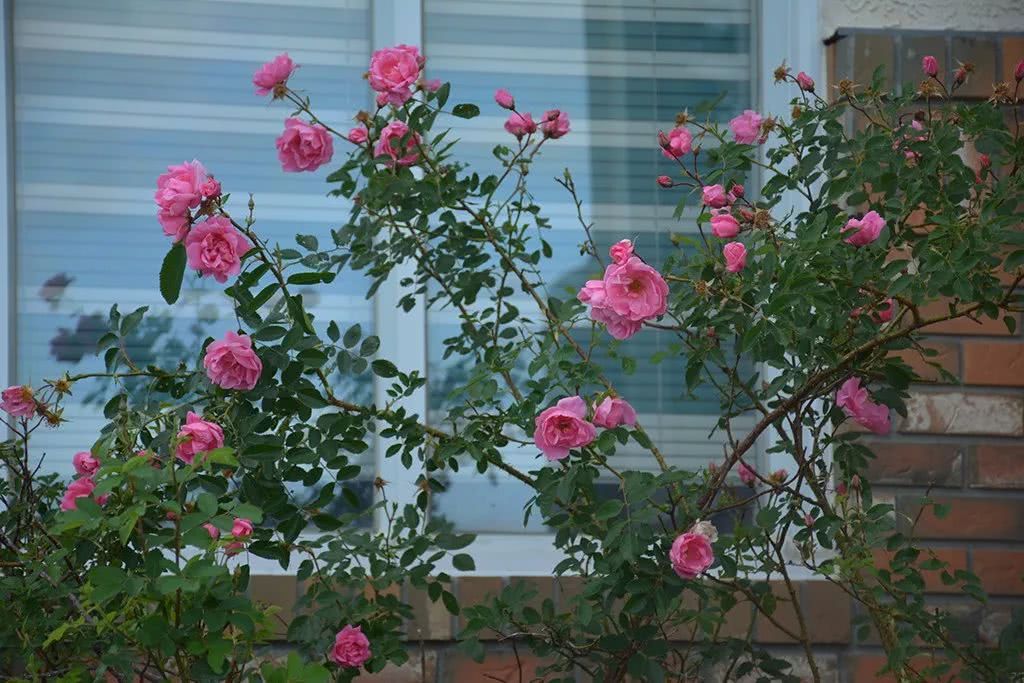
These are the flowers I watered with soft shrimp shell water.
- Okara composting -
Everyone should have heard how smelly okara is, but if you mix it evenly with soil at 1:1, or with a bit more soil, mix it evenly, and then cover it with another 10cm layer of soil, you can hardly smell anything.
Wearing plastic gloves, I mixed it with both hands and kneaded it evenly to make sure every particle of soil was mixed with okara. This increases the contact area and makes fermentation more complete.
Leave it in full sun in 30-degree weather. To prevent rain from wetting it and lowering the temperature and affecting fermentation, you can cover it with a bag or put on a lid.
To prevent odor, you can add EM bacteria to help fermentation, following the ratio in the instructions. Because I put it outdoors, even if it stinks it does not affect me, so I did not add any.
Open the lid every day to let it breathe. Under aerobic conditions, fermentation will speed up. But maintaining high temperature is the prerequisite for successful fermentation. This is the same principle as making raised-dough steamed buns.
After 3 weeks, when it no longer continues to heat up and a large amount of the okara has clearly disappeared, it can be considered fermentation complete. When fermentation is complete, this good soil rich in nitrogen and phosphorus has also been made.
On the left is the soil before mixing with okara, and on the right is the soil after mixing with okara and fermenting. The feel is different, and the color is different too.
This is what I grew using the fermented okara soil. I basically applied no fertilizer, only watered.
- Daily soil care with food waste -
After the soil has supported one round of flowers, it must be cared for so it can lay a solid foundation for the next flowering season.
I once layered soil and food waste one layer at a time, sprayed it moist; I also cut banana peels and orange peels into small pieces and buried them beside pots with plants, watered normally, and in less than 2 weeks they all rotted away, leaving the soil exceptionally loose, black and shiny.
These are the flowers I grew by watering normally and caring for the soil.
But when winter comes and the weather turns cold, I have to move indoors. With not enough sunlight, limited space, and equipment that is hard to buy, there is nothing to do but tinker on my own.
- Winter indoor composting -
Inside a storage box with a lid, place a large flower pot. Inside the large flower pot, put food waste. There is a hole at the bottom of the flower pot, so the liquid seeps out through the hole and flows into the large cake box at the bottom of the flower pot, which catches the liquid.
Every so often, pour this liquid into a mineral water bottle to ferment. At room temperature of 22 degrees, it takes about one week.
Remember to open the lid every day to release gas, otherwise it will be like opening champagne at a celebration banquet and spray all over you.
This fermented liquid is diluted with water to water flowers, and the remaining fibrous residue can be mixed into the soil. When the temperature is above 20°C, it quickly rots in the soil, greatly increasing the soil's organic content and increasing fertility.
Although this method is clumsy, it is suitable for a small enclosed environment and is genuinely effective.
This is soil nourished by food waste, dark and soft. It is not only good for plant roots to take hold, but also provides nutrients for the entire flowering season.
As the accumulated snow in Canada melts, a new flowering season begins, and I am rubbing my fists and itching to try again.
Home composting is a process full of wild ideas: cut through mountains when you meet mountains, build a bridge when you meet water. Its significance, besides beautifying the courtyard, is more importantly protecting the environment and easing the pressure on the Earth on which we depend for survival.
In addition, during the days of waiting for success, I also gained patience and became more focused on my own life and family.
Therefore, home composting is truly something worth trying and promoting. Its significance is extraordinary, and its joy is endless!
Text and images: Li Damao
Editor: Nanzhu
If you also like this article