Environmental pollution leaves them no choice but to eat garbage
Marine pollution usually refers to humans changing the original state of the ocean, causing damage to the marine ecosystem. Pollution caused by harmful substances entering the marine environment damages biological resources, endangers human health, hinders fishing and other human activities at sea, and degrades seawater quality and environmental quality. The ocean is vast in area and holds an enormous volume of water, and so for a long time it was the most stable ecosystem on Earth. Various substances flowing from land into the ocean were absorbed by the ocean, while the ocean itself did not undergo significant change. However, in recent decades, with the development of industry worldwide, marine pollution has also become increasingly serious, causing great changes in the environment of local sea areas, with a trend toward further expansion.
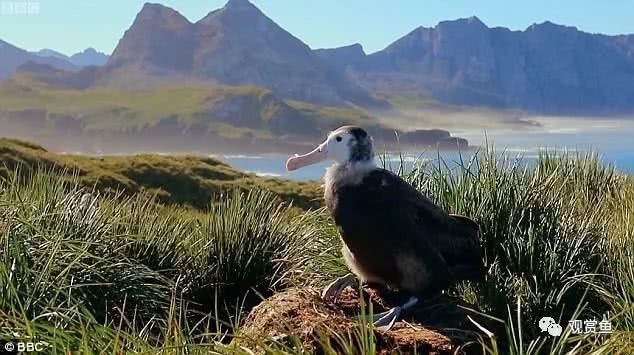
On South Georgia Island in the South Atlantic, albatross populations have been declining steadily over the past forty years, partly because of plastic fishing gear and other garbage discarded by humans.
An albatross chick died after mistakenly swallowing a plastic toothpick, which punctured its intestine. This is yet another example of the catastrophic damage plastic waste causes to the ocean.
In the final episode of the BBC documentary series Blue Planet II, viewers saw a sperm whale mistake a blue plastic bucket for food.
The plastic bucket happened to get stuck in the sperm whale's mouth and was not swallowed. In his narration, Sir David Attenborough said: "For all life in the ocean, the problem of industrial pollutants and discarded plastic waste must be addressed."
About 17 million Britons watch the BBC documentary Blue Planet II every week, and growing public environmental awareness may help push the government to pay attention to the serious problem of plastic pollution. In the program, researchers showed the astonishing amount of plastic waste in the world's oceans.
David Attenborough, the presenter of Blue Planet II, walked a stretch of beach and picked up quite a lot of plastic waste, using this to emphasize to viewers the seriousness of the ocean plastic pollution problem.
A sea turtle appears beside a plastic bag floating on the surface of the sea. Plastic waste is one of the greatest threats facing marine animals. Researchers say plastic bags are only the tip of the iceberg of ocean plastic pollution; tens of millions of tons of plastic waste enter the ocean every year, causing the deaths of thousands of whales and dolphins. A report points out that the worsening pollution problem could cause Britain's only pod of killer whales to disappear within a short time.
Researchers found that, compared with other plastic waste, seabirds swallow plastic food bags more often. Lightweight plastic products can drift far away with ocean currents, and large amounts of abandoned fishing nets and other plastic waste have also been found in some large marine protected areas far from the fishing industry. This has already become a global problem.
This is a desperate scene. Plastic waste has already threatened the survival of many large marine animals. Whales and dolphins are sometimes entangled in fishing nets or lines discarded by fishing boats, unable to return to the surface to breathe, and eventually suffocate to death.